Where there’s a Will – part 2

Where there’s a Will – part 2

I asked Alex Truesdale for her thoughts on the ruling by the Court of Appeal and am thankful for her very valuable insight, here are her thoughts and observations.

The Court of Appeal’s judgment in this long-running dispute confirms that disinherited children are permitted by a 1975 statute to challenge their parents’ Wills if reasonable provision for their maintenance is not made. “Maintenance” means the child’s cost of daily living at whatever level is appropriate to them. The question of what is “reasonable” is dealt with by the court exercising its discretion to consider a number of factors laid down by statute, including the child’s needs and circumstances, the needs and circumstances of the beneficiary who has inherited instead, and the parent’s conduct. Here, Arden LJ endorses the lower court’s description of Melita Jackson’s conduct towards her daughter Heather Illot, since their 1978 estrangement, as “unreasonable, capricious and harsh”, before replacing the lower court’s £50,000 award with a sum of £163,000. This, Arden LJ reasoned, would allow Mrs Illot to purchase her house, receive a modest income, and potentially arrange a pension through equity release, all without compromising her state benefits.


This is not new Law

None of this is new law. But it is inevitable that this high profile victory for Heather Ilott – albeit one which sees her receiving just over 1/3 of her late mother’s estate – will encourage further challenges to Wills which seek to disinherit family members, particularly if there is no connection between a testator and the charity which has benefited from a windfall legacy. A costs order has yet to be made but will be considerable: Melita Jackson’s insistence that her executors defend to the hilt any attempt by her daughter to contest the Will will already have eroded the value of her estate, and so now the charities themselves face a smaller residual legacy and their own costs bill. There may be a further appeal to the Supreme Court, but I would suspect that the charities will take a view on the reputational as well as financial damage they risk in prolonging a dispute which has run since 2004 and, arguably, since the estrangement in 1978.

Where does this leave testamentary capacity? Much as it was before – the award made in this case turns on its own facts, and does not represent any further curtailment of one’s freedom to leave one’s estate as one pleases, so we should all still be making Wills.

Think ahead and think carefully

However, I would encourage those who do wish to exclude family members from their Wills to leave contemporaneous evidence of their reasoning not only to exclude a particular beneficiary, but also to favour other beneficiaries. This is particularly important if, in the case of charities, the testator has no connection with, or history of donations to, charity during their lifetime. I have been instructed on a number of cases where we have done just that by way of a side letter, to try to avoid the washing of too much dirty linen during probate, a process which makes Wills public. And those asked to act as executors should always check whether they are risking accepting a poisoned chalice that may compel their involvement in a protracted legal battle. As in this case, that may, sadly, become the testator’s most enduring legacy.

Alexandra Truesdale MIPW

Alex Truesdale Wills Limited | Registered in England and Wales no 7275445 | Registered office: 27 Mizen Close Cobham Surrey KT11 2RJ

Alex Truesdale Wills Limited is a member of the Institute of Professional Willwriters and complies with its Code of Practice

You can read more articles about Pensions, Wealth Management, Retirement, Investments, Financial Planning and Estate Planning on my blog which gets updated every week. If you would like to talk to me about your personal wealth planning and how we can make you stay wealthier for longer then please get in touch by calling 08000 736 273 or email [email protected]
Where there’s a Will – part 22025-01-21T15:48:52+00:00

Where there’s a Will…

Where there’s a Will…

Perhaps you know the saying.. “where there’s a Will, there’s a crowd”, well it seems that there may have been a landmark ruling in the Court of Appeal. This could impact anyone wishing to disinherit their own children.

The potential landmark ruling was handed down by Lady Justice Arden at the Court of Appeal on 27 July 2015 throws into question the “security” of a number of Wills.

Long story short – Heather Ilott challenged her late mother’s Will of 2002. The original Will made by her mother Melita Jackson, expressly prohibited her only daughter from any inheritance from her estate, leaving the entire estate to animal charities. This all stemmed from a family event in 1978 when Heather then 17, eloped with her boyfriend, who she later married. Mrs Jackson died in 2004 and the Will was initially challenged by her daughter and she was awarded £50,000 of the £486,000 estate. An appeal was initially denied, but this week was upheld by Lady Justice Arden. Heather Ilott was awarded £164,000 about a third of the estate.

“Unreasonable, capricious and harsh”

Lady Justice Arden, ruled that the exclusion of her daughter from an inheritance was unreasonable, capricious and harsh. Ruling that she should have a greater share of the estate.

Needless to say this prompts a few concerns and questions. Firstly it has taken 11 years to agree the terms of Probate and settle the Will. Secondly the original Will, despite being “crystal clear” was overturned, not completely, but essentially opening the way for more legal challenges to Executors. Of course, the animal charities have also lost a reasonable amount too – presumably having an impact on their planning somewhere.

The number of Wills challenged each year continues to rise which rather affirms the statement that where there’s a Will, there’s a crowd. Most people do not understand what is involved when someone dies, having little or no grasp of the lengthy delays that can occur. This case has been rolling on for 11 years!

You can see the ruling by clicking here.

Dominic Thomas
Solomons IFA

You can read more articles about Pensions, Wealth Management, Retirement, Investments, Financial Planning and Estate Planning on my blog which gets updated every week. If you would like to talk to me about your personal wealth planning and how we can make you stay wealthier for longer then please get in touch by calling 08000 736 273 or email [email protected]
Where there’s a Will…2025-01-21T15:48:52+00:00

Taxing Reforms for Pensions

Taxing reforms for pensions

There has been considerable “chatter” about the prospect of pensions being reformed even further. In particular, the tax of pensions is very much up for debate, making the prospect of tax reforms for pensions a genuine possibility.

In brief the Chancellor has already made huge changes to the pension system, enabling a pension to be taken as a lump sum or as income without any requirement to buy an annuity.  In addition, a pension can now be easily passed on to beneficiaries of your estate, rather than ceasing when you do.

Tax Overpayments

The new freedoms have already and will continue to mean that some people don’t do their sums properly and end up paying too much tax – unnecessarily, which of course is a good thing if you run HM Treasury… every little helps and all that.

In very simple terms, most people will currently find that whatever the size of their pension pot, they can take 25% of it as tax-free cash (these days “we” call it a pension commencement lump sum – or PCLS). The rest is taxed as income.

Reforming tax relief

At the moment, anyone that pays into a pension gets tax relief – either at 20%, 40% or even 45% depending on your rate of tax. Everyone gets 20% (from age 0 to 75). So an investment of £1000 actually costs £800 if you are a nil rate or basic rate taxpayer. If you pay more than 20% tax, you get to claim the balance back via your tax returns.

The Chancellor is reviewing this, because it costs the country a lot of money. The main problem being that employers make most of pension contributions each year and do so in part because it is treated as a deductible cost. If this were considerably altered, then most employers are likely to reduce or even stop (bar the minimum requirements of auto enrolment) their contributions. This would result in smaller pensions in retirement…

So he could simply reduce tax relief to a lower amount, in essence he has done this already for anyone earning over £150,00, who have their annual allowance restricted to just £10,000 (less than an ISA) if they earn over £250,000.

Tax relief provided in 2013/14 amounted to £34.3bn, whereas the tax on pensions generated £13.1bn a “cost” to the UK of £21.2bn. Most of which (2/3rds) is reclaimed by higher rate taxpayers… those paying 40% or more.

Shrinking the Pot

He has also reduced the amount that can be held in a pension (the Lifetime Allowance) which is set to reduce again from £1.25m to £1m next April. Anything above this will be subject to an excess tax charge of 55% as things stand at present. That’s what I call easy money for the Treasury and there isn’t that much that you can do about it, other than applying for protection where relevant.

Changing the Sweetener

Another option would be to make pensions tax-free in retirement instead of taxable. Whilst this sounds all well and good, the reality is that who would honestly trust any future Government not to change the rules later, when they realise that they need the income to be taxed.

Simplicity Seems Dead

I am of the opinion that pensions are going to change, how much and when, we simply do not know. However the Government wants to be seen not to help the “rich” which seems to include people paying 40% tax and everyone paying 45% tax. It would include anyone in the State Sector that has built up a long career – doctors, teachers, police, civil servants – all of whom seem to be the current “cat to kick”. It certainly includes anyone that has pension funds worth £1m or more. Though I would argue that £1m in a pension pot isn’t that huge (yes I know its relative)  but in practice that provides at £40,000 a year income… not enough to pay higher rate tax. The worst case to my mind would be to create a “before and after” system – which we have had before, which only makes life more complicated.

If I were Chancellor?

People need an incentive to save for the long-term. I would abolish the Lifetime Allowance making all current and previous protections irrelevant. I would restrict tax relief to a % of salary, perhaps providing it directly as a 5% tax cut, say 20% tax becoming 15% if payments are made to a pension. That way HM Treasury collect taxes, people are incentivized to save and earn. I would scrap rules that enable people to pay into pensions for children, which is essentially something that only the wealthy can do, so that pensions are only for those aged 18. However I would continue to tax pension income as income…

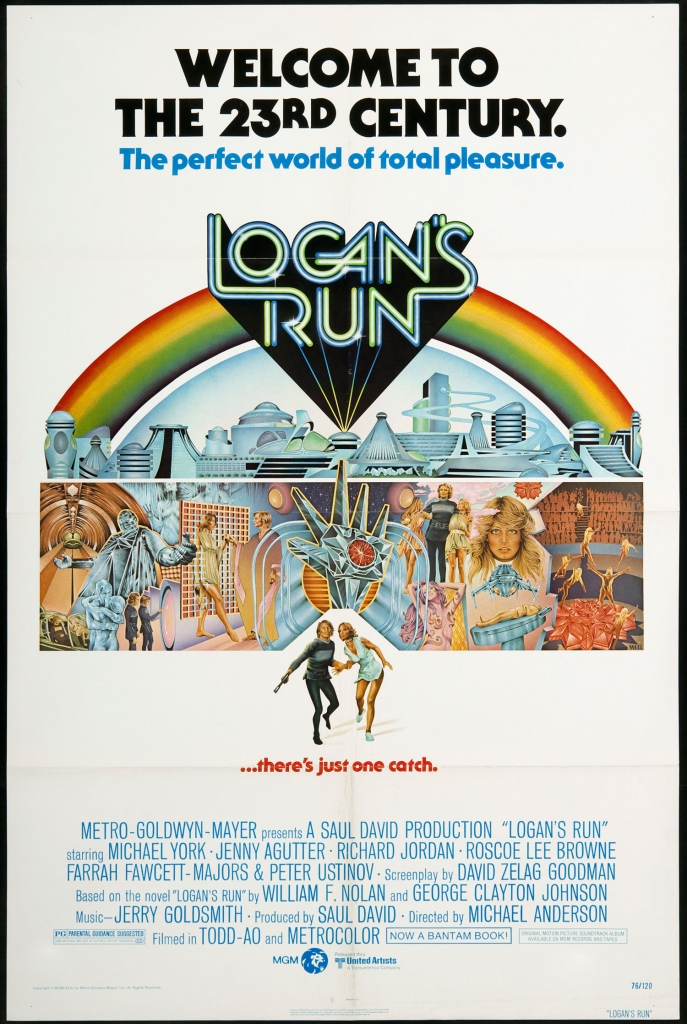
Sadly, for younger generations the prospects of good pensions looks fragile… of course there is the prospect of the solution as outlined in Logan’s Run….. there’s just one catch..

Dominic Thomas
Solomons IFA

You can read more articles about Pensions, Wealth Management, Retirement, Investments, Financial Planning and Estate Planning on my blog which gets updated every week. If you would like to talk to me about your personal wealth planning and how we can make you stay wealthier for longer then please get in touch by calling 08000 736 273 or email [email protected]

Taxing Reforms for Pensions2023-12-01T12:20:08+00:00

Lost your pension?

Lost your pension?

Many people have lost track with old pensions, frankly it is hardly surprising given the number of name changes, mergers and acquisitions of various pension companies over the last 40 years or so.  Perhaps you have lost your pension too.

Consider the various jobs that you have had over the years, however small, perhaps there is an old pension lurking somewhere in the midst of your curriculum vitae.

Pension evolution…. perhaps revolution

Pensions have improved dramatically over the years and almost unrecognisable from those I first understood over 20 years ago. The evolution continues and something that adviser firms like ourselves spend a lot of time researching and reviewing. Cheap is not always best, but then neither is the most expensive.

The media, consumer groups and various politicians have regularly made statements about the charges on pensions, some of which are accurate, some are not. However, I imagine you would like to know if your old style pension could be brought up to date.

Find your lost pension

The Pension Tracing Service (PTS) was set up to help find lost pensions. In essence everyone has a National Insurance number that is unique to them, this is the main tool used to search for lost old pensions. It is believed that there could around 50million dormant or lost pensions “in the system” by 2050 due to the growing number of small pensions (due to auto enrolment, or workplace pensions).

Once lost, now found

Last year the PTS was contacted over 145,000 times and we expect this to increase considerably. They aren’t always successful in tracing pensions, but last year managed to trace 87% of those believed to exist.

Regain control of your pension

So it would be advisable to check if you have any lost pensions and then check them (and any old pensions that you haven’t lost) to determine if they can be improved. I have put a free guide together about this, which I have called “Regaining Control of Your Pension”. You can download it for free (tell your friends and colleagues) simply by completing the online request below this item.

Dominic Thomas
Solomons IFA

You can read more articles about Pensions, Wealth Management, Retirement, Investments, Financial Planning and Estate Planning on my blog which gets updated every week. If you would like to talk to me about your personal wealth planning and how we can make you stay wealthier for longer then please get in touch by calling 08000 736 273 or email [email protected]

Lost your pension?2025-01-21T15:04:39+00:00

Pensions: State Pension changes

The State Pension is changing…. again!

Like anyone else I am rather fed up with the constant tinkering and general messing around with pensions, in particular the State pension. It seems to me that it isn’t so much that the goalposts are regularly moved, but more that you don’t know whether the game requires, a ball, bat, horse or car. I came across a rather good succinct short video by financial journalist Sarah Pennells. I see no reason to reinvent the wheel when someone else puts all you need to know concisely. Sarah runs a financial information website called www.savvywoman.co.uk which aims to help women in particular. It’s certainly worth checking out. Anyway here she is summarising the changes.


Your State Pension

It would be wise to obtain a State pension forecast if you can. You can do this by visiting the main website to obtain one.

Dominic Thomas
Solomons IFA

You can read more articles about Pensions, Wealth Management, Retirement, Investments, Financial Planning and Estate Planning on my blog which gets updated every week. If you would like to talk to me about your personal wealth planning and how we can make you stay wealthier for longer then please get in touch by calling 08000 736 273 or email [email protected]

Pensions: State Pension changes2025-01-21T15:52:00+00:00

Pensions: Annuities starting to improve?

Annuities starting to improve?

We appear to have witnessed a small upturn in annuity rates. In June the best open market annuity for a male aged 65, with £100,000 seeking a single life, level income with a 5 year guarantee rose to 5.35% or £5,350 in April and May the rate was 5.09%…. technically a modest increase of £260 a year in this example, but equivalent to an increase of 5.1% (Ok it is starting from a very low point).

Why?

Well, gilt yields have increased modestly too, these essentially drive annuity rates, along with mortality rates (as well as other health and geographic factors). The 15 year gilt yield bottomed at 1.76% in February this year, but has slowing started to increase. All this suggests a possible interest rate rise is probably coming.

Back in the day…

I wonder what your feelings are to this news. In October 1990 the same £100,000 for a 65-year-old male, also buying a single-life level annuity with a 5 year guarantee would have received an annuity rate of 15.64% or £15,640 a year (nearly three times as much). At the time the 15 year gilt yield was 11.74%. Gilt yields have historically always been less than annuity rates, tracking a very similar path but 2-3% less.

Of course to buy an annuity in October 1990 you would be born in 1925, the year Clara Bow starred in “The Plastic Age” and you would now be 89. Most men born in 1925 do not live to 89, (and some may have fought in WW2… just, being 20 when it ended) but for those that have survived until 2015 the average man would live another 4.32 years according to the ONS. Some will obviously live longer, some less (hence it being an average figure). If you are lucky enough to have a 15.64% annuity rate that started in October 1990 you would have already had £400,384 by the end of June 2015 from your £100,000. Living until the average 93.3 would provide a total income of £458,252… which really isn’t too bad is it.

What about inflation?

Since 1990 until the end of last year (2014) the average rate of RPI was 3.1%. As a result anyone with a level annuity has seen the effective value reduce by 3.1% a year (assuming that you believe the RPI data and buy the same goods and services – which is a significant point).  Of course £15,640 today is £15,640, but if we back date this to 1990, its worth the equivalent of £32,746, in other words a little more than twice as much…. or to put it another way £15,640 is worth about half what it was worth in the space of about 25 years.

Planning your retirement income

If only life were as simple as buying the best deals. In practice planning your retirement income is a fairly involved task, there are lots of choices – loads in fact. How much income you need and your thoughts about inflation are part of the discussion. The new pension freedoms make this a more valuable discussion than simply having to buy an income and living with the consequences, the downside is that greater choice, brings greater complexity and possibility.

Dominic Thomas
Solomons IFA

You can read more articles about Pensions, Wealth Management, Retirement, Investments, Financial Planning and Estate Planning on my blog which gets updated every week. If you would like to talk to me about your personal wealth planning and how we can make you stay wealthier for longer then please get in touch by calling 08000 736 273 or email [email protected]

Pensions: Annuities starting to improve?2025-01-21T15:50:48+00:00

Overseas Pensions

Overseas Pensions?

I wonder if you have been persuaded to invest in an overseas pension? The new flexible pension rules that permit earlier access to a pension fund have caused more than the odd ripple in the global pensions world. We are highly connected to other jurisdictions and particularly those within the Commonwealth.

82% culling

HMRC recently reviewed its list of pensions that it “recognises” (which isnt the same as endorses or approves) but clearly suggests a connection. Earlier in June there were 3,811 overseas pensions on the HMRC ROP list, this has now been culled to just 663 – a reduction of about 82%. See the list here: HMRC site

It may well be that there are some “reinstatement” in time, but essentially the vast majority of overseas pensions failed to respond to the HMRC, who wanted the schemes to confirm that investors could not access their pension before the age of 55 unless, and only if, the member of the pension scheme is in ill-health – for which read – seriously unwell.


Australians in Wimbledon

A lack of response meant cut from the list. Those with Australian pensions this is a particular blow and today there is only one recognised Australian pension. Not so great for all you Australians living in Wimbledon and parts of south-west London. This will impact anyone in the process of moving their pension to an overseas pension and could result in hefty punitive “unauthorised payment charges”…. which can be 55%.

Not Just the Aussies

Obviously it isn’t just Australians that this impacts, London has many people from all over the world that are here for perhaps a short working period in their lives or much longer. This also impacts British domiciled people who wish to emigrate.

Loopholes – a pension is meant to be a pension

The motivation for this is that pensions are meant for retirement. Tax relief is provided on contributions here in the UK, but ultimately income would be taxed. Historically it has been possible in some circumstances to transfer a pension abroad – largely if you are emigrating or returning home. However, as with many things offshore, some loopholes are exploited where terms are more favourable – largely because tax relief in those jurisdictions wasn’t provided in the first place.

Overseas pensions requires specialist advice and not something that should be entered into lightly.

Dominic Thomas
Solomons IFA

You can read more articles about Pensions, Wealth Management, Retirement, Investments, Financial Planning and Estate Planning on my blog which gets updated every week. If you would like to talk to me about your personal wealth planning and how we can make you stay wealthier for longer then please get in touch by calling 08000 736 273 or email [email protected]

Overseas Pensions2023-12-01T12:40:13+00:00

Pensions: Are you an Equitable Life policyholder?

Solomons-financial-advisor-wimbledon-bloggerAre you an Equitable Life policyholder?

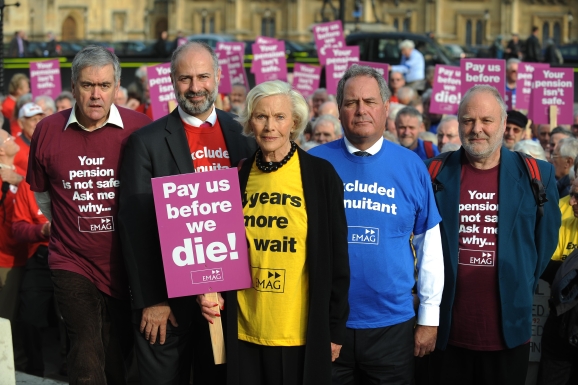
parliamentprotest24oct12

Protest by EMAG October 2012

One of the larger financial messes in the last 20 years has been the failure of Equitable Life. This was a company that essentially said they didn’t deal with “middlemen” (meaning IFAs) which in practice enabled them to also say that they did not pay commission to independent financial advisers, so despite being nothing more than a product manufacturer, managed to persuade many people that this was somehow better than an IFA being able to select from the entire market and select an appropriate arrangement. As a mutual society, they could also claim not to have shareholders (who require returns). Of course in practice, like any organisation, mutual or Plc, they have operating costs – their staff and advisers who sold, sorry “arranged” policies.  It was evident to some in the mid-1990’s that Equitable simply wasn’t a sustainable business. As you may imagine there were not many IFAs that couldn’t control the sniggers once Equitable was forced to close to new business in December 2000. As yet I haven’t met a single adviser that doesn’t believe that the demise of Equitable Life has had a significant impact on the degree of mistrust of financial institutions. This seems to have been compounded by the delays in appropriate compensation to policyholders. Despite failure, the company survives to service its estimated 500,000 policyholders with around £8bn of funds being managed (Equitable has been around for 253 years).

The Big Broken Promise

However the demise was nothing to do with product charges, commission (or lack of it). In practice it was triggered by failing to keep a simple but expensive promise of guaranteed annuity rates, on which it reneged and was subsequently brought to book, which then resulted in the collapse as the annuity rates were rather  more than “over generous” at the time. Anyway, long sad story short, the time to apply for compensation due to the “government maladministration which ocurred in the the regulation of Equitable Life” which was established  in 2010 is drawing to a close. Despite paying very large sums, there are still many people that haven’t claimed and should do so as a matter of priority. This is relevant to people that bought policies between 1992 and the end of 2000 when Equitable closed. Call the helpline on 0300 0200 150 and checkout the supporting website. Also dont forget the EMAG site as well.

Space travel has significant risks

Looking at old Equitable adverts now is a reminder that assurances about the future were somewhat misplaced. Saying something with confidence does not make it true. Even this 1998 advert with Buzz Aldrin suggests that retirement activities might include a space trip by 2028… well who knows, but certainly the belief that you can get something for nothing is definitely thinking from a different planet and those policyholders that have not yet had compensation, probably feel that their pension shouldn’t really be rocket science, but something much more down to earth.

Dominic Thomas

Pensions: Are you an Equitable Life policyholder?2023-12-01T12:40:12+00:00

Pensions: Taking Your Pension? Beware of Tax

Solomons-financial-advisor-wimbledon-bloggerTaking Your Pension? Beware of Tax

When the Chancellor announced the abolition of the requirement for most people to buy an annuity with their pension fund, it was somewhat unexpected. Arguably it was one of the most radical shake ups to pensions in decades. However as time progresses, the wisdom of allowing people to do whatever they want with their own money is experiencing some problems. If you are taking your pension, you need to beware of tax.

Tax

The main advantage of pensions is tax relief. At the moment (who knows if things will change in the Chancellors budget next month). Currently most investors will receive tax releif of 20% higher rate taxpayers get 40% – though the difference has to be claimed via self-assessment tax returns, not granted automatically.

Money in a pension has tax advantages

Whilst invested as a pension, the funds are free from income tax and capital gains tax – which means that they grow faster (free from tax). If you take money from a pension, (possible from age 55) 25% of the fund is tax free and the balance when taken as income (regular, ad hoc or all at once) is taxed at your highest rate of income tax. On death the new rules mean the pension fund can pass to the estate without inheritance tax.

Taking money doesn’t have to be taxing

howtomarryamillionaireposter

It would appear that due presumably to a belief that pensions are “bad” some people have been rushing to withdraw their pension in entirety, which of course results in a signficant income tax bill and the realisation that once its gone… well, it’s gone. The media initially joked about people buying a Lamborghini and the prospect of access to wealth attracting the wrong sort of attention.  For those that don’t spend the money all at once it means that they seek other ways to use the money to generate income to support a lifestyle…. which means investing it. See my earlier post about this.

Most alternatives are subject to tax

Investments are subject to income tax, inheritance tax and capital gains tax…. with a few exceptions such as ISAs – but with limits on the amount that can be invested each tax year. Other tax favourable investments tend to be much more “entrepreneurial” in flavour – EIS, SEIS, VCT for example, most of which carry significantly higher risk due to a small focus on shares in a single company or a very small number of companies.

So be careful – get advice, there is much to consider. Pensions aren’t “bad” in fact they can be really rather good if set up properly. The issue is really to ensure that your pension (which is just a term for income in retirement) suits your planned lifestyle….

Dominic Thomas

Pensions: Taking Your Pension? Beware of Tax2025-01-21T15:50:49+00:00

Pensions: New Freedoms

Solomons-financial-advisor-wimbledon-blogger

Pensions Freedom

Have you heard about pensions freedom? Are you approaching retirement and thinking that this is excellent news, you can have your entire pension? Well you are right, but as ever there is a catch. You are free to self-destruct, it is your right to do so (and I’m not being patronising).

On the one hand freedom is good right? but with it comes responsibility (why do I sound like a Spiderman scriptwriter). By responsibility I mean, once you spend it, whether thats taking it as a lump sum or buyng an annuity or leaving it as a Flexible Access Drawdown pension, once it has gone – that’s it. Nothing left… except any other pension income you may have such as the State pension.v_for_vendetta

So this is all about knowing what you have and what you need. Something that no British Government has ever managed to get right for themselves, yet here we are, with new freedoms. So you have to figure out how long you will live to work out how much you can afford to take out each year. Actually rather more than that, you have to predict future inflation rates, mortality rates, investment returns and tax rates…. to name a few “elements”. Of course you could get a financial planner like me to help by doing some cashflow modelling and explaining the options and reviewing progress regularly or you could do it yourself.

Today I learned about a term called the IKEA effect. This is when we place a disproportianately high value on something that has been partially made us. Go on look it up. This is precisely what happens to DIY investors… that portfolio I built, its not bad. Actually the truth is rather different. I mean no disprect to IKEA or DIY investors. This is about a price-point in the market – what you can afford. Arguably you will have to live with both (furniture and your DIY portfolio) but your portfolio has to last your lifetime. I’m all for consumer empowerment and the removal of elist jargon and ivory towers, but information is not the same as experience or indeed knowledge. I wonder if you remember the John West tinned fish TV adverts? its the fish that John West rejects that make them the best. In other words, selection, some might call it curation – is vital.

Building the right portfolio to last for life is a fairly daunting challenge, for a few this isn’t going to be much of a problem, but for the vast majority of people it will be. Most people do not pay attention to the holdings in their ISAs or pensions. Most are in the funds or more likely single fund, that the adviser put them in when they started their pension. Little attention has been paid to assessing the level of contributions needed, frankly its more like lucky dip… and who can blame them! the jargon is a huge barrier, statements are fairly unclear and the rules keep changing, little wonder people don’t spend much time looking after one of their largest assets. Yet suddenly at the point of retirement, they are expecting to become investment experts. Whilst the Government may say that people should be trusted with their own money, thats fine if it relates to the straight-forward stuff of running a budget and basic banking, but when it comes to understanding asset allocation, volatility, sequencing risk, safe withdrawal rates, reductions in yield… well frankly its taxing even for the experts. Your pension is not a shelving unit from IKEA, its more like fitting a pace-maker, one that has to keep you going.

My advice is to get advice – don’t get sucked into short-term thinking and getting some degree of satisfaction from raiding your pension to show your displeasure with the pension company.  Certainly there are better pensions, but you really need to get sensible advice to explore your options properly. You wouldn’t build a house without architectural plans (I hope)… the same is true when it comes to designing a portfolio for life.

← Back

Thank you for your response. ✨

Dominic

Pensions: New Freedoms2025-01-21T15:50:49+00:00
Go to Top