Pensions – more needless headaches the Lifetime Allowance

Pensions – more needless headaches

You may recall that Mr Osborne in his great wisdom has decided to reduced the current lifetime allowance even further, just to clarify – the Lifetime Allowance is the value of your pensions, either in payment or being built up. It currently stands at a figure of £1.25million but from 6th April 2016 will reduce to £1million.

It is very easy to calculate the value of your pensions, provided that they are purely investments pensions, such as personal pensions, SIPPs (self-invested personal pensions). You can also exclude the value of your State pension.

However, if you have an annuity in payment or old final salary pensions or perhaps simply a current final salary (or career average) pension (called a defined benefit pension scheme) such as the NHS or Teachers Pension, the sums are considerably more complex.

Long story short, once the value of your pensions has been calculated you may find that you have exceeded the lifetime allowance – which is reducing. So you will need to do something about this, which may well involve some uncomfortable decisions about future membership of pensions, even or perhaps especially, good ones, which is utterly daft.

Another bonkers pension policy

Yes, I did say bonkers. Despite what Mr Osborne may say about helping people to help themselves, he is actually restricting the amount that you can build in your own pension, actively discouraging saving, which does seem to be rather at odds with any historic Conservative policy in history, unless you count the lamentable decision by Norman Fowler to remove the rule that enabled employers to make membership of an occupational pension scheme a condition of employment, allowing the employee to contract out and not join the pension scheme. In fairness to Mr Osborne, with the benefit of hindsight, Mr Fowler probably takes the prize for arguably the most loopy pension decision for generations.

Mr Fowler was under the misguided impression that this brought about freedom for employees to decide if they really wanted to be in their employer’s pension. Mr Osborne can only be motivated by collecting more tax as there are 55% tax charges applied to amounts that exceed the lifetime allowance, unless you have the relevant protection, which is also not really guaranteed.

We are not talking about small sums of money here. So you need to gather your information, for two specific dates 5th April 2014 and 5th April 2016. This creates a headache for you, a massive task for me and in my opinion the lifetime allowance is one of the worst pension ideas in history – penalising both those that save and a successful investment strategy. This is a subject that I will return to frequently before 6th April 2016.

Dominic Thomas
Solomons IFA

You can read more articles about Pensions, Wealth Management, Retirement, Investments, Financial Planning and Estate Planning on my blog which gets updated every week. If you would like to talk to me about your personal wealth planning and how we can make you stay wealthier for longer then please get in touch by calling 08000 736 273 or email [email protected]
Pensions – more needless headaches the Lifetime Allowance2025-01-21T15:03:49+00:00

Til death do us part… more IHT issues

Til death do us part…

If you have ever taken marriage vows, you were probably not bothered by the inheritance tax advantage that couples enjoy. More accurately, it is of course the beneficiaries of the estate that will actually enjoy any inheritance tax benefit from marriage.

This is because everyone has a “nil rate band” and whilst much has been made of this “allowance” it is a personal one, so a couple naturally has a doubling advantage. Sometimes people set up their finances so that on the first death, an amount of assets is released from the estate to the beneficiaries, rather than them having to wait for their inheritance.

This does come with some rather obvious potential snags – such as where does the money come from to be released and how best to achieve this. Of course the surviving spouse may have his or her circumstances significantly altered since such an agreement was originally made, so may also be reluctant to release funds if they believe that they are needed.

Nil Rate Wedding Bands

It is quite a common practice for solicitors and Will writers to include the transfer of the “nil rate band” upon death, so you ought to think through if this is right for you. Just because it was good advice at the time does not mean that it will remain best advice.

Think about how the money might be released and to whom. If it does pass to your children, please remember that around 1 in 3 marriages end in divorce, so should that happen to one of your children, the inheritance might be “diluted” as a result of divorce. This is where Trusts can protect family wealth as the money isn’t paid to an individual but to a Trust. The Trustees, then will be directed by the terms of the Trust and depending on how it is set up have discretion about how to pay funds.

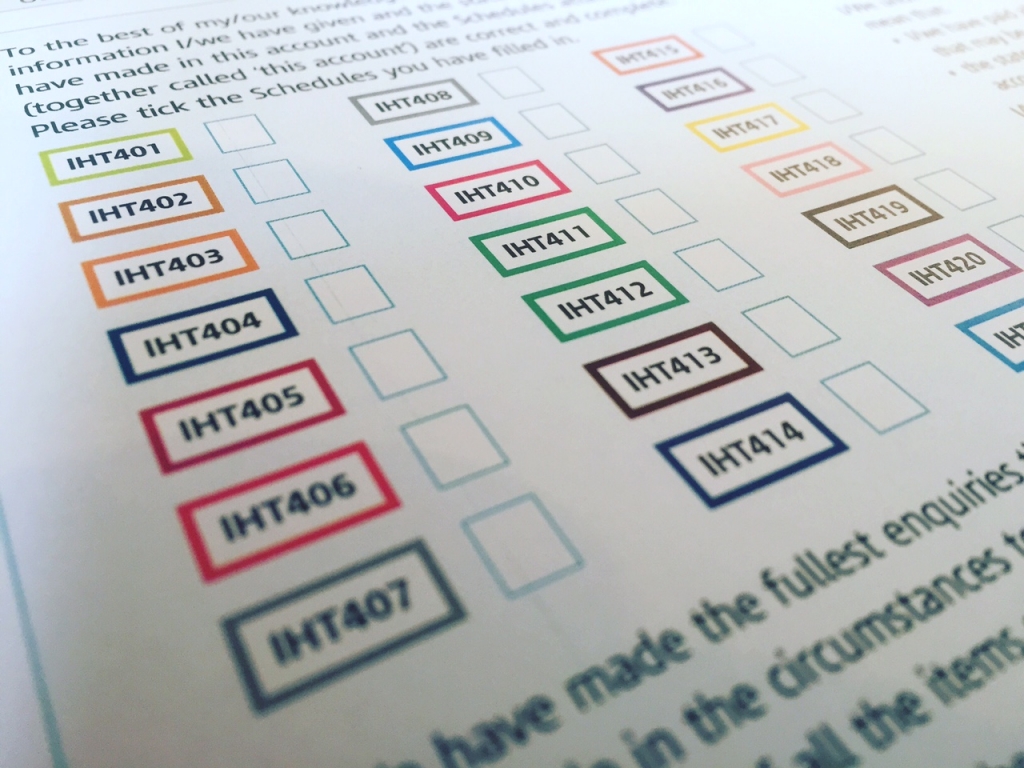
IHT402

IHT402 is a form that is used to transfer the nil rate band and any unused relief. It is worth downloading and having a look at (click on this text to open a pdf of it). You should review your Will regularly to ensure that it remains suitable. However perhaps more importantly, the bigger question you should reflect on before gifting or transferring any substantial sum is to ensure that you aren’t going to run out of funds yourself. Hence a financial plan will keep you up to date and on track and rather vitally, will explore this fundamental concern.

Dominic Thomas
Solomons IFA

You can read more articles about Pensions, Wealth Management, Retirement, Investments, Financial Planning and Estate Planning on my blog which gets updated every week. If you would like to talk to me about your personal wealth planning and how we can make you stay wealthier for longer then please get in touch by calling 08000 736 273 or email [email protected]
Til death do us part… more IHT issues2025-01-21T15:48:50+00:00

As safe as houses… more IHT

As safe as houses…. more IHT

You have probably heard that the nil rate band or inheritance tax allowance is increasing on a main residence, provided that it is inherited by your family and provided that it isn’t worth too much. As probably intended, many are under the impression that this new “£500,000” allowance has started… it hasn’t and many will not see the benefit.

For starters, the new “Main Residence Nil Rate Band” … MRNRB is being gradually introduced from April 2017 starting with an extra £100,000 rising each tax year by £25,000 until the full extra £175,000 becomes applied from April 2020. However if the net value of the estate is worth more than £2m, then this extra allowance is gradually lost. I think that’s called giving with one hand and taking with the other and of course is ignored by those who think that this is a tax break for the super rich…. reality is quite different.

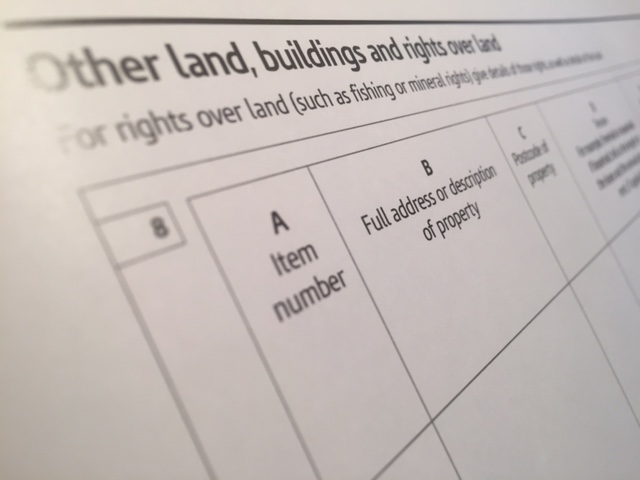
IH405

IHT405 is the form you use to tell HMRC about all of your properties upon death. Have a look at the form, the valuation of a property (or plural) can and will make a considerable difference to the value of an estate. If you have a second (or further) property, then please keep really good records about it. This includes dates and purchase prices, valuations, work done, insurance costs and so on. You need to be fastidious in your record keeping… not least because these records may also be pretty vital whilst you are alive.

Getting your house/s in order

If you have acquired property over the years, perhaps just for your own family use or perhaps as a commercial concern to generate rental income, this all needs accounting…(sorry for stating the obvious). The value of property obviously changes and there is some degree of flexibility in how this is valued for probate… on the basis that what someone will actually pay for a property is more fluid than a simple figure.

As an aside, landlords that are off-setting interest against rental income, thereby reducing profit and tax, are having the amount permitted altered (another feature of the last Budget). So beware! Also as an aside, those with second properties that have soared in value are loaded with capital gains and thus subject to capital gains tax. There are ways to manage this… which I shall outline at another time – but be advised that there are solutions that may appeal.

Dominic Thomas
Solomons IFA

You can read more articles about Pensions, Wealth Management, Retirement, Investments, Financial Planning and Estate Planning on my blog which gets updated every week. If you would like to talk to me about your personal wealth planning and how we can make you stay wealthier for longer then please get in touch by calling 08000 736 273 or email [email protected]

As safe as houses… more IHT2025-01-21T15:48:51+00:00

How does HMRC know about gifts?

Dominic Thomas
Oct 2015  •  3 min read

How does HMRC know about gifts?

You may have been very generous with your wealth and given lots of money to your beneficiaries or charity prior to your death, but how on earth does HMRC or the Executors of your estate know to correctly offset these gifts (if appropriate) against your estate?

Probably the simple answer is that if it isn’t recorded, it would seem difficult to prove a gift was made. There are a variety of issues – the annual giving allowance (£3,000) does not need to be reported, but frankly it would seem wise to record the fact that the amount is actually gifted… all helping to demonstrate the accuracy of the story behind the information.

Here’s the link to take a look at form IHT403 – which is essentially a list of gifts and transfers that you have made within the last 7 years. In short, you really need to know the dates of the gift (within a tax year), the beneficiary, a description and the value of the gift.

Inheritance tax can get rather complicated with terms like “Pre Owned Assets” “Gifts with Reservation” “Lifetime Transfers” and more. So it’s rather important that the source of gifts is documented. To my mind it makes sense that you provide a brief written, dated document to the recipient of your gift and ideally your financial planner and possibly Accountant if you have one. Certainly retain a copy within your records – but remember passwords are all well and good when you are alive, but when you aren’t here to tell anyone what they are…

Gifts from Income

I don’t wish to drown you with detail, but it is possible to make gifts from income, provided that this is not to your detriment or deliberately reduce the value of your estate for IHT planning. If that sounds like an oxymoron… well, that’s the state of the tax system.

How do you demonstrate legitimate regular gifts from income? without a summary of your tax year income and expenditure I’d suggest that it will be fairly “difficult”. A business doesn’t have this problem – there are obvious accounts, or at least there should be, but as individuals perhaps the rule of thumb ought to be – think of yourself as a business – which means keep details carefully.

Taking a look at the last page of the form IHT403, you will observe that HMRC will request details of income and expenditure for the last 7 years. Could you provide this for yourself today? if not, how on earth will your Executors?…. hence one of the reasons we ask clients to update us with income and expenditure information every tax year… enabling us to help them build up a record – but also to do all the other sensible financial planning stuff – like helping reduce income taxes, checking that our assumptions about future lifestyle costs are broadly right and where it’s all going… and ideally to help them catch rather more of it than they otherwise would. So yes, those forms are rather important both whilst you are alive or deceased.

In practice, it is possible that HMRC might even wish to go even further back in time, perhaps as much as 14 tax years prior to death…. so my advice is to get your “ducks in a row” – which has several important positive by-products.

  1. Better budgeting
  2. Better financial planning
  3. Lower income taxes
  4. Reduced costs
  5. Longer-lasting wealth…

In the digital age, its relatively easy for HMRC to search your bank account transactions and with both open banking, legislation and AI functionality they can. You heard it here – make an HMRC form your best financial planning tool!

How does HMRC know about gifts?2026-03-16T16:06:31+00:00

Marriage is not an IHT exemption

Marriage is not an IHT exemption

Save yourself some time, if you aren’t married or haven’t been married or don’t ever plan to marry you really don’t need to read this item, but if you have, are or do… well its one for you to take a look at.

Let me begin by correcting myself – marital assets are generally exempt from IHT (inheritance tax). However what is not exempt is the need to report these to HMRC upon the death of one or both of the parties. This is all part of the continuing series about IHT and how it inter-relates with your financial planning today – and how the information that is requested once you have died isn’t easy to trace and leaves your Executors – perhaps your nearest and dearest, with a headache.

IHT404

This is a form that HMRC use for you to report jointly owned assets (click to see). Now please be careful, this needs some thought and you may have already made some changes to jointly owned assets – perhaps “giving” them to your spouse to help reduce your combined taxes, or perhaps you have been persuaded to adjust the ownership details of your home by a solicitor intending to help you to reduce inheritance tax.

I meet lots of different people as you may imagine and many couples take different views about money, in essence these boil down to – everything is private and separate or everything is jointly owned and some couples delegate financial management to just one of them, with the other playing a very minor role (which usually troubles both in the event that “something were to happen”).

Clarity

So if you have been married or are married, please take a look at the HMRC form IHT404. Download it and then complete it fully, keep a copy, ensure your spouse has a copy and also send your financial planner a copy too.

This is a form for the Inland Revenue (HMRC) so its not to be trifled with, the dates of purchase, values and share of ownership are not “minor details” this is your account of what you have together. I’m not bothered about how old you are, unless you can tell me exactly when you will die, this is a form all married people need to get sorted out in advance and keep under review. So, if that’s you… its your task for today… another way to show your spouse that you care!

Dominic Thomas
Solomons IFA

You can read more articles about Pensions, Wealth Management, Retirement, Investments, Financial Planning and Estate Planning on my blog which gets updated every week. If you would like to talk to me about your personal wealth planning and how we can make you stay wealthier for longer then please get in touch by calling 08000 736 273 or email [email protected]

Marriage is not an IHT exemption2025-01-21T15:48:51+00:00

Where are you originally from?

Where are you from originally?

Today, this may sound like a loaded question, so let me explain. The UK has a plethora of international tax agreements. Financial planning is always set in a context – it can be done in almost any country and is a growing profession in northern Europe, India and China. A financial planner needs to understand where you are deemed resident and where you are deemed domiciled as this has considerable impact on any planning in the present, but also in the event of your death.

Global Death Duties

The world seems smaller because of our ability to communicate and travel much more easily, within a few hours, you could be… well, the other side of the world. Britain’s multi-cultural history might be reasonably easy to plot, but how about your own? If you aren’t here to correctly explain the where, when and why… who has the accurate details?

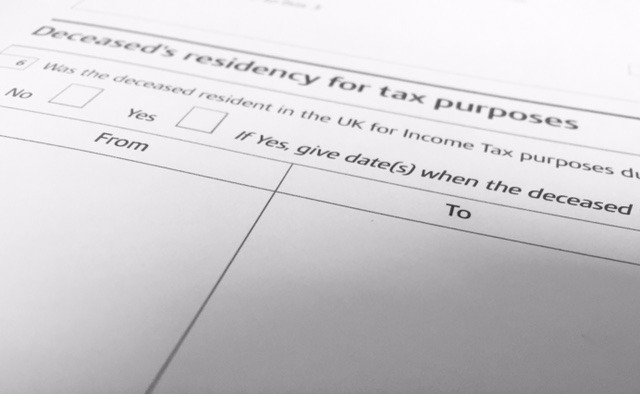
IHT401

The form IHT401 asks for a full history (take a look by clicking the link). The information requested covers some of what you may think is obvious (where you are from, your nationality etc) but also details about your education and employment. If you were not born in Britain, even if you have lived here since before you could walk, this is a form that you should prepare for your Executors. It has implications for where you are taxed and how much tax your estate will pay in the event of your death

Do yourself and your estate a favour..

The information requested by HMRC is probably easy for you to put together reasonably quickly, so can I urge you to do so. It will always be much harder for someone else to collate and verify your history, so make it easy for them to do so – by getting it done yourself.

This is more than a casual glance at LinkedIn with information of your career to date (assuming that your online CV is accurate). Naturally any Executor will need to check the information, so make this easy for them to find – provide it in a safe place or even in advance to each of them.

To my mind it makes sense for a financial planner to hold this same information about you as well – because investments that you make need to be set in the context of potential global taxes and of course ensure that the advice is suitable, appropriate and rather obviously – legal!

So, if you weren’t born in the UK – please take a moment to download the IHT401 form and fill it in, saving it to your records and if you are a client and haven’t done so already, send me a copy. Don’t put it off any longer.

Dominic Thomas
Solomons IFA

You can read more articles about Pensions, Wealth Management, Retirement, Investments, Financial Planning and Estate Planning on my blog which gets updated every week. If you would like to talk to me about your personal wealth planning and how we can make you stay wealthier for longer then please get in touch by calling 08000 736 273 or email [email protected]
Where are you originally from?2025-01-21T15:48:51+00:00

What if you had died yesterday?

What if you had died yesterday?

There’s no escaping this highly sensitive topic – death. It comes to us all eventually. However I’d like to take a different approach to this topic in relation to your financial planning, it will be a short series that I hope will be of value to you and yours.

Can I first of all challenge you to simply have a look through the HMRC (Inland Revenue) form called IHT400. It is the starting point for those charged with administering your estate. Yes I am serious. However far off death hopefully is, what if you’d been hit by the proverbial bus yesterday? Who would pick up this task and how do you expect them to complete it? Here is the link (open a new window – so that you don’t leave this page).

HMRC IHT400

OK, assuming that your estate does need to be reported (i.e. worth more than £325,000) and you moved past the double-speak, does anything strike you?

Stating the obvious…

I’m not going to approach this line by line, but to highlight some basic points. Whoever has to complete this form has a huge task ahead of them… perhaps you have done this for someone else already?… I have several times. The guidance notes document that accompanies IHT400 runs to nearly 100 pages…. the NOTES!

So let’s face a few key facts

  • You have 12 months to complete the form
  • After 6 months interest is charged
  • You need a lot of personal information, matters of record – marriages, births, deaths
  • You probably need a family tree
  • You need tax information, NI number, tax reference etc
  • You need a valid Will
  • You need a list of gifts and disposals
  • All banking information, investments, pensions and life assurance
  • All assets on a worldwide basis
  • All liabilities and debt
  • Details about Trusts and exemptions
  • Details of your income and expenses for the last 7 years
  • There are another subsequent 21 forms IHT401-IHT430

If experience has taught me anything, it’s that getting most people to put this sort of information together isn’t easy – because it’s an arduous, daunting task. Yet this is what we leave others to do for us in a time of stress. Yes a solicitor can do this for you, but actually most, if not all of the information is within your possession, it’s simply that it’s not easy to extract or perhaps understand.

Who else has this information? well…. we do… if you have kept us up to date…. which is one of the many reasons for requesting it. So… imagine that yesterday was your last. You are not here to tell your loved ones and/or Executors where everything is neatly filed (!)…. so where to begin? may I suggest we address this now? You could even start by printing off IHT400 and putting in some of the information you already know…. you can see where I’m going with this can’t you.

Dominic Thomas
Solomons IFA

You can read more articles about Pensions, Wealth Management, Retirement, Investments, Financial Planning and Estate Planning on my blog which gets updated every week. If you would like to talk to me about your personal wealth planning and how we can make you stay wealthier for longer then please get in touch by calling 08000 736 273 or email [email protected]

What if you had died yesterday?2025-01-21T15:48:51+00:00

70 is the new 60…. well for the State Pension

70 is the new 60….for the State Pension

One wonders what we are doing to future generations. Today I read an article suggesting that the State pension age will inevitably become 70, all due to the fact that more people are living longer. The State pension age used to be 60 for women and 65 for men, this has undergone a period of “equalisation” and will be 65 for both men and women from 2018. As this ideological “hurdle” was achieved some time ago, successive Governments have simply made plans to extend the age at which a State pension is provided. The State pension age will be 66 by 2020 and 67 from 2028.

The reason is really two-fold, cost and longevity. The State pays pensions in various forms, the most obvious being the State pension, which now costs about £110bn a year. Disability pensions costs around £42.2bn and survivors pensions about £1.1bn, amounting to roughly £153.3bn which is about 20% of all Government spending and by far the largest component of Government spending. Details here (click).

Looking ahead

In essence anyone born since 1960 can expect to have to work longer. Given the increasing life expectancy and inherent problems with ageing, care costs are expected to soar, resulting in further dilemmas for Government about how to meet costs…. from a population that is having fewer children.

Episode IV – A New Hope

Consider those that graduated this summer and are just starting out on their careers, born in the early 1990’s they were only just teenagers when the credit crunch occurred the property boom had happened. If you understand my heading (refering to the very first Star Wars movie in 1977) this generation can be forgiven for thinking that the Star Wars films were made sequentially when episode I was actually released in 1999 – they were 7). Student loans are now part of their deductions each month, along with compulsory pensions. I don’t like to be a pessimist, but the generation just starting out have inherited the debts of previous Governments (currently interest payments are around £40bn a year), have little prospect of “getting on the property ladder” and an ageing population that received their State pension many years younger than they will. Any academic results they achieve are met with accusations of “easy exams” and employers seem almost eager to say “we cannot find good enough people”. Not even to mention the problems with the environment. I appreciate that you already know this.

The Breakfast Club

I am reminded of the 1985 film, “The Breakfast Club” written and directed by John Hughes, which recently celebrated its 30th anniversary. This was a group of teenagers held back in detention one Saturday morning and who eventually reveal the stories that brought them there. Vernon, the supervising teacher, representative of a now uncaring, disillusioned, bored older generation loathes the fact that he is also forced to spend his Saturday supervising misfits. He is caught by Carl, the caretaker, fishing through the personnel files hoping to find scandal that he can use against his peers. This results in a conversation between the two, in which he complains about the youth of today and ends with this dialogue.

VERNON: You think about this…when you get old, these kids; when I get old, they’re gonna be runnin’ the country.

CARL: Yeah?

VERNON: Now this is the thought that wakes me up in the middle of the night…That when I get older, these kids are gonna take care of me…

CARL: I wouldn’t count on it!

No… neither would I…. perhaps we all need to think rather more carefully about how we are planing not just our own future, but that of future generations… as Simple Minds remind in the closing title music – Don’t You Forget About Me. Perhaps there could be some redemption… even Darth Vader managed to salvage something with his own offspring.

Dominic Thomas
Solomons IFA

You can read more articles about Pensions, Wealth Management, Retirement, Investments, Financial Planning and Estate Planning on my blog which gets updated every week. If you would like to talk to me about your personal wealth planning and how we can make you stay wealthier for longer then please get in touch by calling 08000 736 273 or email [email protected]

70 is the new 60…. well for the State Pension2025-01-21T15:52:00+00:00

Pension Exit Charges

Pension Exit Charges

I wonder if I can be honest with you about pension exit charges? I freely admit that I probably spend too much time concerning myself with what others within my industry think. I spend a lot of time improving my knowledge and this involves reading both technical papers and opinion. Yet I find myself increasingly perplexed by the comments on industry media outlets.

THIS IS A LONG ITEM, BUT PLEASE STICK WITH ME…

Like it or not, the financial services industry regularly gets berated for being nothing short of self-serving. Often different or indeed competing elements of the spectrum that make up the financial services get lumped together, frankly this is our collective fault for not clearly defining or explaining the differences, invariably made harder by really rather poor regulatory clarity.

However I was utterly exasperated with my peers on yet another comment section within the “trade press”. This concerned the issue of exit penalties on pensions. At the time Mr Cameron, the Prime Minister was expected to outline his frustration with pension companies that apply high exit fees… for the sake of simplicity, let’s call them what they really are – transfer penalties.

Old World not New Model Advisers

The comments appeared in a publication that I respect by Citywire – New Model Adviser, the article written by a very thorough journalist, Will Robbins. The publication aims to high-light good or best practice and aims to help improve the advice sector and thus help achieve better results for the investing public. So one would hope that the readers and their comments are towards the front forward-thinking end of the adviser population.

The King is dead, long live the King

On the topic of exit penalties it seemed to me that commentators reverted to their historic stances as salesmen, not advisers, preferring to defend high penalties rather than lead a revolution to have them scrapped or at least capped.

Investors are being ripped off

Yes it is true that pensions set up were contracts and that contract law is therefore under the microscope…. but there are times to simply admit that enough is enough.  I have seen some horrendous penalties (the difference between the actual value and the transfer value of a pension)… some taking well above 30% of the fund. That is simply not good enough. OK there was a contract, but neither “adviser” nor investor could have anticipated these penalties which have become increasingly pertinent as investors and advisers seek better, more efficient and cost-effective solutions. Something that I regularly do to great effect for our clients.

Analogies have flaws but…

However suggestions that imposing a cap were largely greeted with derision. I was under the impression that it is the advisers job to represent the client, not the pension company and if engaged by them, to seek the most suitable solutions. I would like to think that it is in the collective interest to allow someone to move their money elsewhere with minimal fuss and cost so that it can grow better (hopefully) – and yes it cannot be guaranteed…. at least it cannot be guaranteed in a way that your life is not guaranteed by the protection that the airbags in your 2015 car should deploy if you have an accident, as opposed to your 1986 car that doesn’t have any of the current safety features. Yes you may be maimed or even die in the accident, but which do you think is likely to provide a better journey?

Aren’t we meant to put you, the client first?

In an industry steeped in scandal and mistrust this ought to be an opportunity for pension companies and advisers to put clients interests first. I find this even more frustrating as in reality it is all to do with commission and the lie that advice is free. Old style policies are those that typically paid high levels of commission, which the pension company advanced to the adviser as payment for arranging the pension with them. Of course it didn’t help that some pension companies offered more commission for using them as opposed to others, thus bringing into question the independence of the advice and adviser. If you went to a Tied Agent or Bank, you didn’t even get any option to compare costs…. which was the job of the IFA at the time.

Thinking that is so last century…

This has been going on for years, yet alternative approaches have also been available for those willing to face some truths. In 1999, 16 years ago I formed Solomons, removing commission, charging 1% on any investment or pension product – no matter who… a level playing field. 16 years ago! The regulator eventually caught up and banned commission on investments from 2013 called RDR so since then all advisers have had to charge fees properly.

Vive la revolution

Why does this vex me so? well as someone still in their 40’s I expect and plan to remain advising clients for many years to come, so I’d like to see things improve. I would like to see the standard of advice improve and the number of scandals and complaints decrease… not least because invariably the way compensation works is that those left working within the sector pay the compensation levy, even if they had nothing to do with it. This summer I had yet another regulatory invoice for this levy, an increase of 64% on last year…there comes a point when I and many (thankfully) like me, simply cannot absorb all these costs without jeopardising our own sustainability.

If you are fed up with your pension or not even sure what its worth, please check out my free guide, which  will help you regain control of your pension planning. There ought to be a box below to download this, if not just email me.

Dominic Thomas
Solomons IFA

You can read more articles about Pensions, Wealth Management, Retirement, Investments, Financial Planning and Estate Planning on my blog which gets updated every week. If you would like to talk to me about your personal wealth planning and how we can make you stay wealthier for longer then please get in touch by calling 08000 736 273 or email [email protected]

Pension Exit Charges2023-12-01T12:20:04+00:00

Ten million don’t check pensions

Ten million don’t check pensions

Wow! according to research conducted by AVIVA (who used to be Norwich Union) about ten million people are not checking their pensions. That is staggering. For many people their pension will be their second largest asset, their home being the largest.

ICM research surveyed 1500 people online, who were 45+ but under retirement age. A staggering 63% did not bother to check their pensions. AVIVA have extrapolated data from their research and widely known information about pensions published by the Office of National Statistics (ONS). Their data suggests that there are about 8.1m active occupational pension scheme members and about 8.2m with active private pensions. Active doesn’t necessarily mean “paying into” – after all these are pensions that alter in value each year (or day) and ultimately have a maturity date. Breaking down the numbers (a precarious exercise) results in AVIVA concluding that about ten million people do not check the value of their pensions.

So what?

Even if the numbers are vaguely correct, there are probably a variety of reasons why people do not check their pensions. Frankly it could be as simple as they lost them or didn’t know they even had them (from former employers). It might be the constant name changing of pension companies due to all the mergers and acquistions that have occurred over the last 20 years. It may be that they realise that the pots are so small that to check them seems rather trivial. Equally it may be that because they are small, few wish to be reminded of the reality of the pension provision.

Not always the ostrich

It isn’t as simple as dismissing ten million people as little more than the proverbial ostrich. The reasons can be rather more complex. In any event, whilst the ostrich is known for its head-in-the-sand behaviour, it does have a rather large nest-egg and of course, whilst flightless, is a very fast and powerful runner, even being raced…

One problem is the simple number of pensions to keep track of . The research found to be the main reason why people consolidated pensions (of those that did). Consolidating pensions can make a lot of sense, but it needs to be done very carefully – some older style pensions have various guarantees which may be worth keeping. Some may have very high penalties for transferring them to a different pension.

Making the best of things

Whatever the reason, being prepared for retirement and knowing what you are aiming for is important to us all…. ask any pensioner! As a financial planner, I work with what you have built up and then we figure out together what you need and how to best get there. May I urge you, if you are not a client to begin by downloading my free guide to regaining control of your pension. If you are a client, please share this information. Drifing into retirement will result in serious disappointment.


Dominic Thomas
Solomons IFA

You can read more articles about Pensions, Wealth Management, Retirement, Investments, Financial Planning and Estate Planning on my blog which gets updated every week. If you would like to talk to me about your personal wealth planning and how we can make you stay wealthier for longer then please get in touch by calling 08000 736 273 or email [email protected]

Ten million don’t check pensions2025-01-21T15:04:13+00:00
Go to Top