

Assumption

Assumption

You will have probably heard the saying “assume – makes an ass of u and me”. Whilst this holds some truth, it naturally requires context. As financial planners, we make assumptions about the future all the time, but equally we review these on a regular basis.

Watergate Bay

Like most people, I have picked up the occasional parking fine in the course of my driving lifetime, most, on reflection, were fair. One more recent experience, where I paid and displayed, resulted in a fine as my ticket “wasn’t seen”. I didn’t keep the original ticket, (does anyone?) so I had no evidence to affirm my claim. Reluctantly I paid the fine, which left me with a fairly bitter feeling towards the car park at Watergate Bay in Cornwall and its fine dining (yes, I have an irrational streak).

Court Orders Woman to pay £24,500 in parking fines

The headline above grabbed my attention. You can read the full story here about how Carly Mackie managed to accumulate fines that she could have avoided fairly easily – if only she had paid a small monthly fee. This would have permitted her to park in exactly the same spot, but ensuring that she could do with peace of mind, legitimately.

Price and Value

This reminded me of the mess that people can get in because they don’t see the value of a maintenance agreement. OK, it doesn’t necessarily hold true all the time, (electric goods “service agreement”) but it made me think about our services to clients. We provide an ongoing service to look after your financial “stuff”. We keep you posted about changes to rules and your arrangements. The purpose in doing so is to help prevent a larger expense later, because something was missed or not known. The problem with any such service is that most people see the price not the value. They assume that this aspect of life is all very straight-forward and any such service is an unnecessary cost. In fairness, it doesn’t help that the point of the service agreement is to do precisely that – to avoid unnecessary cost and making things appear to be simple.

Are you still paying attention?

I don’t wish to overstate, but a phrase that comes to mind is “those that pay, pay attention”. In other words, if you don’t really pay (enough) for something you tend not to value it. If you don’t value it, you probably ignore it….which can lead to problems.

Whilst some aspects of financial planning are “blindingly obvious” – such as spending less than you earn. Some are not (think new tax on annual pension allowance excess). Also, if nobody is around to challenge you on some “obvious” stuff, who will keep you on track? There are some “basic” traps that most people fall into…. Ready for it? (this is basic, but uncomfortable)…. If you spend more on your car each month than you put towards your pension, you are set for a miserable retirement. Most cars are monthly payment plans. It’s true of your holiday spending and so on… your pension is your future income stream, not an optional extra.

How is that coffee smelling?

All of which reminds me of one of the short films (Bombita) within “Wild Tales” (one of my favourite) about a demolition manager who takes the law into his own hands after dealing with the city parking bureaucrats.

Dominic Thomas
Solomons IFA

You can read more articles about Pensions, Wealth Management, Retirement, Investments, Financial Planning and Estate Planning on my blog which gets updated every week. If you would like to talk to me about your personal wealth planning and how we can make you stay wealthier for longer then please get in touch by calling 08000 736 273 or email [email protected]
Assumption2025-01-27T16:08:02+00:00

2017 Budget

2017 Budget

The 2017 Budget from the Chancellor Philip Hammond will take place this Wednesday. In practice, few are expecting him to deliver anything significant. He has already publicly stated that there will be no “spending sprees” which is a rather unhelpful relative term, but would imply that there is unlikely to be a considerable amount of money for sectors that probably need it.

There are lots of things that I wish he would change, but I am sounding rather like a broken or at least well-worn record, that the rules around pensions are more than a little bit daft, but utterly insane – but hey, this is Government policy not common sense.

Pension Insanity

As a brief reminder of the pensions insanity. You are restricted to how much you can pay into a pension each tax year (called the annual allowance). This is currently £40,000 or 100% of your actual earned income, whichever is the lower figure.

The UK has a system where you are penalised if your pension pot exceeds a certain value (now £1million) this is called the Lifetime Allowance. You are also penalised if you earn more than £150,000 and begin to see the reduction of your annual allowance from £40,000 to £10,000. This is called pension taper relief, catchy sounding term isn’t it! Tax penalties are ready and waiting should you mess up, many will – through nothing deliberate, other than earning and income and being a member of a pension scheme, something that one would normally think were good things to do. Just for good measure your pension is valued at the point you “retire” (though in their infinite wisdom this is now called a crystallisation event) and then again at 75 with assessment against the Lifetime Allowance, which may well result in a significant tax payment – or rather it will if you exceed the Lifetime Allowance of the day.

Doctors, Teachers and Measure for Measure

Those that are members of final salary pensions like the NHS, Civil Service or Teachers Pension Schemes – basically anyone that works for a State service, which is likely to benefit us all. You possibly know someone who works within in the NHS or a Teacher, who has had increasingly pressurised workloads, with extended hours and utterly pointless assessments, form filling (for which read, Government department bureaucrats need to measure something, so let’s try this) all simply to justify their non-inflated salaries, which on occasion they have to reapply for…  all because a Government can. Anyway, as these people are clearly coping too well and not leaving in the numbers that Government hoped, they are asked to calculate their annual allowance rather differently and constantly guess if they will overpay for the year, which results in a tax fine that on money that they might not receive when then retire. I am not kidding – this is not fake news.

Hollow Words, Smoke and Mirrors

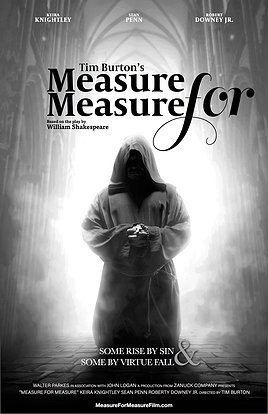
When Chancellors and Prime Ministers or indeed any politician talks about serving people, one is  always left suspicious as the words are invariably bereft of any action plan or follow through. There are few like the Duke, in Measure for Measure, who survey the detail of the way their citizens are governed. We all plod on regardless because the problems are apparently “just too big to fix” and “we must all have a grown-up debate”… hmm..

If Government was a business it would be in an even worse shape, for failing its customers so frequently and so outrageously. Yet whichever one is elected, they make the same empty promises and simply meddle along, tinkering at the edges hoping that everyone will quickly forget, which they will…

Dominic Thomas
Solomons IFA

You can read more articles about Pensions, Wealth Management, Retirement, Investments, Financial Planning and Estate Planning on my blog which gets updated every week. If you would like to talk to me about your personal wealth planning and how we can make you stay wealthier for longer then please get in touch by calling 08000 736 273 or email [email protected]

2017 Budget2023-12-01T12:18:40+00:00

Ban Cold Calling Pension Scammers

Ban Cold Calling Pension Scammers

Since my post on 25 October about a petition by one of my peers to attempt to encourage the Government to address the problem of people being swindled out of their pensions, there is now a new dedicated website. Can I ask that you get involved by signing the petition and sharing it with your contacts.

Why? Well, if you are a client of ours you have protection and have our support and regulated advice. The new pension freedoms mean that many people in their late 50’s or older are being targetted to move their pensions into some very poor (rip off) arrangements. OK, so this may not be you, but pension funds can now last a lifetime, rather than until retirement, which was normally when people bought an annuity. Now most are holding the investments for life, meaning that ongoing advice will be required (to get the portfolio delivering what is needed each year)… but that also means that long after I retire you will likely still need advice for your pension portfolio. So imagine yourself in 15, 20, 25 or 30 years time, being bombarded by calls or emails promising you all sorts of wonderful things…. are you really going to resist?

So please sign the petition, we need to push through to 10,000 signatures. OK cold calling may not be banned, but the issue being raised may result in new policy or regulation that protects people from this.

BAN COLD CALLING WEBSITE

Dominic Thomas
Solomons IFA

You can read more articles about Pensions, Wealth Management, Retirement, Investments, Financial Planning and Estate Planning on my blog which gets updated every week. If you would like to talk to me about your personal wealth planning and how we can make you stay wealthier for longer then please get in touch by calling 08000 736 273 or email [email protected]

Ban Cold Calling Pension Scammers2023-12-01T12:19:01+00:00

Help Stop the Pension Scam

Help Stop the Pension Scam

Can I ask you to help me to stop the pension scam? The new pension freedoms that the previous Chancellor introduced are largely welcome; however as ever, freedom brings responsibility. The main challenge of the new freedoms is that the money in your pension has to last… or if not, you will certainly need other resources. Making your money last a little longer than you is essentially what financial planning is all about.

Daylight Robbery

The days of holding a bank up at gun point are largely gone, cyber crime or financial fraud are the obvious choices for any career thief. Your pension fund will hopefully be one of your largest financial assets and thus something of a honeypot.

movie poster the Sting starring Newman and Redford

Sounds familiar?

We live in a time of very low interest rates and low investment returns, so it is often tempting to look for alternatives to reality, which in practice is anything that offers high guaranteed returns or perhaps even high returns. Invariably these are non-mainstream investments but invariably sound familiar – car parks, investment property, storage rental, film funding, hotels and casinos. Nothing you haven’t heard of… but that’s part of the deception.

If you aren’t really that familiar with investing, it can all seem rather like the same thing – its just risky stuff right? Wrong. So anyone can be tempted into giving other forms of investing a go – particularly if you believe that pensions are “rubbish” or that bankers are all evil. The perfect storm for thieves to play upon understandable concerns and a lack of knowledge.

Arming themselves with a telephone or email, they lure investors into moving their pension (generally) in exchange for high returns. They use classic cold calling pressure techniques or simply wear you down with emails and “examples” of how it works.

Many have lost their entire pensions through this.

Hence another adviser (Darren Cooke) has started a petition to ban cold calling and I’m supporting it. We are not naïve enough to believe that a ban stops thieves, but a petition can certainly inform debate at Government policy making level and hopefully result in some changes which make it far harder for people to be ripped off, it seems that relying on the regulator to do this is delusional. So can I ask you to join me in supporting the campaign.

Click here to sign the petition.

Dominic Thomas
Solomons IFA

You can read more articles about Pensions, Wealth Management, Retirement, Investments, Financial Planning and Estate Planning on my blog which gets updated every week. If you would like to talk to me about your personal wealth planning and how we can make you stay wealthier for longer then please get in touch by calling 08000 736 273 or email [email protected]
Help Stop the Pension Scam2023-12-01T12:19:04+00:00

The Future of Pensions

The Future of Pensions

I am currently at my annual conference in Wales – the Chartered Institute for Securities and Investments (CISI) with whom the IFP – Institute of Financial Planning merged last year. Yesterday we covered a number of valuable topics, but the talk that resonated most with me was from former Pensions Minister MP Steve Webb, who talked about the future of pensions – amongst other things.

I had to admit that my BS radar is usually on hyperdrive when listening to any politician these days, which is probably a sad reflection on me, however I was very impressed by what he had to say, albeit he did not paint a terribly pleasant picture of the future. Of course, only time will tell if his predictions come about and in fairness, he was quick to remind us of the problems with predicting the future, particularly in a climate where since the last general election all of the major political parties have changed their leaders and the country has voted to leave the EU.

Book cover of Yes Minister - A Very Courageous Decision

Play it again Sam…(or Phil)

Webb was clear that changing pensions is pretty difficult and appears to be a low priority to either the Government of Civil Service. He gave an insight into the slow turning wheels of Whitehall, sounding much like an episode from Yes Minister. Given all the change that we have had (State Pension, Auto Enrolment, Pension Freedoms, Annual Allowance Taper, Lifetime Allowance…) he suspects and urges a period of quiet inaction from the Chancellor, Philip Hammond. This is particularly pertinent to those concerned about the loss or reductions of tax relief on pension contributions or changes to the tax free cash entitlement. He made the case that the public and financial planners could not plan ahead in confidence if the rules are changed every year, yet warned at Chancellors are easily tempted by ideas to collect more tax, however short-sighted.

Whilst on the subject of tax he made it clear that the Treasury are naturally inclined to taxing now rather than in the years ahead, so there is a very real pressure to take the view that tax relief reductions in the short-term outweigh the advantages of taxed incomes in the future, so by inference, a system of loss of tax relief and no taxation of pension income is a genuine prospect. He argued that this was evidenced by the Treasury’s love for ISAs and obvious contempt for pensions with the Lifetime Allowance reductions (and associated tax penalties) and the new tapered annual allowance. Personally he would scrap the LTA but retain a cap on annual pension contributions (which I certainly agree with). He did point out that of course putting trust in future Chancellors to honour a commitment not to tax pension income in the future required a high degree of faith, which  deliberately provoked some mirth from the audience.

Turning to Brexit, he simply outlined his view that interest rates are likely to be very low for a long time, which would place pressure on people to look for better returns than the puny sums they achieve from their savings. He argued that this would likely lead to yet more scams as people fall for yet more illusory promises of high returns. He also warned of the impact on final salary pension schemes which, because of the assets that they hold and the way calculations are performed, would have larger deficits in their pensions (due to low interest rates) probably leading to some, or perhaps a majority of companies trimming their dividend payments.. which in turn makes the task of achieving investment income harder still.

He seemed to have little regard for our regulator of whom he said was “not fit for purpose” and thought the new LISA was perhaps the most badly constructed investment idea for years. If you follow me on social media, you will know my thoughts on this already.

So, whilst Steve Webb found a receptive audience, I was left with the sinking feeling that there was little hope for common sense to return to the Treasury… but who knows… we all get to find out in a few weeks time for the Autumn Statement.

Dominic Thomas
Solomons IFA

You can read more articles about Pensions, Wealth Management, Retirement, Investments, Financial Planning and Estate Planning on my blog which gets updated every week. If you would like to talk to me about your personal wealth planning and how we can make you stay wealthier for longer then please get in touch by calling 08000 736 273 or email [email protected]
The Future of Pensions2025-01-21T15:03:17+00:00

Understanding Your Pension

Understanding your pension

I came across an example of an experience that most financial planners have from time to time. An adviser took on a new client. The clients believed that they had about, (let’s call it X) in their pensions, it surprised them and their adviser to learn that in fact they were worth considerably more (X + about £300,000).

The way the story was framed within the financial pages suggested that the adviser had created a huge return, in fact this was nothing to do with the adviser and rather missing the point. The point being that many people simply do not know what their pensions are worth. I do not believe that this is because of a lack of intelligence, but rather the very confusing statements issued by most pension companies.

Have a look at your pension statement, does it actually tell you what your pension (or investment) is actually worth? There’s the rub, sometimes admitting not understanding something because we are told “it’s rather obvious” is a very difficult admission. Yet I cannot emphasise enough that there are no stupid questions when it comes to your money. Any adviser that dismisses your question as “stupid” should be dismissed. His or her job is to sufficiently explain what you have, what it does, what it’s worth and why you’ve got it. If you don’t know, change your adviser.

There is no stupid question

Sadly it would appear that even senior economists that advise the Bank of England fail to understand their pensions – dare I suggest that such a statement may also be true of those that determine pension laws and tax rates.

In essence the concept of pensions is basic. Here it is. You save over time to enable you to live off the proceeds when you retire.  There are really two types of pension. One that is purely investment, so the size of the pot fluctuates daily, what you get is what you get. The other is a final salary pension – based on how long you worked for your employer and what your final salary was – you get a percentage of your final salary for life, with inflation. This type are now the equivalent of “gold dust”.

There are of course complexities, all of which were dreamed up by meddlesome politicians and their advisers to either encourage or discourage certain behaviours so that they could give the appearance of actually reflecting their stated manifesto values and aims. The UK pension system is particularly complex, the principles are not. To make matters worse, the jargon used has been made up by parties with vested interests (including financial advisers).

So help me to help you… to understand what you have so that you have a basis on which to make some sensible decisions. Do not leave it to the political elite.

Dominic Thomas
Solomons IFA

You can read more articles about Pensions, Wealth Management, Retirement, Investments, Financial Planning and Estate Planning on my blog which gets updated every week. If you would like to talk to me about your personal wealth planning and how we can make you stay wealthier for longer then please get in touch by calling 08000 736 273 or email [email protected]

Understanding Your Pension2025-01-21T15:03:36+00:00

Delusion and Florence Foster Jenkins

Delusion and Florence Foster Jenkins

How we respond to money is explored in the new film by Stephen Frears “Florence Foster Jenkins”. The film recounts the true story of the wealthy musical benefactor played by Meryl Streep. Sadly she does not possess the singing talent that she so desperately craves, yet a doting and financially dependent husband (Bayfield) played by Hugh Grant, contrives to protect her in a bubble of innocence, a charming modern day PR man. In practice, this protected them both.

The delusion is maintained through some creative and tender manipulation of a largely uniformed social circle, who pass the entrance test of wealth, yet clearly have a lack of knowledge about music. In reality this exposes their own hunger for social standing and are caught by the inability to speak the truth for fear of being outcast. There is no malice in the contrivance, but reminds us again of the impact of crowds and fear of being different, something more like the Emperor’s new clothes.

Collusion in delusion

I was surprised how much I enjoyed the film, it is warm, funny and moving. This, despite essentially being a story about the ultra-rich, living in denial of any form of reality and for whom success is bought. The strong character performances carried the suggestion that denial and delusion are arguably just as important as the truth, a sentiment that Shakespeare frequently conveyed. Perhaps in relationships denial of some realities (we all have flaws) is even a necessity.

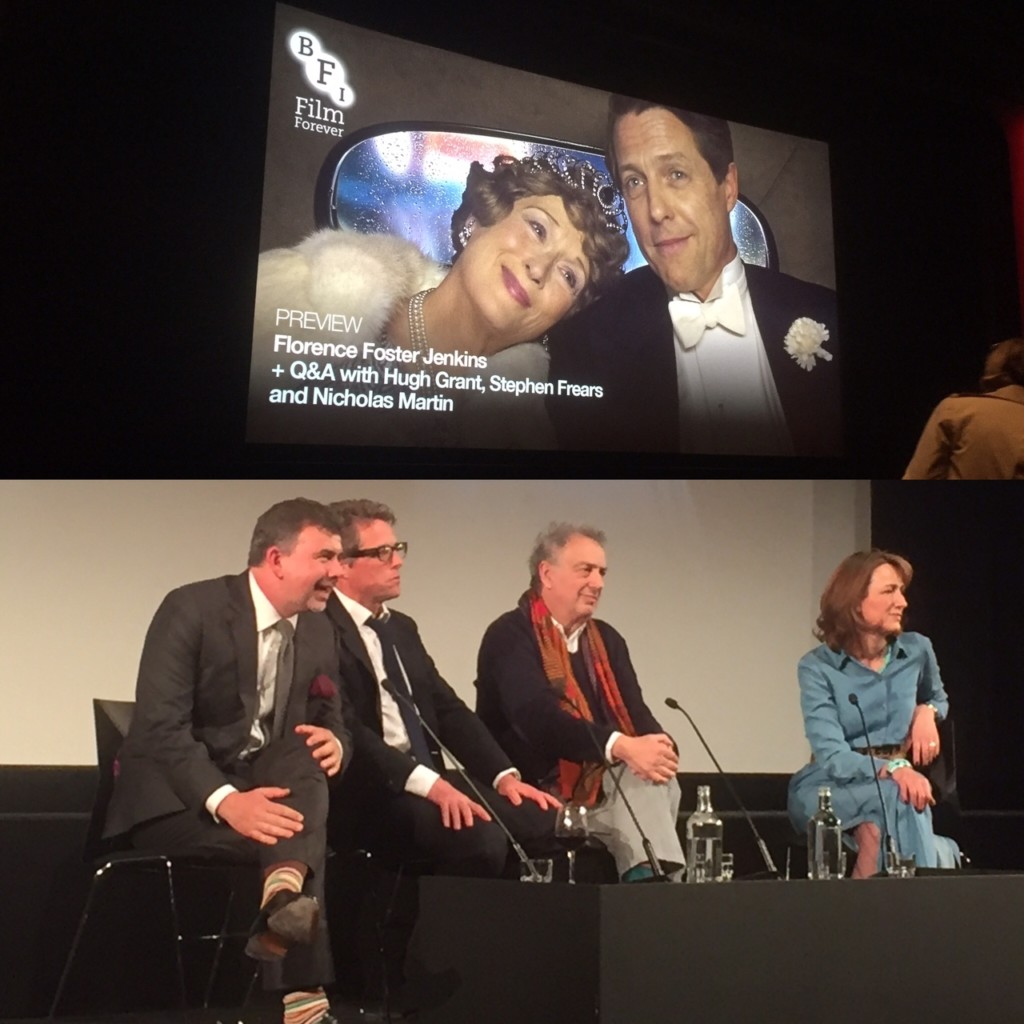
I won’t spoil the film for you, do go and see it. As a financial planner, I would draw your attention to the briefcase and the lengths that people go to avoid the harsh confrontation with reality. The Q&A at the BFI last night with Hugh Grant, Stephen Frears and writer Nicholas Martin was also illuminating, ironically employing similar delusionary tactics to protect Florence, the audience and probably the box office. This is of course is the skill in great story-telling, how to edit and reassemble a story that shapes opinion, of course the political interpretation is ever present.

FFJ preview Q&A BFI 2016-05-04

So the question is, what are we in denial about? Some denials are probably healthy and serve our own interests, other – such as the truth about your own finances is rather more vitally exposed, not harshly, but so that reality can bring about a healthy perspective.

If you would like a financial reality check, you now simply need to get in touch – contact details all over the site. Here is the trailer for the new film.

Dominic Thomas
Solomons IFA

You can read more articles about Pensions, Wealth Management, Retirement, Investments, Financial Planning and Estate Planning on my blog which gets updated every week. If you would like to talk to me about your personal wealth planning and how we can make you stay wealthier for longer then please get in touch by calling 08000 736 273 or email [email protected]
Delusion and Florence Foster Jenkins2025-01-27T16:09:25+00:00

1000 Pensions at Risk

1000 Pensions at Risk

If you are a member of a final salary scheme, or were, I’m sorry to bring you some sorry news of a new report from the Pensions Institute, part of Cass Business School, which highlights the acute pressure faced by many private sector defined benefit (DB) schemes and their trustees as they strive to meet their long-term liabilities.

The report, “The Greatest Good for the Greatest Number“, predicts that the businesses of hundreds of employers will become insolvent well before the end of their recovery plans, under which the trustees and sponsor agree contributions to make good the deficit over an agreed number of years. On insolvency, these schemes may have insufficient funds to pay members’ pensions in full.

In theory the Pension Protection Fund would support those schemes that become insolvent. However it is important to understand that this does not always apply and doesn’t cover all of the pension benefits in any event.

The long-term problem

The research found that of the approximate 6,000 DB schemes in the PPF Index, most of which are closed, as many as 1,000 schemes are highly vulnerable to the risk of significant underfunding and the sponsor’s insolvency as scheme funding levels continue to weaken. Around 600 schemes – 10% of the total – are unlikely to ‘ever’ pay off their pension scheme debts. The businesses of up to a further 10% are at risk of failure due to the DB deficit. Quantitative Easing (QE), low interest rates, and low gilt yields are all considered to add significantly to the problem, especially as gilt yields are a key factor in the assumptions used for valuations.

Key Points

  • Up to 1,000 of the 6,000 Defined Benefit Pension Schemes are at serious risk of falling into the Pension Protection Fund.
  • Of this, members of 600 schemes may only receive PPF compensation; many sponsors are expected to become insolvent in the next five-to-10 years
  • The remaining 400 sponsoring employers might initially survive, but may eventually fail if they are not able to off-load their pension obligations
  • the report challenges the ‘flawed assumption’ that, in time, the majority of these sponsors will meet their pension promises in ful
  • Planned and coordinated action now could secure better outcomes for members than the PPF compensation floor while securing jobs and freeing up businesses to create growth

So, I’m sorry to report that we may all become rather more familiar with the Pension Protection Fund unless action is taken and with so many financial pressures, one can see why it isn’t. Of course, not everyone has a final salary pension scheme and it should be said that many of those in existence are very well funded. However the key lesson in this that applies to everyone is that providing income for a lifetime is expensive, getting your pension income sorted out, in whatever form, is important to address and why you need a good financial plan.

Dominic Thomas
Solomons IFA

You can read more articles about Pensions, Wealth Management, Retirement, Investments, Financial Planning and Estate Planning on my blog which gets updated every week. If you would like to talk to me about your personal wealth planning and how we can make you stay wealthier for longer then please get in touch by calling 08000 736 273 or email [email protected]

1000 Pensions at Risk2023-12-01T12:19:41+00:00

Women and Pensions

Women and Pensions

Scottish Widows produce a report each year called “Women and Pensions”. The 2015 report was released recently. The key finding was that 71% of women don’t know how much they will need in their pension. Let me confess that I have little faith in surveys. In my experience, almost everyone has little idea about how much they need in their pension, regardless of gender or age.

Sadly another top-line statistic is that 28% of women retiring received less income in retirement than they had expected. The report isn’t really designed to provide anything other than observe trends within financial services. Many commentators, myself included, would observe that women are not served well by financial services firms. There are still sadly, very few female advisers or investment managers and of course very few in the Board rooms of financial services firms. A notable difference between genders observed by Scottish Widows is that 60% of men are “adequate savers” compared to 52% of women. I should point out that “adequate” is the best category.

Report Findings

If you have regularly followed my blog, you will appreciate that I am somewhat sceptical about reading too much into the data. In reality, there are a wide range of reasons why women may be saving less for retirement. This might include being paid less, which still remains a problem. The fact that many women take career breaks to bring up children, or work part-time.  Context is everything. Here are some statistics that are published in the report

  • 43% of women have little or no understanding of individual pension savings
  • 25% of women aged 35-49 are non-savers
  • 25% of women earn less than £10,000 a year
  • 9% of women have a financial adviser
  • 34% of women would be prepared to pay for financial advice

So What About Solutions?

Whatever you make of the report findings, the reality is that most people do not have a clear idea about how much they need in retirement, or indeed when they can afford to retire. What is clear is that financial planning provides a solution, the million dollar question is whether the advice is affordable for many, which sadly, I believe it is not. Hence why we launched a new service “The 100 Club” which is designed to help anyone “get going” on their long-term saving. Please pass the information on to anyone that needs it.

So, I guess my question is… what are your ideas for improving how women are served within the financial services industry?

Dominic Thomas
Solomons IFA

You can read more articles about Pensions, Wealth Management, Retirement, Investments, Financial Planning and Estate Planning on my blog which gets updated every week. If you would like to talk to me about your personal wealth planning and how we can make you stay wealthier for longer then please get in touch by calling 08000 736 273 or email [email protected]

Women and Pensions2023-12-01T12:19:47+00:00

Power of Attorney

Power of Attorney

Clients will know that I advise everyone to arrange Power of Attorney. Often people believe that because generally older people are the ones who suffer from loss of faculty, only the aged need Power of Attorney. I would suggest that this is a very dangerous assumption to make.

Anyone can find themselves unable to make their own decisions. Being hospitalised due to an accident and being “comatose” would be one example. As society becomes rather better at understanding mental health issues (slowly) this can also result in the need for a Power of Attorney.

In essence, an Attorney is meant to act in your interests, as though they were you. This prevents the stressful and lengthy process of going to the Court of Protection, which, like many State institutions is currently “swamped”.


Protection in Action

A Power of Attorney is rarely overturned, but last month just such a case occurred. On 13th October 2015, the Court of Protection revoked the powers of an attorney who charged his elderly mother expenses of £117,289 for visiting her in her nursing home and acting as her attorney. The attorney applied the daily charging rate that he used when he was a self-employed independent consultant.

The judge made the comment that ‘one would be hard pressed to find a more callous and calculating attorney, who has so flagrantly abused his position of trust’ with Senior Judge Lush adding that ‘charging one’s elderly mother a daily rate of £400 for visiting and acting as her attorney is repugnant’.

Even though the son, Martin is named as the sole beneficiary of his mother’s estate, attorneys must never take advantage of their position or profit from it, apart from receiving gifts where the law allows it.

The law actually states:

“A fiduciary duty means attorneys must not take advantage of their position. Nor should they put themselves in a position where their personal interests conflict with their duties. They must also not allow any other influences to affect the way in which they act as an attorney. Decisions should always benefit the donor, and not the attorney. Attorneys must not profit or get any personal benefit from their position, apart from receiving gifts where the Act allows it, whether or not it is at the donor’s expense.”

When Martin suggested that the appointment of a panel deputy would be a waste of time and money because his mother’s estate is effectively already his.  Senior Judge Lush disagreed, stating that, “the panel deputy will, for the first time in eleven years, place Sheila at the centre of the decision-making process, rather than view the preservation and enhancement of Martin’s inheritance as the paramount consideration”.

For more details of the case click here.

Dominic Thomas
Solomons IFA

You can read more articles about Pensions, Wealth Management, Retirement, Investments, Financial Planning and Estate Planning on my blog which gets updated every week. If you would like to talk to me about your personal wealth planning and how we can make you stay wealthier for longer then please get in touch by calling 08000 736 273 or email [email protected]

Power of Attorney2025-01-21T15:48:31+00:00
Go to Top