THE BUDGET 11 MARCH 2020

TODAY’S BLOG

THE BUDGET 11 MARCH 2020

In order to save you time, I watched the Budget and even had a neat little animated logo designed for the occasion. Prior to the Budget I had hopes of some significant pension reforms – to simplify pensions whilst also hoping for the possibility of a fairer tax system, which means different things to different people – I would probably settle for a more straight-forward one.

In fairness to Rishi Sunak, becoming Chancellor when he did must have felt rather like a “hospital pass”. By which I mean a term used in rugby, where you are passed the ball so that you are the last one to face some enormous opponent who will surely flatten you and send you to hospital for treatment.

As he prepared for his Budget, we were all aware of the gathering momentum of “coronavirus” and the global collapse of the stock markets as investors seem unable to comprehend the impact on trade and the current oil price war between Russia and Saudi Arabia. No small matters and certainly sufficient to cause significant “alarm”.

The Budget

INCOME TAX

Rates remained unchanged – so depending on whether you are a glass half empty or half full, if you allow for inflation, that’s worse, but better than an increase.

  • Personal Allowance: £12,500
  • Basic rate (20%) on the next £37,500
  • Higher rate (40%) on income up to £150,000 (but loss of personal allowance at £100,000 ars previously)
  • Additional rate (45%) on income over £150,000

The only allowance to improve marginally was Capital Gains tax (increased from £12,000 to £12,300), which will be of little comfort today.

PENSIONS

The Lifetime Allowance has increased by inflation to £1,073,100. The precision of this number speaks volumes of the Treasury’s desire to collect every penny.

Anyone earning over £300,000 can only contribute £4,000 to a pension (including employer payments). Otherwise, some relief for Hospital Consultants as the Tapered Annual Allowance was inflated by £90,000 to impact those with incomes over £240,000. This keeps tax calculations complex and required, but likely to kill off public sympathy for the cause to simply abolish the Tapered Annual Allowance. If you really don’t understand this, it probably doesn’t impact you.

ISAs

There remain at a very healthy £20,000 of tax-free growth and tax-free income when withdrawn, unlike a pension which has tax relief and provides taxable income. This also tells you something about the Treasury.

A Junior ISA (JISA) has been greatly increased to allow for a significant £9,000 into a JISA each tax year from 2020/21. No real benefit for adults, but of course a bit of a nod to those funding University. Though this could turn into a large fund over time and some thought ought to be given to how most 18 year-olds handle money.

INHERITANCE TAX

No changes

BUSINESS OWNERS

Those wishing to sell a business that they built will now have much higher taxes to pay on sale as entrepreneurs’ relief was slashed. The 10% tax rate on sale of a business still applies but only on the first £1m rather than the first £10m. That idea that your business is your pension… well, think again the new allowance is lower than the Lifetime Allowance.

CORONAVIRUS – CORVID19

Various special measures have been “initiated” to enable people to have some form of basic minimum income (statutory sick pay) from first signs of illness and self-isolation. This is an attempt to head off concerns that those needing to earn cannot afford to be ill and therefore continue to pose a “threat” to the rest of us. Whether it works remains to be seen – I suspect call centres will be jammed for some time.

As far as I can tell today, a few things are in short supply and probably more expensive than a week ago – toilet paper, hand sanitiser and wisdom.

Dominic Thomas
Solomons IFA

You can read more articles about Pensions, Wealth Management, Retirement, Investments, Financial Planning and Estate Planning on my blog which gets updated every week. If you would like to talk to me about your personal wealth planning and how we can make you stay wealthier for longer then please get in touch by calling 08000 736 273 or email [email protected]

GET IN TOUCH

Solomon’s Independent Financial Advisers
The Old Mill Cobham Park Road, COBHAM Surrey, KT11 3NE

Email – [email protected] 
Call – 020 8542 8084

7 QUESTIONS, NO WAFFLE

Are we a good fit for you?

GET IN TOUCH

Solomon’s Independent Financial Advisers
The Old Mill Cobham Park Road, COBHAM Surrey, KT11 3NE

Email – [email protected]    Call – 020 8542 8084
7 QUESTIONS, NO WAFFLE

Are we a good fit for you?

THE BUDGET 11 MARCH 20202025-01-21T16:33:58+00:00

HOW TO PROTECT YOUR TAX ALLOWANCES

TODAY’S BLOG

HOW TO PROTECT YOUR TAX ALLOWANCES

The government has committed to an awful lot of new spending. But the money has to come from somewhere. The unwritten rule of electioneering is to announce the spending increases during campaigning, and wait for the first post-election Budget to reveal the bad news about tax. Over the past few weeks we’ve seen suggestions of everything from some form of ‘mansion tax’ on more expensive homes, to changes in capital gains tax and tweaks in pension tax relief.

Sajid Javid’s resignation as chancellor – the person in charge of the Budget – might have derailed some of the plans in progress, but commentators are divided on what’s likely to happen next. Some think fiscal (tax) rules will be relaxed, so there’s less pressure to balance the books and spending can rise alongside tax cuts.

TAX ALLOWANCES

Let us not forget the small matter of an election manifesto pledge to get rid of ‘arbitrary tax advantages’ for the wealthy. Unfortunately we don’t have a working crystal ball to know what tax changes if any will come to fruition. We think the best way to shelter yourself from any potential tax changes is to take as much advantage as you can with the appropriate current breaks, while they still last:

  • Take advantage of ISAs (£20,000)
  • Consider a Lifetime ISA (£4,000)
  • Don’t forget Junior ISAs (£4,368)
  • Top up your pension (£40,000 and the abilty to use up unused allowances from the 3 previous tax years)
  • Consider salary sacrifice (employer pays your reduced NI and tax into your pension)
  • Take advantage of your spousal exemptions (share capital gains etc)
  • Claim the marriage allowance (transfer £1,250 to your spouse)
  • Consider your annual gifting allowance of £3,000
  • Use your 2019/20 Capital Gains Tax Allowance of £12,000
  • VCT, EIS, SEIS investment options for those that are more adventurous

Dominic Thomas
Solomons IFA

You can read more articles about Pensions, Wealth Management, Retirement, Investments, Financial Planning and Estate Planning on my blog which gets updated every week. If you would like to talk to me about your personal wealth planning and how we can make you stay wealthier for longer then please get in touch by calling 08000 736 273 or email [email protected]

GET IN TOUCH

Solomon’s Independent Financial Advisers
The Old Mill Cobham Park Road, COBHAM Surrey, KT11 3NE

Email – [email protected] 
Call – 020 8542 8084

7 QUESTIONS, NO WAFFLE

Are we a good fit for you?

GET IN TOUCH

Solomon’s Independent Financial Advisers
The Old Mill Cobham Park Road, COBHAM Surrey, KT11 3NE

Email – [email protected]    Call – 020 8542 8084

7 QUESTIONS, NO WAFFLE

Are we a good fit for you?

HOW TO PROTECT YOUR TAX ALLOWANCES2025-01-21T16:33:58+00:00

TAX YEAR END PLANNING PART 3

TODAY’S BLOG

TAX YEAR END PLANNING PART 3 – IHT

Inheritance Tax is one of the most unpopular taxes, yet it is a tax that you will not pay – your estate might. There are various solutions to reducing or avoiding inheritance tax – talk to me if you want to know more about them. However, each tax year you get some basic allowances that you can use to pass on wealth without any inheritance tax.

  • ANNUAL EXEMPTION

Each tax year you can give away £3,000 free of IHT. If you do not use all of the exemption in one year, you can carry forward the unused element, but only to the following tax year, when it can only be used after that year’s exemption has been exhausted.

  • SMALL GIFTS EXEMPTION

You can give up to £250 outright per tax year free of IHT to as many people as you wish, so long as they do not receive any part of the £3,000 exemption.

  • NORMAL EXPENDITURE EXEMPTION

The normal expenditure exemption is potentially the most valuable of the yearly IHT exemptions and the one most likely to be reformed. Currently, any gift is exempt from IHT provided that:

    • you make it regularly;
    • it is made out of income (including ISA income); and
    • it does not reduce your standard of living.

One way to combine the use of your CGT annual exemption with IHT planning could be to make an outright lifetime gift of investments. Such gifts would count as a disposal for CGT purposes and a potentially exempt transfer for IHT. The recipients of the gifts would start with a base cost for the investment equal to the gift’s value and there would be no IHT to pay at any time, provided you survived for the following seven years (possibly reduced to five under OTS proposals).

ANNUAL GIVING

ISAs – INDIVIDUAL SAVINGS ACCOUNTS

There are five important tax benefits which are common across the different types of ISA:

·         Interest earned on cash or fixed interest securities is free of UK income tax.

·         Dividends are free of UK income tax.

·         Capital gains are free of UK CGT.

·         There is nothing to report on your tax return.

·         On death, the income tax and CGT benefits of your ISAs can effectively be transferred to a surviving spouse or civil partner.

The overall maximum that can be invested in all ISAs in 2019/20 is generally £20,000 (£4,368 for Junior ISAs). There are no carry forward provisions, so like the CGT annual exemption it is a case of use it or lose it.

Dominic Thomas
Solomons IFA

You can read more articles about Pensions, Wealth Management, Retirement, Investments, Financial Planning and Estate Planning on my blog which gets updated every week. If you would like to talk to me about your personal wealth planning and how we can make you stay wealthier for longer then please get in touch by calling 08000 736 273 or email [email protected]

GET IN TOUCH

Solomon’s Independent Financial Advisers
The Old Mill Cobham Park Road, COBHAM Surrey, KT11 3NE

Email – [email protected] 
Call – 020 8542 8084
7 QUESTIONS, NO WAFFLE

Are we a good fit for you?

GET IN TOUCH

Solomon’s Independent Financial Advisers
The Old Mill Cobham Park Road, COBHAM Surrey, KT11 3NE

Email – [email protected]    Call – 020 8542 8084
7 QUESTIONS, NO WAFFLE

Are we a good fit for you?

TAX YEAR END PLANNING PART 32025-01-27T17:01:21+00:00

TAX YEAR END PLANNING PART 2

TODAY’S BLOG

TAX YEAR END PLANNING PART 2 – CAPITAL GAINS

2019 was a good year for nearly all investors in share or bond-based funds. Even the Brexit-buffeted UK stock market, something of laggard in global terms, grew by over 14%. If your portfolio does not show some decent capital gains for the year, it is probably in need of a serious review.

As a general rule, it makes sense to realise gains up to the Capital Gains Tax (CGT) annual exempt amount each tax year. The exemption, covering £12,000 of gains in 2019/20, cannot be carried forward: use it by 3 April (the tax year ends on Sunday 5 April), or you lose it. Systematically using the exemption can help avoid building up large gains over the years which attract tax. Currently, the maximum tax rate on gains is 20% for higher and additional rate taxpayers (28% for gains involving residential property and carried interest).

If you want to crystallise gains to use your exemption, but would prefer to retain the same investments, you cannot simply sell them one day and buy them back the next. Anti-avoidance rules prevent this from being effective, but there are alternatives that achieve a similar result, such as reinvesting in an ISA or self-invested personal pension.

CAPITAL GAIN

CAPITAL GAINS TAX IN PRACTICE

CGT applies to nearly all forms of investment, the notable exceptions being ISAs, Pensions and Investment Bonds. In simple terms, you want to trigger gains by selling an asset that has increased in value. Ideally you want to trigger as close to the allowance (£12,000) as possible. Thats a gain. So by way of example, if you invested £10,000 in 2010 and the investment is now worth £22,000 you would need to sell the entire investment to trigger a gain of £12,000.

The important issue is to know when you invested and how much. This is often more complicated than it appears because funds or holdings may well generate income which might have been paid to you, but may well have been re-invested. Over time the sums get very complicated.

We do a lot of work for clients that have a portfolio that we gradually convert into ISAs. Each year we trigger gains to move over into your ISA, ideally until the taxable investment has nothing left as it has all been moved into a tax-free ISA pot. This is a good way to gradually convert a portfolio into a tax-free portfolio.

A married couple have their own allowance each, but this is only relevant if the investment is jointly owned. Trusts also have a CGT allowance, but only at half the rate of the personal allowance (£6,000 in 2019/20).

Dominic Thomas
Solomons IFA

You can read more articles about Pensions, Wealth Management, Retirement, Investments, Financial Planning and Estate Planning on my blog which gets updated every week. If you would like to talk to me about your personal wealth planning and how we can make you stay wealthier for longer then please get in touch by calling 08000 736 273 or email [email protected]

GET IN TOUCH

Solomon’s Independent Financial Advisers
The Old Mill Cobham Park Road, COBHAM Surrey, KT11 3NE

Email – [email protected] 
Call – 020 8542 8084

7 QUESTIONS, NO WAFFLE

Are we a good fit for you?

GET IN TOUCH

Solomon’s Independent Financial Advisers
The Old Mill Cobham Park Road, COBHAM Surrey, KT11 3NE

Email – [email protected]    Call – 020 8542 8084

7 QUESTIONS, NO WAFFLE

Are we a good fit for you?

TAX YEAR END PLANNING PART 22025-01-21T16:33:59+00:00

TAX YEAR END PLANNING PART 1

TODAY’S BLOG

TAX YEAR END PLANNING PART 1

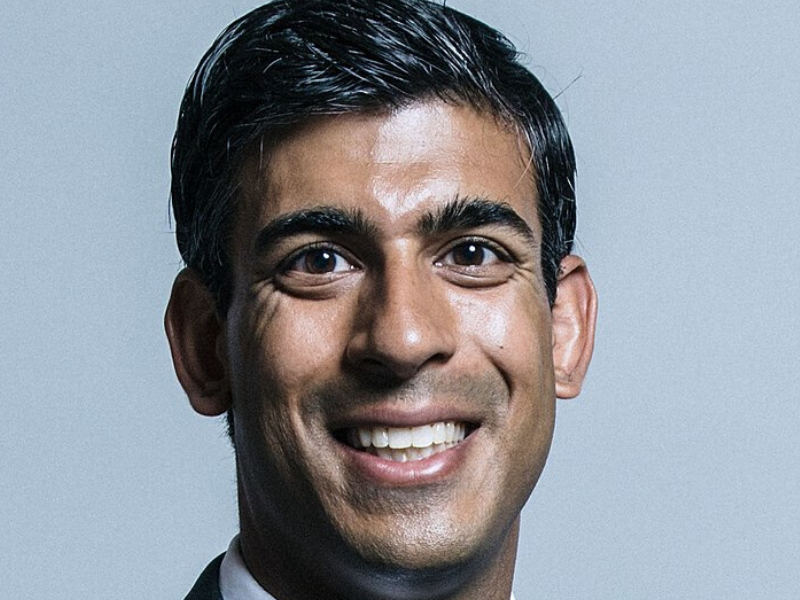
As you will have gathered, the Chancellor Sajid Javid resigned on 13 February just a month before his first Budget. There will be many that offer reasons for this, perhaps some of them will be something resembling the truth, but as they say “a week in politics is a long time”. We have a new Chancellor – Rishi Sunak (who?) … who sent most of us into a google spin. He’s the 39 year-old who worked for Goldman Sachs immediately following graduating from Oxford in 2001, who he left in 2004 to become a Hedge Fund 2006-2010. He became an MP in 2015 taking over William Hague’s seat in Richmond, Yorkshire.

As a result of the rather sudden changes in arguably the most important job in UK politics, there was concern that the Budget may have to be resceduled. However we have been reassured that 11 March remains the date for the 2020 Budget date. We also have an effective deadline for tax-year-end planning. There could be a range of measures announced on 11 March (normally operative from the beginning of Budget day) which could impact on such planning. The Government has loosened the purse strings on capital investment, but in terms of day-to-day spending it has little room for manoeuvre. The Treasury may thus be tempted to make some subtle tax changes to boost its coffers.

Rishi Sunak - UK Chancellor

PENSIONS

More than in most years, 2020 is the year to ensure you make your pension contributions before the Chancellor delivers his speech. As explained earlier, the risk of a major pension tax reform, potentially reducing higher rate tax relief, is greater now than for some while.

One important point to check is whether you have any unused annual allowance from 2016/17, when the maximum annual allowance (before tapering) was £40,000. You have until the end of 2019/20 to use up this past allowance, or it is lost forever. However, it can only be utilised once your full annual allowance for the current tax year is exhausted. So, for example, if you are not affected by the taper rules and you have £10,000 annual allowance unused from 2016/17, to mop it up completely would require a total contribution of £50,000 in 2019/20 – £40,000 for the current tax year and £10,000 carried back three years.

Unused relief can also be used from later years, but once you have paid the current year ‘entrance fee’, the excess contribution is offset in chronological order, starting with 2016/17. Under current rules unused relief can be carried forward for three tax years (hence the 2016/17 deadline), but that principle – and the rate of tax relief – could change.

Dominic Thomas
Solomons IFA

You can read more articles about Pensions, Wealth Management, Retirement, Investments, Financial Planning and Estate Planning on my blog which gets updated every week. If you would like to talk to me about your personal wealth planning and how we can make you stay wealthier for longer then please get in touch by calling 08000 736 273 or email [email protected]

GET IN TOUCH

Solomon’s Independent Financial Advisers
The Old Mill Cobham Park Road, COBHAM Surrey, KT11 3NE

Email – [email protected] 
Call – 020 8542 8084

7 QUESTIONS, NO WAFFLE

Are we a good fit for you?

GET IN TOUCH

Solomon’s Independent Financial Advisers
The Old Mill Cobham Park Road, COBHAM Surrey, KT11 3NE

Email – [email protected]    Call – 020 8542 8084

7 QUESTIONS, NO WAFFLE

Are we a good fit for you?

TAX YEAR END PLANNING PART 12025-01-27T17:01:21+00:00

ONE MONTH UNTIL BUDGET DAY

TODAY’S BLOG

ONE MONTH UNTIL BUDGET DAY

The chancellor Sajid Javid announced the date of next UK budget, with a pledge to tackle the cost of living and tear up strict budget rules to hike borrowing for infrastructure spending. The 2020 budget will take place in a month’s time on 11 March 2020 after a planned budget last November was cancelled in the run-up to the election.

Business leaders have said it was the new administration’s “first opportunity” to show it understood firms’ concerns amid continued political uncertainty over Brexit. Javid said the British public had “told us they want change,” in a signal of the government’s changing priorities since the Conservatives’ landslide election victory in December. Officials said Javid would use the budget to:

  • Fulfil government pledges on tax to “help tackle the cost of living for hard-working people.”
  • “Level up” across the country through “billions” in investment, rewriting previous administration’s spending rules and taking advantage of low interest rates to increase borrowing.
  • “Build on” recent announcements to boost spending on public services and tackle the cost of living, including hospital investment, vocational training and a significant hike in the minimum wage

So…. we shall have to wait 4 weeks to see what happens and whether mistakes of the past will be repeated. I have every confidence that they will be.

HOUSES OF PARLIAMENT

Dominic Thomas
Solomons IFA

You can read more articles about Pensions, Wealth Management, Retirement, Investments, Financial Planning and Estate Planning on my blog which gets updated every week. If you would like to talk to me about your personal wealth planning and how we can make you stay wealthier for longer then please get in touch by calling 08000 736 273 or email [email protected]

GET IN TOUCH

Solomon’s Independent Financial Advisers
The Old Mill Cobham Park Road, COBHAM Surrey, KT11 3NE

Email – [email protected] 
Call – 020 8542 8084

7 QUESTIONS, NO WAFFLE

Are we a good fit for you?

GET IN TOUCH

Solomon’s Independent Financial Advisers
The Old Mill Cobham Park Road, COBHAM Surrey, KT11 3NE

Email – [email protected]    Call – 020 8542 8084

7 QUESTIONS, NO WAFFLE

Are we a good fit for you?

ONE MONTH UNTIL BUDGET DAY2025-01-21T16:33:59+00:00

CHANGES FOR TRUSTEES

TODAY’S BLOG

CHANGES FOR TRUSTEES

A series of government moves over the past few decades have reduced their tax advantages and made trusts much less attractive to wealthy families. They are likely to become less popular still from March, when a new requirement will force thousands more trustees to list on a government register that is partially open to the public, or risk penalties.

Since 2017, certain types of trusts have had to report information to a government online register called the Trusts Registration Service (TRS). This came into being as result of an EU-wide directive to tackle money laundering. Far be it from me to imply or suggest that motivation for Brexit had anything to do with circumventing new EU Anti-money laundering rules!

To comply with the rules, all UK trusts that have to pay a tax liability such as capital gains tax (CGT), income tax, inheritance tax or stamp duty must report information to the register.

Trusts that are outside the UK but trigger UK tax must also do so, as must all trusts that are required to fill out a self-assessment tax return anyway. Currently the register is not publicly available, with access limited to law enforcement authorities. But from March 2020, the next phase of the EU directive (the fifth Anti Money-Laundering Directive) is set to increase the number of trusts that must submit reports.

It will also partially open up the register to the public, including journalists, leading some to worry about an erosion of privacy. Despite the UK’s imminent departure from the EU, the government is committed to implementing the directive and passing it into domestic law. Tax experts warn that hundreds of thousands of trustees and beneficiaries could be affected and need to understand better the possible impact of the changes.

TRUSTS & MONEY LAUNDERING

Dominic Thomas
Solomons IFA

You can read more articles about Pensions, Wealth Management, Retirement, Investments, Financial Planning and Estate Planning on my blog which gets updated every week. If you would like to talk to me about your personal wealth planning and how we can make you stay wealthier for longer then please get in touch by calling 08000 736 273 or email [email protected]

GET IN TOUCH

Solomon’s Independent Financial Advisers
The Old Mill Cobham Park Road, COBHAM Surrey, KT11 3NE

Email – [email protected] 
Call – 020 8542 8084

7 QUESTIONS, NO WAFFLE

Are we a good fit for you?

GET IN TOUCH

Solomon’s Independent Financial Advisers
The Old Mill Cobham Park Road, COBHAM Surrey, KT11 3NE

Email – [email protected]    Call – 020 8542 8084

7 QUESTIONS, NO WAFFLE

Are we a good fit for you?

CHANGES FOR TRUSTEES2025-01-21T16:34:00+00:00

PPI – ANOTHER PAYOUT?

TODAY’S BLOG

PPI – ANOTHER PAYOUT?

Just when you thought you had seen the last of PPI, I am here to tell you that it’s not over until the tax taken is repaid… If you’re one of the millions of people who’ve shared in the £34billion of PPI repaid (so far), you may have paid tax unnecessarily. If so, and your payout happened in the last four tax years, you are due money back. The money you get paid back for PPI can have up to three main elements:

  • A refund of the PPI you paid.
  • If the bank (outrageously) added an extra loan to your original loan just to pay for the PPI you get back any interest you were charged on this extra loan.
  • You get Statutory Interest (at eight per cent a year) on the total of both those sums, for each year since you got the PPI.

Only the third element is taxable. Any tax taken is usually shown on your payout statement. Tax is due because this Statutory Interest is designed to return you to the position you’d have been in if you hadn’t had PPI. If tax is due on PPI payouts, most firms deduct it automatically, at 20 per cent, before you get the money. That has always been an issue for non-taxpayers. However, since April 6, 2016, far more people have been owed tax back, as that’s when the personal savings allowance launched. It allows most taxpayers to earn £1,000 a year of savings interest, tax-free. Since then, while most savings interest has been paid without any tax taken off, PPI still has 20 per cent automatically deducted. Therefore, oversimplifying somewhat, it counts as savings interest, as if you’d earned it on that saved cash.

PPI AGAIN

Dominic Thomas
Solomons IFA

You can read more articles about Pensions, Wealth Management, Retirement, Investments, Financial Planning and Estate Planning on my blog which gets updated every week. If you would like to talk to me about your personal wealth planning and how we can make you stay wealthier for longer then please get in touch by calling 08000 736 273 or email [email protected]

GET IN TOUCH

Solomon’s Independent Financial Advisers
The Old Mill Cobham Park Road, COBHAM Surrey, KT11 3NE

Email – [email protected] 
Call – 020 8542 8084

7 QUESTIONS, NO WAFFLE

Are we a good fit for you?

GET IN TOUCH

Solomon’s Independent Financial Advisers
The Old Mill Cobham Park Road, COBHAM Surrey, KT11 3NE

Email – [email protected]    Call – 020 8542 8084

7 QUESTIONS, NO WAFFLE

Are we a good fit for you?

PPI – ANOTHER PAYOUT?2025-01-21T16:34:00+00:00

THE TAXMAN COMETH… AGAIN

TODAY’S BLOG

THE TAXMAN COMETH… AGAIN

A week today is deadline pay to send in your self-assessment tax return and payment to HMRC. The 31st January brings an end to arguably the worst month of the year with a tax deadline. Most people will be very familiar with 31/01 by now, but invariably a lot of people file their returns late.

In February 2019, HMRC confirmed that 93.68% of people filed their returns on time, which was a new record. There were 11.56 million taxpayers that had to file a return, 731,186 didn’t do so on time. Fines for not filing a return on time are £100, even if no tax is due. So that comes in at a neat £73,118,600 in immediate fines. After 3 months (30 April) additional penalties are applied at £10 a day.

Taxing Time

Left until the last minute.com…

A thumping 735,258 filed on the final day itself (6% of those that had to). Remember this is sending a return for the tax year that ended 5th April in the previous year!

Some 60,000 people tried to file their return between 4pm and 5pm on the 31st January 2019. That is really leaving it to the last minute (which is midnight of that day).

IMPORTANT – Pension Tax Tips Pre-Return:

These tips help taxpayers get all the pension tax relief to which they are entitled or to avoid an unexpected tax bill in years to come.

 A) Claim higher rate relief on personal pension contributions:

Many pension savers who pay income tax at the higher (or additional) rate, may be unaware that they need to claim higher rate relief through their tax return on contributions into a personal pension. Employee contributions into a personal pension or group personal pension automatically attract pension tax relief at the basic rate through the ‘relief at source’ method. This tax relief is claimed by the pension provider on behalf of the member. But those who pay tax at the 40% or 45% rate only get their extra tax relief if they claim it through their tax return. For example, someone who pays £80 into a personal pension automatically gets an extra £20 in basic rate relief added to their pension. But if they pay tax at 40% they are entitled to another £20 in tax relief which they will only get if they enter this information on their tax return.

B) Report contributions in excess of your annual allowance

Individuals are expected to report on their tax return any pension contributions (from themselves or their employer) into a Defined Contribution pension and/or any growth in Defined Benefit pension rights in excess of the Annual Allowance, so that additional tax can be paid.

C) Report contributions made on your behalf under ‘scheme pays’

HMRC recently admitted that some taxpayers were failing to report on their tax return that a pension tax charge had been paid on their behalf by their occupational pension scheme. A new FOI obtained by Royal London shows that in 2016/17 just over 1,000 people failed to report this information. As the number of people affected by ‘scheme pays’ has grown rapidly since 2016/17, it is likely that thousands of people are now failing to report this information. The FOI from HMRC says that this is a case of ‘under-reporting, not under-payment’, but taxpayers are expected to give complete information on their tax return.

And finally…

There were some strange excuses too… here is a video HMRC put together about them.

Here are some things that didn’t pass the valid expense claims.

Dominic Thomas
Solomons IFA

You can read more articles about Pensions, Wealth Management, Retirement, Investments, Financial Planning and Estate Planning on my blog which gets updated every week. If you would like to talk to me about your personal wealth planning and how we can make you stay wealthier for longer then please get in touch by calling 08000 736 273 or email [email protected]

GET IN TOUCH

Solomon’s Independent Financial Advisers
The Old Mill Cobham Park Road, COBHAM Surrey, KT11 3NE

Email – [email protected] 
Call – 020 8542 8084

7 QUESTIONS, NO WAFFLE

Are we a good fit for you?

GET IN TOUCH

Solomon’s Independent Financial Advisers
The Old Mill Cobham Park Road, COBHAM Surrey, KT11 3NE

Email – [email protected]    Call – 020 8542 8084

7 QUESTIONS, NO WAFFLE

Are we a good fit for you?

THE TAXMAN COMETH… AGAIN2025-01-21T16:34:22+00:00

TAX AND POLITICS

TODAY’S BLOG

TAX AND POLITICS

The General election is a few weeks away, the over-egged promises are being spouted by all sides. We really must seem like a very dim bunch to those that are so wrapped up in their political ideology. Anyway, I am not here to share my political views, simply to remind you of some basic truths.

I heard one item on the news as I travelled to the office the other morning. This was another politician using the word “free” to describe what the electorate would receive. This is an interesting choice of words. I was also somewhat interested in the bashing of the uber rich. I am not in that bracket (!) and frankly there is no possibility that I ever would be. However I was surprised that some people seem to believe that those with vast wealth actually have it all in bank account that can be easily raided. Like them or not the uber rich hold assets and some cash, but mainly assets.

This in mind, I thought that perhaps a little bit of education on the tax system may be of help. There are lots of numbers involved, but stick with it if you can (I know your time is precious).

INCOME TAX

Income tax accounts for about a third of all taxes received by HMRC. When combined with National Insurance, Capital Gains Tax and Bank Payroll Tax, these make up about 55% of all UK taxes. The amount of total tax paid to HMRC rises almost every year. In 2000/01 the total stood at £315,642m in the last tax year 2018/19 it had nearly doubled to £619,367 over 18 years.

THE UNION AND TAXES

In the tax year 2016/17 for those of you interested the total tax raised was £568,603m of which 87.2% was raised in England, 3.3% was raised in Wales, 7.4% raised in Scotland and 2.1% raised in Northern Ireland.

WHO PAYS INCOME TAX

In 2017 the UK population was about 66million. Not everyone pays income tax (children, sick, unemployed, not employed and choosing to not “work”). In practice about 40% of the population pay income tax (they may well pay other taxes, but so do the 40%). In the 2016/17 tax year, there were 26.3m income tax payers in the whole of the UK. Of these 15.1m were male and 11.2m were female. 20.9m were under 65 and 5.39m were 65+.

HOW MUCH INCOME TAX DID THEY PAY?

In the 2016/17 tax year (the most recent with the data analysis). There was £174,000million paid in income tax by 26.3m individuals. So thats about 30% of all the taxes paid were from these income tax payers.  In the tax year concerned we basically have 4 categories of income taxpayer, those that simply pay the savings rate, those that pay basic rate (20%), higher rate (40%) and additional rate (45%).

As a reminder, in 2016/17 the personal allowance was £11,000 (the amount you can earn without paying income tax). This is reduced once your income is £100,000 at the rate of £1 for every £2 of income over £100,000. So anyone with an income of £122,000 has no personal allowance – all their income is taxable.

In terms of taxable income, the first £32,000 was taxed at 20%, from £32,001 – £150,000 tax is 40% and anything above £150,000 is taxed at 45%. Here is what happened.

As you can see from the table above, 81.75% of basic rate (20%) income taxpayers paid £57,300million in tax. You will remember Pareto’s law 80/20? Well its not far off, just over 80% of income taxpayers (83.78%) pay about 33% of the income tax bill. The next, smaller group, nearly 15% of the income taxpayer population of 40% taxpayers pay rather more between them – 37.3% of the total income tax bill. The smallest group (1.25% of taxpayers) those paying 45% income tax rates pay 29.6% of the total bill.

So whilst it is only part of the story – higher rate and additional rate taxpayers pay 66.9% of the income tax bill. Yet they only make up 16% of the income taxpayer population.

DO YOU WANT TO TAKE A POP AT THE 1%?

I am not supporting any political position here. I am simply making the statement that factually, if you pay income tax of 45% you are the 1%. As such you contribute a huge proportion of the total income tax bill. In exchange you have no personal allowance and probably a reduced pension allowance of £10,000 – less than an ISA. Let me also remind you that an income of £150,000 does not make you a millionaire…

If you fancy having a pop at the “millionaires”, taking the same data but just considering Additional Rate Taxpayers. There are 16,000 people with incomes of £1m+ (0.06% of income taxpayers) pay 8.79% of total income tax collected. So I will leave this here for you to mull over.

I have taken all this data from published HMRC and ONS documents that you can easily search and check yourself.

Dominic Thomas
Solomons IFA

You can read more articles about Pensions, Wealth Management, Retirement, Investments, Financial Planning and Estate Planning on my blog which gets updated every week. If you would like to talk to me about your personal wealth planning and how we can make you stay wealthier for longer then please get in touch by calling 08000 736 273 or email [email protected]

GET IN TOUCH

Solomon’s Independent Financial Advisers
The Old Mill Cobham Park Road, COBHAM Surrey, KT11 3NE

Email – [email protected] 
Call – 020 8542 8084

7 QUESTIONS, NO WAFFLE

Are we a good fit for you?

GET IN TOUCH

Solomon’s Independent Financial Advisers
The Old Mill Cobham Park Road, COBHAM Surrey, KT11 3NE

Email – [email protected]    Call – 020 8542 8084

7 QUESTIONS, NO WAFFLE

Are we a good fit for you?

TAX AND POLITICS2025-01-21T16:34:22+00:00
Go to Top