Do You Need Financial Protection?

Solomons-financial-advisor-wimbledon-bloggerDo You Need Financial Protection?

A question I’m often asked is do I need financial protection? frankly this is rarely the question… most people are really asking if insurance is worthwhile. Given the scandal of PPI, and a general mistrust of financial services, it is little wonder. Add in the reality that there is a general assumption that such contracts are designed to favour the insurer and the lawyer involved, many question whether the insurers would ever pay out.

OK, there is little I am going to be able to say to convince anyone that is suspicious about “the system”. All I can do is point you to data about claims paid and also relate my own experience. In all the years I have been advising clients, I have unfortunately had a number of claims. All of them were accepted, only one was not paid out at the full amount (they paid 73% citing non-disclosure of material health matters). We are currently considering whether to contest this or not, I can see both sides of the argument – but obviously represent my client, so will represent his interests.

In essence there are really only three types of financial protection I deal with for individuals. So let’s cover what these are.

1. Life assurance – you die, it pays out. Price is everything, there is pretty much nothing between providers on terms and conditions, however there are a myriad of types of life assurance policy and enormous differences in cost.

2. Critical Illness Cover – this is much more contentious. Terms and conditions are everything, quality is upmost, price is secondary – you pay for what you get. However cost still varies enormously. This cover pays out if you are diagnosed with a serious medical condition – it pays you. The main conditions are cancer, heart attack and stroke….all stuff that most of us would prefer not to think about, but probably know several people (depending on your age) that have experienced this.

3. Income Protection – this  pays your income if you cannot work due to incapacity and an inability to return to work. Generally cover would pay until you are better and can return to work, or until the policy maturity date (invariably your retirement date). It isn’t so contentious, these days a lot of employers provide cover. Certainly terms are important – most basic being does it pay out if you cannot do your job or any job or any job for which you are suitably skilled/able.  Cover is always less than your total income, as this provides an incentive for the claimant to “make a recovery” and also reduces fraud. Cost varies considerably. Generally cover is a percentage of income, up to a maximum and starts typically after 3, 6 or 12 months of “being unwell”… the longer this “deferred” period, the cheaper the cover. This isn’t accurate… but gives you an idea.

Which job would you prefer?

Job A: £60,000 per annum

Job B: £59,500 per annum plus £38,675 per annum until 65 if you have a long term illness.

As I say, its not accurate, lots of if’s but’s and maybe’s…. but hopefully I am conveying the concept.

So how much cover do you need?

That depends entirely on your circumstances, the cost of your lifestyle, your age and your level of debt and if you have anyone that is relying on you. It is generally true that the more you need cover, the less you can afford it… think of a young family who have a tight budget…precisely because they have a tight budget they need cover. Some people don’t need any cover (because they have ample resources). In essence they are self-insuring, however some of these people would prefer to pay for insurance so that they pass the risk to the insurer rather than bear it themselves, so using funds for other, more enjoyable purposes.

Reviewing Cover

So you have a load of old policies. You have some cover. Sometimes it isn’t a good idea to change the cover –  the policies where terms and conditions matter generally are weaker and more vague these days than they once were. However some can be reviewed. Don’t forget on the whole your debt should be reducing and you and your family, if you have one are older, less dependent.

FT FAAwards2015

Financial Times (FT) Financial Adviser Awards 2015

Yesterday I attended the FT Financial Adviser Awards – having been nominated for “Protection Adviser of the Year”. I’m pleased to say that it was a podium finish (2nd)… which isn’t bad (the winner is a thoroughly good adviser that I respect – genuine congratulations). Of course I would have preferred to win – but hey, out of 24,000 advisers in the UK… I, like Nico Rosberg need to keep improving. However I don’t really know the exact reason why I came second (unlike F1 there isn’t a final lap chequered flag. I assume it cannot be based on the amount of protection business I arranged over the last year (consider the big networks of advisers or Bank employees), so I presume it is the quality of the advice process, perhaps also because I have always removed commission from protection policies (reducing the cost for clients) which is still unusual and not a regulatory requirement of “adviser charging rules”. Perhaps it was the case study, business model or interview that revealed the quality rather than the quantity of our protection advice. At this stage I don’t know, but what I do know is that if you find yourself in a nightmare scenario – the inability to earn, or life threatening illness or worse – suddenly bereaved, having cover in place that removes financial stress makes all the difference in the world. Because sometimes in life stuff happens that we don’t like.

← Back

Thank you for your response. ✨

Dominic Thomas

Do You Need Financial Protection?2025-05-09T16:20:05+01:00

Are You Safely Connected?

Solomons-financial-advisor-wimbledon-bloggerAre You Safely Connected?futurecrimes

You are online and connected, so in the interests of providing you with some useful information about the online world, I thought I’d share a podcast (and video) that I listened to recently. This is taken from a really useful free resource website called “I Love Marketing” which is run by Joe Polish and Dean Jackson. I know that marketing isn’t everyone’s thing… but don’t forget that I run a small business and also work with many clients that run small (and large) businesses… and these guys have some really good ways of helping understand marketing, so that we all waste less time wasting each other’s time and get to what we all actually want (or need). As someone that did a Business Studies Degree with a specialism in Marketing, albeit many years ago, I can genuinely say that these guys provide information that can be implemented – its practical and it works.

Anyway, episode 189 of the I Love Marketing podcast or the video (here) is really worth spending your time. I tend to listen to podcasts at 1.5x speed, which saves some time and remains clear. Joe interviews Marc Goodman, a guy with a new book (yes ok, something to promote) all about the near future of technology. We think we’ve seen an explosion of things to save time, learn and so on… online, but he argues its nothing to what is coming… and with it there is a price – the need for much better understanding of security and the possible flaws in your own technology at home or work, which are exposing you to possible crime. The podcast or video is a reasonable length, but well worth your time.

ilmlogoOf course if you run a business or are in a marketing role, then I’d certainly suggest you check out Joe and Dean’s website and podcasts. They are an engaging pair with a wealth of great ideas and invaluable experience. The podcast can be found on itunes here. I’ve been listening to I Love Marketing for some time and hope that by sharing this you, if you are a marketeer or business owner, also get some really useful ideas from it. You can check out Joe’s bio page here and Dean Jackson here.

Dominic Thomas

Are You Safely Connected?2025-01-23T13:47:14+00:00

Would You Risk It?


Solomons-financial-advisor-wimbledon-bloggerWould You Risk It?

I recently watched a Swedish film by Ruben Ostlund called “Force Majeure” which had me squirming in my seat. Its the story of a family on a skiing holiday in the alps, who get caught up in an avalanche, which of course is merely symbolic of everything else that is going on in their lives. It’s a convincing story if somewhat realist and slow in pace. As someone that has only been skiing once (which I loved) but also knowing many people that have had fairly miserable and even tragic tales from the slopes, this film ended any thoughts I had about taking my family on a skiing holiday, even though I am well aware that it can be a wonderful experience. force majeure

I won’t spoil the story for you and it probably isn’t what you may expect of the story from simply using the words family, holiday, skiiing, avalanche. However this is an exhausting look at how stress is handled, magnified in the dynamic of a family holiday. In the film, the couple (Tomas and Lisa) seem much more willing to take risks and lead their two young children in a way that I simply wouldn’t even contemplate – because I think of them as being unsafe. However its deeper than that.. its also the risks people understand and assess (or not) on a much broader level. The nation that build Volvo’s (the safest cars?) flips the notion of risk on its head when reduced to the individual and relationships.

The film prompted much discussion and reflection, but with my my financial planner hat on, I tried to draw a few lessons. On the one hand, the setting of busy people carving out time to spend with their family and friends and enjoying “the good life” is some of the “stuff” that is talked about in a financial planning meeting… ie. how do you really want to spend your time? what do you value? what’s the purpose/reason for you working so hard? This is only part of the start of a conversation, which invariably lasts much longer than a single meeting…. after all we are discussing your life plans right?

In the design and implementation of a financial plan and experiencing the “process” I believe that many of our clients look for a sense of leadership and guidance, not in a patronising way, but one that reflects a weathered, seasoned expert that has been on the track getting people from A to B. I do not believe that they expect me to take shortcuts, go off-piste or compose a different version of reality to suit my perspective. There is far more to it than simply getting from A to B anyway… its the journey and your unique values and “milestones”.

Many of us were brought up to ask questions, but soon learned that to do so exposed a lack of knowledge. The peer pressure of school for many is more than sufficient to have the opposite effect to the one your teacher hoped for. For many this carries into adult life, not wishing to ask “dumb questions” for fear of being seen to appear foolish. I believe that there are no “dumb questions”… none of us knows everything. So in the perilous world of investing and planning a life (which doesn’t come with an instruction book) it is sensible to get a guide, someone that you can trust to help you with your journey. Even the best skiiers were taught and the very best still get coached.

The final sequence in the film reveals someone that is paid to take people from A to B yet appears to possess none or very few of the required practical skills, let alone social ones. As for me, I may have a different take on the risk of skiing, those of you that are skiiers may think I’m daft… that’s not really my point, but merely to highlight and understand the risks involved. Thats also partly what I do for clients – helping them to see the risks that they are really running, be that taking too much (or too little) investment risk, banking their future on the sale of their home/business, gaining an inheritance and so on… none of which is “wrong” provided that you know what you are getting into… its not a matter of “a different perception” but of seeing what is there. Just because I wouldn’t risk it, doesn’t mean that you shouldn’t… but you may want to benefit from taking a moment or two to ensure that your thinking and assumptions are “solid” and that you aren’t standing on very thin ice… or hurtling down a mountain in the fog. So what are the risks you are running within your own financial planning? Why not begin a conversation with me to make your journey much more sure-footed.

← Back

Thank you for your response. ✨

Here’s the trailer. Do get out to support your local independent cinema and independent movies/arts if you can.

Dominic Thomas

Would You Risk It?2025-01-27T16:11:52+00:00

Retail Therapy

Solomons-financial-advisor-wimbledon-blogger

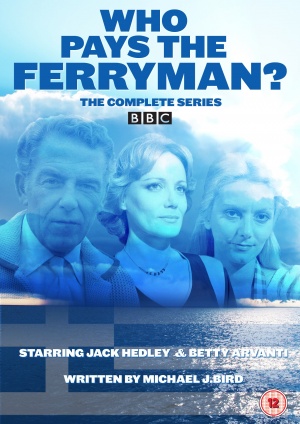
Retail TherapyWho Pays the ferryman

Most of us have probably at some point dabbled in a bit of retail therapy, bought something nice to make us feel a bit better. Invariably the feeling is all too fleeting, which most of us observe and move on, however some, much like addicts, seek out another high or buzz, returning to the shops. Unfortunately most western economies are based upon this reality to a greater or lessor extent.

However, whatever your economy is based on, the cold reality of life will eventually be something that cannot be avoided. You may have seen the rather sad tale of Louise Gray, a widow of the 7/7 London bombings. Mrs Gray received a substantial sum from the Criminal Injuries Compensation Authority and awards were also made to her son and daughter, which were placed into Trust (presumably a Bare Trust) as the son gained access to the funds at 18. However, he simply took funds out and entrusted them to his mother, who it seems had spent her funds and then spent his. Sadly this resulted in her son Adam taking his mother to court to return the money to him, which she couldn’t so was recently sentenced to imprisonment for 2 years and 8 months.

Of course, I know nothing of the detail of this case, but I imagine that Mrs Gray has found it very hard to adjust to life following the loss of her husband and rather than seeking professional help and support sought comfort in things. Of course, she may have sought and even found some counselling, but even if she did, her behaviour suggests that she was avoiding confronting some very harsh realities, which I imagine would be a difficult process for most people. war bonds

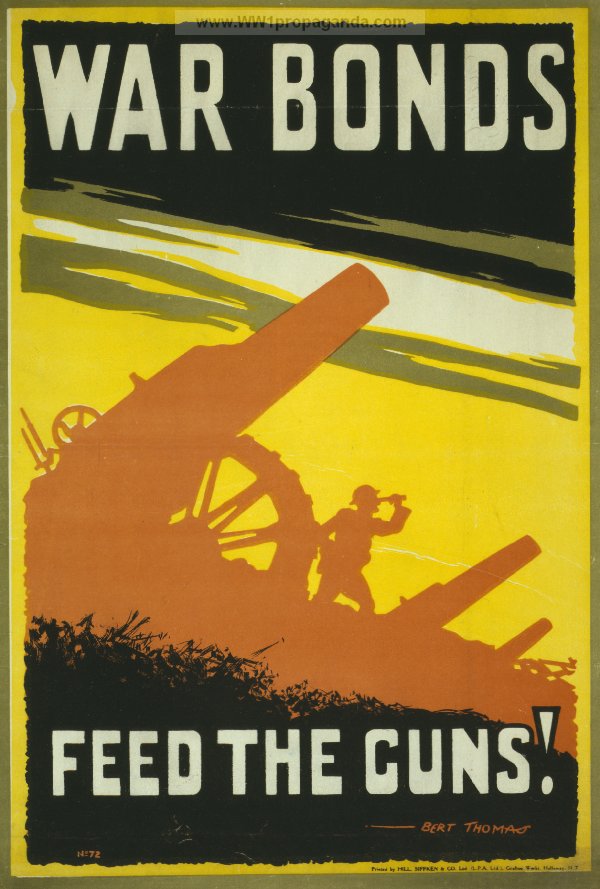
It would be easy to dismiss her actions as foolish, yet it is plain that it is far easier to avoid reality than face it. The Greek election vote is something of a vote for denial of reality, but then, aren’t our own politicians in a rush to make promises that in reality delay the unyielding inevitability of collective need to get our finances in order? Whether its tax cuts, tax breaks, spending increases, decreases… it all boils down to some basic sums… you cannot continue to spend what you don’t have, without a day of reckoning. Talk of finally paying off the FIRST World War debt (some £1.9billion is still owed) is somewhat flawed… the debt hasn’t been repaid, its been repackaged… much like switching a credit card balance to a cheaper one isn’t clearing debt. Perhaps you thought that the country would have paid for WW1 by now, some 100 years later…war is expensive in every possible sense! How much better off our Nation would be if we had found the courage to repay debt rather than simply maintain it. The truth can be pretty painful can’t it…..

Dominic Thomas

Retail Therapy2025-01-21T15:44:02+00:00
Go to Top