Avoidance is not in your Interest

Avoidance is not in your Interest

We have had a sustained and long-lasting (by comparison) level of very low interest rates. This has been bad news for those with cash savings, but good for those with mortgages or loans, at least regular “mainstream” ones. However a lot of borrowers have mortgages that are interest-only mortgages. This means that they are only paying the servicing interest each month, not actually repaying any of the loan. As rates have fallen, many have failed to use this as an opportunity to make some progress clearing the debt.

The credit crunch had lots of far-reaching effects on most of us, we are still living with the official Government response to it, which is one of austerity. An attempt to keep expenditure lower than income, which for you and I make a lot of sense, as a nation it ought to, but of course the Government has lots of ways of “making money”.

Anyhow, there are a whopping 1.67m mortgages that are either entirely or partly interest-only. The regulator is rightly concerned that borrowers are not engaging with the problem and without any plan to clear the loan will utlimately be subject to discovering the joys of Court and perhaps repossession of their homes.

70% Ignore the Lender

The research conducted, reveals that a staggering 70% of borrowers that fall into the category of an interest-only mortgage never respond to requests from their lenders suggesting a proper review. This is collective denial on a massive scale. Everyone is presumably hoping for one of several possible outcomes.

  • That they have a plan in place that will clear the debt, they simply haven’t told anyone
  • That they intend to sell their property and downsize once clearing the mortgage
  • That they have every intention of doing something, just never got around to it.
  • That the lure of gambling or lottery, cryptocurrency winnings will be the answer
  • That they expect the world to end, so who is really bothered…..

As you may have gathered, I’m probably offering thoughts that aren’t written down in the report, though I suspect I’m not far off the truth. Denial is a very powerful force and many people are, frankly taking their future all too lightly.

I will sell up and then rent, what’s the big deal?

Of course selling the property, hopefully for a figure larger than the loan, may work for some, but for others there is unlikely to be much left over to buy a house. So perhaps renting is a consideration, after all, interest-only mortgages are a bit like renting, except the borrower also has all the upkeep and insurance. However, renting is not as easy as you may think. Most agents apply a multiple of secure income (pensions) to determine if the rent is affordable. As a guide, expect to prove that your income is 30x the monthly rent…. most will not be able to do so. If you are over 70, then add in the lack of suitable property and landlords willing to rent to people more likely to fall and hurt themselves… well, let’s just say that renting becomes harder.

As is probably obvious, the regulator is concerned about the lack of engagement. I suspect that this might lead to some new initiatives to “encourage” borrowers to take action. You have been warned.

Dominic Thomas
Solomons IFA

You can read more articles about Pensions, Wealth Management, Retirement, Investments, Financial Planning and Estate Planning on my blog which gets updated every week. If you would like to talk to me about your personal wealth planning and how we can make you stay wealthier for longer then please get in touch by calling 08000 736 273 or email [email protected]

Avoidance is not in your Interest2025-02-03T10:37:21+00:00

The Hurdles We Face

Like most advisers, I regularly have enquiries as a result of the new pension freedoms. In essence, someone wants to move money out of a pension and the Pension company have told them that they cannot do so unless an adviser signs the forms, by which they really mean, takes responsibility for the advice if or when it all goes wrong. So after attempting to explain why I will not do this for the umpteenth time, I thought that perhaps a post about it would be easier… its lengthy, but provides context. If you are in this position and cannot find the time or energy to read 4 pages, then you really should not be messing around with your pension.

The Hurdles We Face

In the past, most people received a poor service from their financial adviser. As advisers were paid based on selling products, some of which were good, some of which were awful. The majority were unlikely to see “their” financial adviser (assuming s/he stuck around) unless the adviser believed that there was another chance to sell a product and thus earn some money.

Free Advice Illusion

The illusion of “free advice” was perpetuated by the product providers (the big life assurance and pension companies). They made it worse by having incredibly complex charging structures. They competed for business based on spurious data about past performance coupled with extra commission, above the agreed standard LAUTRO rate. Unhelpfully each product had a different rate of commission anyway so it was always likely that you would end up with a product that suited the adviser rather more than it suited the investor. In the late 1980s there was also the added problem of Independent Advisers being forced to disclose commission whereas Tied Agents didn’t (and couldn’t) Tied Agents were paid much more commission in any event. It was Tied Agents that were largely responsible for mis-selling of pensions. The collective advising legacy of Tied Agents is now shaped in the form of the largest financial advice company in Britain.

Suits you sir…

As an example, £200 into a pension typically paid commission to the adviser of around £2,300 and then about £5 a month after 4 years until payments stopped. The same amount invested into a PEP or ISA would pay typically £6 a month for as long as the payments were made (£72 a year). PEPs and ISAs did also include a fund based commission of 0.5% as well, so on a fund worth £2400 this would generate another £12 a year (plus growth) – £2,300 now or £84 over the year? (not hard maths).

This invariably resulted in bad selling practices and inappropriate advice. The result was marginally better regulation, improved qualification requirements for advisers and a ban on commission for investments from 2013. All advisers had to charge fees and agree these with their clients.

Unfortunately, this has not prevented criminals being criminals. The digital revolution which has helped on many levels is now under constant threat from fraud. Standards have had to be raised. What most people don’t appreciate is that the advice provided by financial advisers needs to be suitable, it sounds rather obvious but has implications. The most significant being that the adviser is liable for his or her advice not simply at the time, or their working career or indeed their lifetime, but for eternity. We are the only group on earth that can be sued posthumously (our estates).

Tongue-tied about risk

As a direct consequence of the historic mis-selling, any insurer providing professional indemnity insurance (a mandatory requirement to hold) takes a fairly negative view of bad practice and particularly “risky” products – which don’t necessarily mean investor risk, but those that invariably have been used to scam people. This has resulted in fewer insurers, higher premiums to the point that many advisers consider this a tax on good practice rather than an insurance against unlikely complaints.

Common Sense Revolution

A good adviser will always want to look after their clients well, forming a long-term relationship where a good service is provided and is financially rewarding to both the adviser and the client. Most advisers now look after their clients much better, adding significant value over time. There is much documented evidence for this (google adviser alpha).

The risk to the adviser is now more likely to be a bad relationship with a client, that results in a complaint, so service is vital and actually serves both client and adviser much better anyway. So very few advisers are now willing to take on a “one off” piece of work. The risk of things going wrong is too great.

Getting to know you

In a typical process an adviser must demonstrate that s/he knows their client before offering advice. This means sufficiently understanding the clients existing arrangements, circumstances and plans for the future, all within the context of the current real world. Here’s a brief list of the sort of things we require.

·         Evidence of your identity and residency (are you a potential fraudster?)

·         Family circumstances, context (who else is impacted?)

·         Income and tax information (to reduce but also to avoid fraud and evasion)

·         Assets (on a global basis)

·         Liabilities (on a global basis)

·         Existing arrangements (old employer pensions etc)

·         Giving (historic, present and planned)

·         Current spending levels (where does it go? How much does life cost you?)

·         Goals (why, when, who, what, how?)

·         Attitude to risk and capacity for loss

·         The content of your Will (where will all the above go?)

I could go on, but you probably get the point. Obtaining all of this isn’t as straight-forward as you may imagine either. Whilst you may loathe insurance companies, I can assure you that tracking down and obtaining the right information from them about you is enough to test the frustration boundaries of anyone.  Additionally, some people are simply not good at facing difficult truths – such as their own lack of financial control and an unwillingness to confront the basics of something that reveals where it all goes (like an expenses statement).

Trust me, I’m a…

So we’ve now gathered the above, we need to assess it and analyse it properly. Then in light of your aims, what’s realistic given your resources, appetite for risk and ability to cope with loss, we can put together solutions from everything that is “out there”…. Which to remind you is an ever evolving, changing, competitive marketplace, so what’s “best” last week may not be so today.

Committed to paper

We then provide a suitability report, which is meant to be read. Most are long because a lot needs to be said, but we also operate in a climate of complaint and many complaints are won based on what was not said by the adviser than what was done or even whether the adviser was “right”. The client is a human and wants to simply get on with life and not read a very long document about financial stuff.

Then there is the issue of fees and investment costs. We have evolved from the delusion that advice is free, but most people still believe that it is cheap. Even with very good technology (none of it joins up) completing the list earlier and creating a “file” takes about 2 days for the typical person, that assumes the information has arrived.

Fees

Anyway, fees – most charge to look after your money, so will take a percentage of this. The more you have the more you pay (as with most things in life). However in our unnecessarily complex tax system, the more you have invariably means the greater your options and the greater the complexity. Just for a benchmark, complexity probably starts at income of £80,000, but could be a lot lower depending on your age.

Fees come in all forms, but in essence I see six  

1.       The first is to implement or arrange something (i.e.. ISA). Some call this an initial charge. In essence, it is the result of a recommendation to use XYZ investing in a portfolio of funds with ABC, which is suitable because…. Charges are typically 1%-5%

2.       Ongoing management and looking after of the arrangement – the idea being that stuff changes, you need to make adjustments to keep within the parameters that were established. Perhaps switching funds within the portfolio, rebalancing or changing the “shell” of the investment to something now better. Charges are typically 1%

Both of these rely on you having money to invest and look after. Its not that different from commission, invariably taken from the investment rather than your bank account. It works but its not perfect. We know that it isn’t perfect as well, but its how most of us work.

3.       The service fee, this is often paid as a retainer and provides for the cost of meetings and keeping all your stuff (old style and new style) up to date and keeping you in the loop, charges are typically £50 – £500 a month

4.       Ad hoc fees – for specific, often complex pieces of work but of course nobody does this unless they are fully furnished with all the facts about you (as per my list). Charges typically a minimum of £300

5.       The financial planning fee – this is really where the best advisers are heading. In theory you don’t need any money to be invested with your adviser, they design a financial plan, which will take account of all you have and reveal a version of the future so that you can actually know how much is enough, what you need to do and so on, irrespective of who ends up investing the money. A financial plan can be a mammoth document covering the reasons for each assumption made, or it can be reduced to the headline charts, showing you the what and why with a list of action points. A financial plan will cost at least £1500, some ten times this (remember complexity and options). Some advisers recognise that this is often “new” for their clients and discount it heavily to £500-£750 be warned that this also indicates their lack of confidence in the value that they are offering. Financial planning is a real skill, not simply a new label.

6.       The no strings fee. This is the latest attempt to separate financial planning and perhaps behavioural coaching from your money. You pay all fees directly from your bank account, irrespective of how much you have. Naturally there will be some expectation of a correlation between how much value is added or work done, but payment is separate. As a result, there will be no adviser charge shown on any illustrations as the adviser is paid separately. This of course, makes the illustrative projections look much better. The adviser will be paid what was agreed irrespective of results. To be blunt most of us would prefer to work this way, but don’t have clients wealthy enough to do so. Those that do, successfully tend to charge £5,000 – £30,000 a year for their services.  Note that the fee is not necessarily related to time, but more likely value. Consider a tax planning saving of £800,000 what is that worth?

Show me the money

In the attempt to protect and help consumers the regulator has ensured that fees and costs are reflected in all illustrations (evolving since 1995 with “commission disclosure requirements”). Illustrations now show the impact of investment charges and adviser charges. These are significant and appear to cannibalise your investments. When coupled with low rates of growth used for illustrations and a well-intended “remember the impact of inflation” the resulting illustration far from helps consumers, but puts them off ever bothering to move money out of their bank account, (which if run by the same illustrative rules, would have you spitting blood).

Full circle…. Back to affordability and making it appear cheap

The truth, as uncomfortable as it may be, is that financial planning and good financial advice are now largely out of reach (price wise) to most people, due to our operational costs and the need to make a profit so that we can come back next year and do this all again so that our clients are looked after properly within the context of accurate information. It is an exhausting process. Most advisers I know (and I know a lot) would all want everyone to have better financial advice and are actively seeking ways to help through new media (podcasts, blogs, Vlogs, books, seminars, free downloads etc). Naturally, we hope to attract some new good clients, but we are also keen to help educate and improve financial literacy. We call it the savings gap. It’s in all our interests to help Britain become a nation of financially independent adults….the alternative is really rather frightening.

In conclusion (finally!) I cannot do a one-off piece of work for you. It isn’t in my long-term interests to do so (and probably not yours) without doing a proper job. Any adviser that offers to do so is at best deluded and perhaps desperate for money; at worst somewhat economical with the truth and likely running the risk of taking cash for forms, aiding scammers, knowingly or foolishly. This will result in further complaint, the inevitable failing of his or her business, and a compensation bill that the remaining good firms have to split between them (known as FSCS levies). Such a system has numbered days and is currently being reviewed in a fairly timid fashion. This really infuriates most advisers, many of whom vent in online sector forums and can easily be found on topics like Unregulated Collective Investment Schemes (UCIS) or Defined Benefit Pension Transfers or any recent receipt of a regulatory invoice from the FCA or FSCS, despite this there has been little appetite for opposition to a regulator that appears powerful yet out of touch.

When all is said and done, nobody can guarantee anything in financial services. Trust needs to be earned, I believe that this is done by being transparent and keeping promises. Quite how or even how much advisers are paid becomes largely irrelevant under such conditions. Any good financial planner or adviser wants a good long-term relationship with clients.

I genuinely wish you good luck in your endeavour to find a trustworthy, ethical adviser that has possesses business acumen. At one point there were over 250,000 people selling pensions and insurance products, there are now about 25,000 registered individuals who are licensed to do so across 5,720 firms, the vast majority of which are not yet financial planners. You could search my social media account to find some, but in general those are the elite advisers. Beware that search engines or directories are also paid-for marketing tools.

Think I’m wrong? today a report about pension transfers from final salary (“gold-plated pensions”) continues to press the point that advisers cannot be trusted. Nobody appears to have any notion of the cost or risk involved, everything is assessed in terms of a price for filling out forms. See Professional Adviser item by Hannah Godfrey.

Dominic Thomas
Solomons IFA

You can read more articles about Pensions, Wealth Management, Retirement, Investments, Financial Planning and Estate Planning on my blog which gets updated every week. If you would like to talk to me about your personal wealth planning and how we can make you stay wealthier for longer then please get in touch by calling 08000 736 273 or email [email protected]

The Hurdles We Face2025-01-27T16:07:36+00:00

Glengarry Glen Ross

Glengarry Glen Ross

The 1984 play by David Mamet opened in London last week. I had seen the 1992 film but had not the play. They are certainly different. To my mind the characters in the film generated more sympathy than those in the play. Whatever your view, the performances are strong, but perhaps not as strong as the language which is about as “locker room” as you can get, as clashing egos and dysfunctional ideas about masculinity are spat across the space between characters.

These are “men” that have a fluid understanding of truth, it seems that they believe that it serves their purpose to be economical with the truth. Selling whatever they can for as much as they can to whomever they can. We are all probably familiar with the hard sell and yet despite it being largely frowned upon here in Britain, we are all still regularly blitzed by people trying to grab our attention. This week I’ve had the customary junk emails, a few text messages and a call or two about an accident that wasn’t my fault and never happened. Selling, sadly, is a regular bedfellow of scamming.

Always Closing

Anyone in business will recognise the constant problem of attracting and obtaining new customers. Those that provide a particular product may only ever sell it once, as opposed to those that sell a service. It is telling that in the play, none of the characters really possess much by way of a sense of ethics. Sadly this is nothing new and of course the notion of hypocrisy (at best) lying (at worst) is familiar in almost any sector of society and unique to none. To the salesman (person) the enquiry or “lead” is their opportunity to close a sale. However bad or unethical selling can only lead to a failed business and one that closes.

A Brood of Vipers

I have never really understood those that knowingly and deliberately lie in order to make a sale. Financial services (my sector) is of course one where many sharks and charlatans have resided. Life may be harder for them now, but invariably they exist and find a way to part people from their money with apparent ease. Some “advisers” often refer to the “good old days” of financial services, by which they mean earning a commission for selling products. It may interest you to know that back in those good old days there were about 250,000 people selling financial products, primarily in person, often at your doorstep. Today there are around 25,000 authorised individuals who are able to provide advice and arrange “stuff”. Of those probably no more than 5,000 are financial planners, who, like me, don’t need to arrange “stuff” to get paid and provide a valuable service to clients, but of course most of us will arrange investments and the like as required.

Money Interest

Money is invariably the barrier to an honest conversation. In 2013 after much mucking around the regulator of the day banned most forms of commission (note I started the firm in 1999 completely removing commission). In January 2018 the rules will be taken to a higher level due to a European agreement (MIFID2). This will mean advisers and product providers need to be crystal clear about their charges and agree terms for their service. This is coming from a sensible, laudable intention of protecting investors, unfortunately I can see very few benefits at this stage, at least for those that are already provided with a costed and agreed service, as our clients are. If anything, people are more likely to make more bad decisions, focussed on cost rather than value. One of the new rules is quarterly valuations and prompt/immediate notification if a portfolio falls by 10%. These sort of actions tend to panic investors and shift their focus to the short-term rather than the long-term benefits of disciplined investing and having a proper financial plan.

Unintended Consequences… again

Your in-boxes will become fuller of correspondence, which will in turn lead to either inertia or anxiety, perhaps both. This is likely to be followed by the current serpent de jour, dressed as a helpful paramedic, but actually seeking to suck a pint of blood or two for themselves – the ambulance chasers will find some way to bombard you and convince some, many perhaps that their portfolio will only ever rise and if it doesn’t or didn’t, please take a ticket and join the queue for those seeking remedy or the fantasy of one. To my mind the equivalent of worrying that an egg was broken when the intention is to make an omelette. If I’m sounding fed up or perhaps “aggressive” this is because, well I am certainly tired of pointless changes, but equally aware that we will need to do more work, for no benefit, which will result in higher costs and fees, which will inevitably be passed on to clients. It won’t really deter the liars or crooks, perhaps it will make like marginally harder, but those are people that never play by the rules and would never offer you anything of value.

As for the play, well it’s on in London near Embankment tube. It has not been updated (if it has I cannot see where). It has contains some very uncomfortable language – racism and sexism which jar and are not helpful to the underlying message of the play. Of course it deals with bigger topics such as the dog-eat-dog world that forms of capitalism create, where collaboration isn’t in evidence, but rather ruining your peers helps your own cause. Starring Christian Slater, Kris Marshall, Oliver Ryan and Don Warrington to name a few. Get your tickets here – (warning – very sweary!)

Dominic Thomas
Solomons IFA

You can read more articles about Pensions, Wealth Management, Retirement, Investments, Financial Planning and Estate Planning on my blog which gets updated every week. If you would like to talk to me about your personal wealth planning and how we can make you stay wealthier for longer then please get in touch by calling 08000 736 273 or email [email protected]

Glengarry Glen Ross2023-12-01T12:18:21+00:00

Cold Feet

Cold Feet

Perhaps you have been watching the new series of Cold Feet. The original series began in 1997 – some 20 years ago and ran until 2003. It was revived last year. Originally a series about three thirtysomething couples living in Manchester, we have seen the usual plethora of “dramatic” storylines. Any significant exploration of characters or plot reveals a number of gaping holes and sadly even in the decade or so of a break, the writers have continued to fail to redeem themselves.

The Hapless David

David Marsden, the character played by Robert Bathurst has had to contend with a fair amount of turmoil in his life. Now, two marriages, various affairs and of no fixed abode later, his already somewhat questionable career (from anything believable) has now developed into that of Independent Financial Adviser.

Financial Planning for the Filthy Rich

In the latest series (7) we have seen Mr Marsden provide a presentation to a collection Manchester’s wealthy women, held in the plush executive home of Nikki Kirkbright, with Champagne freely flowing and perhaps more like an Anne Summers party, he proceeds to rename his “talk” financial planning for the filthy rich.  David meets with Nikki who clearly wishes to keep the matter from her husband who returns home and results in David being asked to leave quickly to avoid meeting him. The latest episode had David meeting discreetly with Nikki, a meeting which he claims he has all the forms for the Unit Trusts. Her husband finds out and has David collected for a “meeting”.

David wouldn’t be an “Approved Person”

I don’t really know where to begin with this, save that David would not be a financial adviser having been arrested, charged and imprisoned for fraud – for his arrangement of what can only be unregulated investments whilst working for a firm that clearly are equally as inept at understanding financial regulation. His firm leaves him to “hang out to dry” and of course David attempts to pass the buck and record his boss admitting liability. His only obvious punishment is that at the start of series 7 he is to be found visiting very elderly ladies and encouraging them to sign application forms to release equity from their home or buy life assurance.

David Marsden is without shame, without qualification and frankly without any credibility. Someone in the writing team must have had a rather bad experience, but has clearly allowed that experience to dictate terms that no further understanding of finance shall be permitted. David is utterly incompetent, totally untrustworthy and completely delusional.

Trust Me, I’m A….

Of course, misrepresentation on television is nothing new, (ask Doctors, Lawyers, Nurses, Teachers, Ministers, Police and anyone in the Armed forces) and yes, it’s just light-weight comedy-drama, designed to amuse, not inform. Fair enough. I’m more concerned at the continued lack of understanding of finance and whilst yes, these characters aren’t real, they really don’t help anyone improve their own understanding of financial services, but merely compound the problems with misinformation. Dont get me wrong, I quite enjoy the series, I simply wish that there was rather more credibility in the characters…. you can watch it here:

Dominic Thomas
Solomons IFA

You can read more articles about Pensions, Wealth Management, Retirement, Investments, Financial Planning and Estate Planning on my blog which gets updated every week. If you would like to talk to me about your personal wealth planning and how we can make you stay wealthier for longer then please get in touch by calling 08000 736 273 or email [email protected]
Cold Feet2025-02-03T10:37:23+00:00

Your call is being recorded…

Your call is being recorded..

One of the many things that regulation is meant to provide is a high degree of security for investors and clients. In the main, the regulator exists to keep markets fair and ensure that people are not ripped off. You may have a view about their success over the years… then again perhaps things would have been worse without them – one of those conundrums.

From time to time (for which read – with great frequency) the regulator issues Consultation Papers, in theory to outline an issue, propose some remedial solutions for comment. Today’s 500+ page (CP16/29) latest idea is for all advisers to record telephone calls with clients. This, they believe, will help reduce problems as many people cite that they were told something over the phone, upon which they acted.

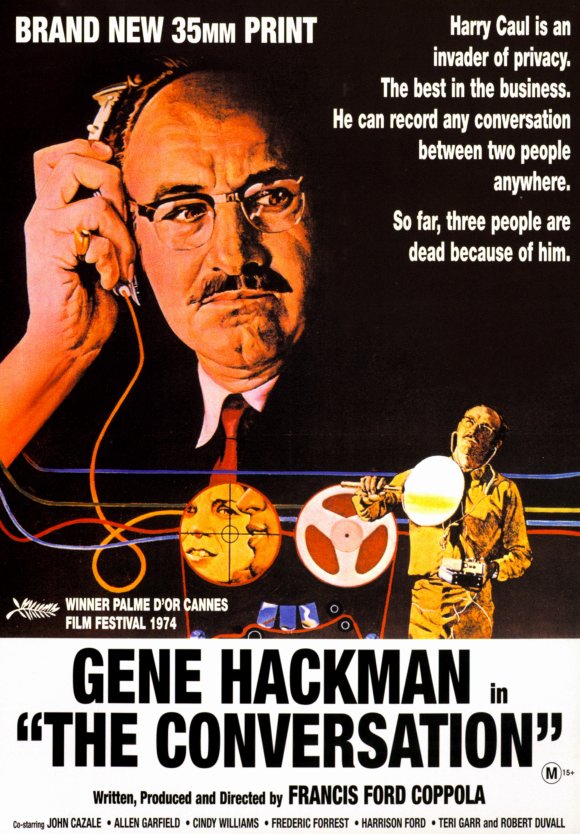
1973 movie poster The Conversation starring Gene Hackman

Are you being served?

To provide some context, to buy any regulated financial product, you have to have a “Reason Why Letter” – which can take a variety of forms, but in essence is an explanation of why you have been advised to implement a product. If you have been a client of ours for anything more than five minutes you will have had this from us.

So I wonder what your thoughts are if we are to record your phone calls with us. We have nothing to hide and are in the process of installing VOIP telecoms anyway, which would enable us to  do this (though our motivation was for a better and more cost effective telecom system and the fact that BT are gradually moving everyone in this direction). However, does it actually provide you with any more protection?

As you may also know, we have been using software that enables us to hold meetings over the internet – such as gotomeeting or Skype (and others). Of course we may have called you from a mobile phone at some point too, so presumably these ought to be recorded too (if the logic applies). Then perhaps meetings (in person) should be recorded or indeed any interaction between us.

Anything you say may be used in evidence against you…

You may have a view on such an approach – all the data would be stored for at least 5 years (which is of course cyberspace that needs to be rented) – so there is a cost financially, but I also wonder how it might impact our relationship. For example, when I am on hold to a big company and they are recording the call, I’m minded to make statements like – why don’t you hire more people to answer the phones if you are so busy? Why have you outsourced the call handling around the world, where my personal data is now viewed?… or how on earth do you guys sleep at night with such a rubbish service? (but I have, to date, not said this aloud).

Its my belief that a crook, or someone that wants to take your money away from you by selling you something that simply isn’t real or realistic will find a way to do so… and not recording the call or then editing the data file would be obvious to anyone. Anyway I thought that as I’m being asked for my views, the best ones are probably yours, so email me your thoughts. I need to feedback thoughts by the end of the year… not long now!

How is your paranoia? here’s the trailer to a film on the subject… Paranoia

Dominic Thomas
Solomons IFA

You can read more articles about Pensions, Wealth Management, Retirement, Investments, Financial Planning and Estate Planning on my blog which gets updated every week. If you would like to talk to me about your personal wealth planning and how we can make you stay wealthier for longer then please get in touch by calling 08000 736 273 or email [email protected]

Your call is being recorded…2025-01-23T10:56:03+00:00

Our Kind of Traitor

Our Kind of Traitor

The new film “Our Kind of Traitor” is based on the 22nd novel by John Le Carre of the same name. For those of you that enjoy some espionage, intrigue and have nagging suspicions about who is really protecting who, this is definitely one film for you.

The story is set within the context of a relationship that is undergoing some difficulties and attempting to find a way forward from a break in Morocco. Work interrupts leaving a brief vacuum into which Dima, a glittering, persuasive millionaire steps.

It transpires that Dima is of course somewhat of a figurehead in the Russian mafia, however he is under pressure to surrender his power to someone higher up the food chain. The drama is set with a potential trade of family lives for information.

Money, Sex and Power

As ever Le Carre points to the colour of money and the interchangeable values that it solicits. He questions the lack of questioning posed by the powerful when the sums are significantly enticing enough to look the other way, ask no questions, tell no lies. Le Carre has a regular discussion about the dynamic of money, sex and power. Indeed these are probably the basis for almost every thriller within the genre.

Whilst we may not find ourselves in the same position as Perry and Gail (Ewan McGregor and Naomie Harris) we do find ourselves regularly facing buying and investing decisions, from the apparently minor issues of everyday grocery shopping to how we vote. At a time when the City and those within the financial services are still largely untrusted, this film asks questions about provenance.

Of course, those within the financial services industry can point to a catalogue of incidents where “looking the other way” was detected by the regulator, resulting in considerable yet insufficient fines to truly deter such practice and culture (despite assurances that lessons have been learned). It would seem that the big fish generally do get away with it, whilst any financial adviser failing to do the required checks would face rather harsher punishment. There is little escaping the sense that the rules do not apply equally, something I imagine that Mr Le Carre would say.

Here’s the trailer.

Dominic Thomas
Solomons IFA

You can read more articles about Pensions, Wealth Management, Retirement, Investments, Financial Planning and Estate Planning on my blog which gets updated every week. If you would like to talk to me about your personal wealth planning and how we can make you stay wealthier for longer then please get in touch by calling 08000 736 273 or email [email protected]

Our Kind of Traitor2025-01-28T09:57:06+00:00

Should advisers fear being black listed?

Should advisers fear being black listed?

There are numerous benefits of social media. One is the ability of peers in any field to discuss topics and share ideas. Sadly this comes with the inevitable double-edged sword of whether to post under your real name or a pseudonym… or “nom de plume”. This I assume is connected to a fear of being black listed.

Of course there’s a lot to disagree about, and it appears that many will take considerable time to vent and click send. Not always a great choice, I’ve been guilty of it myself. There is a general perception, whether explicit or implied that somehow anything critical of those in power will result in some form of retribution. Hence many publish comments under false names for fear of being “black listed”.

Invariably the problem within my own sector is that of fear of the regulator. Of course on the one hand I think this is quite a good thing, advisers ought to be “afraid” of the regulator. That would really mean that they are surely there to keep people on the “straight and narrow”. So I welcome good, strong regulation – it’s in my interests (and yours). The hope is that strong regulation reduces the potential for people to be ripped off.

A critical voice brings change

On occasion, of course some criticism of the regulator is entirely appropriate (after all is anyone or any organisation perfect?). It is this that advisers fear (good ones too). The concern is rather obvious – raising a critical voice may be met with a sudden barrage of requests for information, which can prove time consuming and frankly unnecessary. I take the view that the regulator needs to be held to account and publish under my name. Frankly it is rare that I am critical of them – my main gripe is invariably a difference of approach to the way investors who have suffered scams or mis-selling are compensated following advice from “bad” advisers.

At present, the system is such that “bad” advisers rip off investors. The product, fund, adviser and their PI cover all fail and the remaining “good” advisers pay the compensation. By remaining, I really do mean a diminishing number. At one point there were about 250,000 “financial advisers” today there are about 22,000. Most advisers pass this cost onto their clients. To date, I haven’t despite a 30-day demand for payment increasing by 67% in 2015 on top of a 69% increase in the previous year! Hard to explain and pass on such fee rises in a period of virtually no inflation!

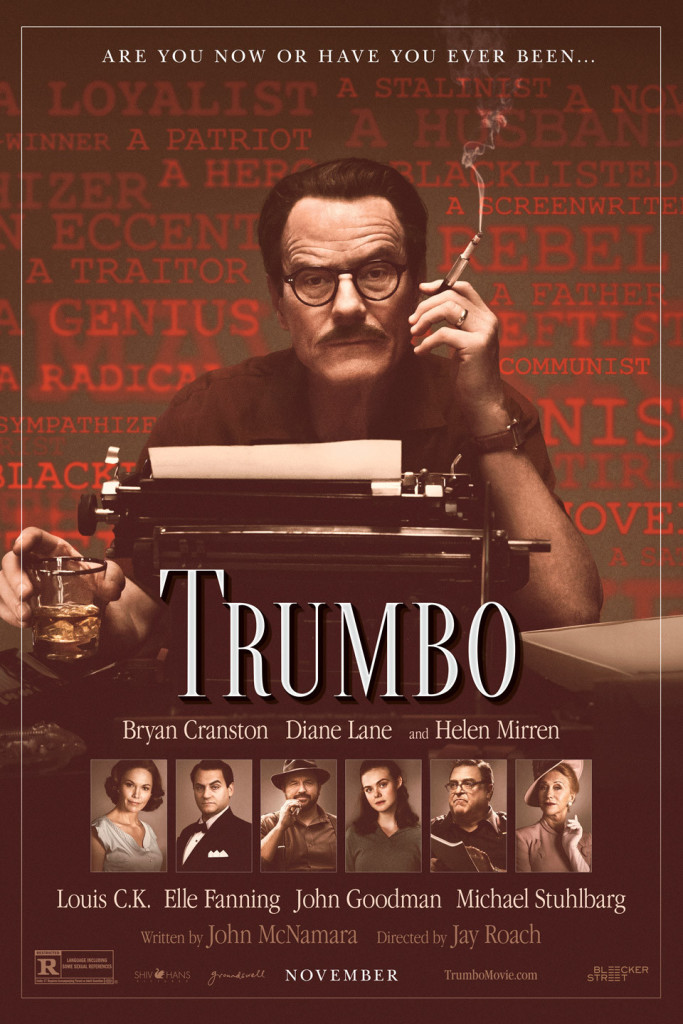
I don’t think I’m being too radical or inflammatory in my industry comments. This isn’t the 1950’s, McCarthyism has not returned (as far as I can tell). On which note, there is a very good new film out called Trumbo – the true story of a man that was blacklisted by some very unsavoury people in Hollywood. Trumbo was forced to write under a pseudonym to allow him to earn a living and he wasn’t ripping anyone off. I’m not so sure that advisers publishing under pseudonyms is really the same thing at all. I wish I had the creative writing skills of Trumbo! I only stand with him in the sense of being free to write or speak without fear of reprisal.

Oh, and you are welcome to check out my industry comments online at places like New Model Adviser, Financial Adviser, Professional Adviser.. but they are pretty dull and aimed at advisers.

Here is the trailer for Trumbo, you may recognise Bryan Cranston (who plays Walter White in Breaking Bad) and Helen Mirren has a small role, but has you piping venom… well it did for me. It has only just been released here in the UK… its one of the few films that I gave 10/10… but of course I may have been influenced by issues raised here!

Dominic Thomas
Solomons IFA

You can read more articles about Pensions, Wealth Management, Retirement, Investments, Financial Planning and Estate Planning on my blog which gets updated every week. If you would like to talk to me about your personal wealth planning and how we can make you stay wealthier for longer then please get in touch by calling 08000 736 273 or email [email protected]
Should advisers fear being black listed?2025-01-27T16:38:36+00:00

The Big Short

The Big Short

I have been looking forward to the release of “The Big Short” for some time. I suspect that many will yawn with incredulity at the prospect of watching a film about Bankers and the financial crisis… all that jargon, which is, lets face it, all rather dull and old news… I beg to differ.

This is a story well told, but a story that is frankly unbelievable, yet it happened. I would urge you to go and see it, I managed to do so on Monday evening (no I did not claim it as an expense). It will not change your mind about the Heads of Investment Banks or regulators, it will remind you of how utterly corrupt and complicit they have been in ripping off investors for years, and I see little evidence to suggest that this will alter.

The film makers attempt to explain some of the key terms that underpin the entire credit crunch. It is reminiscent of the musical about Enron – yes a musical essentially about accountants, but as with the musical, this is really an exposure of some rather foolish human behaviour.

Whilst the vast bulk of the film concentrates on the American story, the financial services industry is of course global and the setting for the story is largely irrelevant.

Are you sitting comfortably?

There are many that will not like the content of the film. The film is damning in its criticism of Government, regulators, bankers, credit rating agencies and mortgage brokers. The only group to have really been punished for the crisis in the US were the homeowners and the poor – by losing everything (a story told very well in the film “99 Homes” – see my piece on that too).

Here in the UK, we took the collective punishment of austerity, tax hikes and pay cuts. But at least the head of the regulator (then the FSA) was even knighted for services to the financial services industry (!).

You may have some questions after watching the film, both at the practical level and the “what one earth are they thinking?” level. Here is the official trailer to get you in the mood… oh and the film is nominated for an OSCAR. Mind you, I was even more incensed having watched “Four Horsemen“…  to my mind The Big Short is the softer option (pun intended).

Dominic Thomas
Solomons IFA

You can read more articles about Pensions, Wealth Management, Retirement, Investments, Financial Planning and Estate Planning on my blog which gets updated every week. If you would like to talk to me about your personal wealth planning and how we can make you stay wealthier for longer then please get in touch by calling 08000 736 273 or email [email protected]

The Big Short2025-01-27T16:38:37+00:00

Money Talks

Money Talks

You’ve heard the expression “money talks” I’m sure. Well, if you have tried to open a savings account or current account with a main UK bank in the last 10 years or so you will have observed and experienced a high degree of red tape and hoops that you have to jump through to prove you are who you say you are (even if you’ve been with the bank for your entire adult life).

If you are a client, you will have gathered that we have to verify your identity, residency and source of your funds. We try to make this as painless as possible and apply common sense. This is important (sadly) because there are people out there that are involved in criminal activity, taking money made from drugs and laundering back through legitimate financial arrangements so that it becomes “clean”. Just so that you are clear, if we (or anyone in financial services) suspect this is the case, we have to report it, else risk imprisonment ourselves.

So it was with some degree of surprise that I read that Barclays received yet another eye-watering fine. This time for poor handling of financial crime risks. The fine imposed is £72million. This relates to the lack of checking done on some of their clients…. ultra high net worth clients, who were “politically exposed people” (a term used not just for politicians, but those also in positions of significant public service etc)

Suits you sir…

Barclays were caught arranging £1.9billion (pause, that’s billion)… for a few such ultra high net worth individuals, without the proper checks in place. Perhaps it had something to do with the commission that they earned in the process – some £52.3million (all in a day’s pay). This occurred in 2011 and 2012 when Bob Diamond was at the helm (until July 2012). He resigned as a result of the Libor scandal. Anyway Barclays went to “unacceptable lengths to accomodate these ultra high net worth individuals”.

The FCA have fined Barclays in the hope that it will make them think twice about similar actions in the future. The real motivation is of course the sums involved, and as the FCA’s final notice said the clients involved were ‘politically exposed persons’ which are individuals with a ‘high political profile’ or have or had held public office, and pose a higher money laundering risk as their positions may make them vulnerable to corruption.

So now you know that the regulator thinks such people are at greater risk of corruption. Yet the irony is that had this incident happend at a financial planning firm, like this one, should it have been found wanting in such a manner, a custodial sentence and lifetime ban would have probably been handed down…. so there’s more than a slight degree of “power play” at hand here. Hence a few advisers are more than a little peeved that yet again, despite the big fine, the punishment never lands anywhere other than the shareholders in the Bank… after all aren’t these senior executives remunerated for the risk that they take? isn’t that why the big bank, pays big salaries, to big names to work with other big names and get away with a big golden handshake?

What still perplexes me, is why anyone would ever use a Bank for anything other than a bank account…. yet they do, in their millions.

You can see the FCA fine notice here… for the breach of principle 2.

Dominic Thomas
Solomons IFA

You can read more articles about Pensions, Wealth Management, Retirement, Investments, Financial Planning and Estate Planning on my blog which gets updated every week. If you would like to talk to me about your personal wealth planning and how we can make you stay wealthier for longer then please get in touch by calling 08000 736 273 or email [email protected]

Money Talks2025-01-23T10:56:39+00:00

Is Financial Services like gun crime?

Solomons-financial-advisor-wimbledon-blogger

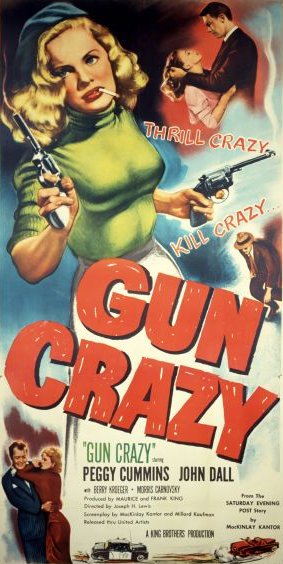
Is Financial Services like gun crime?Gun_Crazy

Here in the UK we have some gun crime, its horrible, but it is still thankfully rare. In North America the obession with guns is perplexing, the rising death toll and increasing militarisation of police forces is alarming. We have seen further mishandling and stereotyping lead to deaths in police custody and now further riots in some American cities. I’m not anti-police, I am anti-stupidity and I don’t think I’m telling you anything you don’t already know. America has almost no gun control, you can wander into a gun store or general department store (heck, sometimes they even give them away for opening a bank account -see Bowling for Columbine) and buy a firearm and ammunition. No real checks. We tend to think this is insane.

Yet here in the UK we have an equally perplexing situation which has collectively blind-sided most people. Its in the form of pension advice. Yes that rather dull topic (believe me I know how dull). Anyway it seems that your neighbour – the one that’s tempted by all those offers of too good to be true (because it isn’t true) high investment returns is wreaking havoc with the rest of us, like a loaded gun.

Garbage in, garbage out..

Despite warnings from the regulator, or there being a regulator, believe it or not, there are some “advisers” out there peddling all sorts of… well…”junk”. These always promise high returns, but actually pay high commission (something that is meant to be banned). So I can only assume that the person that does this is greedy, gullable or vulnerable. If the latter, then they have my sympathy and support, but those that are gullable, well it may sound harsh, but at some point in life you have to take some responsibility for your actions. As for the greedy… why should the rest of us pay for your gambling habit? eh?

Back to the gun analogy. Say I am a shop keeper, I don’t sell guns, in fact I sell books, but the guy nextdoor does. Guess what? his customer went on a rampage in the mall and shot 60 people. Being a shopkeeper I am sent a bill for compensation because I am a shop keeper.

What do I mean? Well pensions are regulated products and in theory should be arranged by regulated advisers. However in some products (SIPPs – Self Invested Personal Pensions) you can hold “uncoventional” funds… or what I might call “stuff you shouldn’t ever touch”. The regulator (FCA) would call this “non-mainstream funds” and in fact categorise them as “unregulated” in other words not regulated and therefore not actually protected by compensation. However because they were bought through a SIPP (regulated) and arranged by an adviser (regulated) therefore when it predictably goes wrong (it will) anyone that is an adviser gets to pay for the compensation. Now I don’t know about you, but I thought being an adult involved taking responsibility for your actions, so being one, I don’t sue people every time decisions I take don’t work out right.

Yes inflation is 0% but fees increase 75%

I tell you this because on top of a £20million levy a few days ago in March, the new annual levy has been set, increased from last years £57million to £100million for those that arrange pensions (shop keepers). This levy always comes with 30 days to pay (thanks). This is only a fraction of the full regulatory fees that I and other adviser firms have to pay.

Nobody to blame… but the good guys can pay up right?

The pension companies that allowed these investments in their pensions claim “not guilty – the adviser did it”, the regulator claims “We can’t use our product intervention powers on unregulated investments”… so cannot stop the funds being sold (or bought).

Those that sold these things have scuttled off elsewhere, probably to re-emerge in a different guise, leaving the dwindling number of firms (now about 5,300) and advisers (now around 24,000 from about 250,000 20 years ago) to pay the bill. The bill is paid by the firm and is enough to wipeout some firms, meaning that next year….the numbers reduce, so the share of the bill increases. There is only so much “cost” that a small firm can manage before needing to pass this on to their clients. I therefore predict that as a consequence, many advisers will be “forced” to put up their fees… which means you are also coughing up for the greed of your neighbour, because they cannot be bothered to take any responsibility for believing in fairytales…

Sorry to moan, but seriously… this isn’t fair is it? Of course people that have been ripped off need compensating, but seriously, you didnt think investing in a timeshare via your pension was normal did you? Your comments would be very welcome…. perhaps I am missing something, perhaps my entire profession is… in which case I’d like to know so that I have a snowballs chance of improving it.

Dominic Thomas

Is Financial Services like gun crime?2025-01-27T16:09:57+00:00
Go to Top