The Future of Pensions

The Future of Pensions

I am currently at my annual conference in Wales – the Chartered Institute for Securities and Investments (CISI) with whom the IFP – Institute of Financial Planning merged last year. Yesterday we covered a number of valuable topics, but the talk that resonated most with me was from former Pensions Minister MP Steve Webb, who talked about the future of pensions – amongst other things.

I had to admit that my BS radar is usually on hyperdrive when listening to any politician these days, which is probably a sad reflection on me, however I was very impressed by what he had to say, albeit he did not paint a terribly pleasant picture of the future. Of course, only time will tell if his predictions come about and in fairness, he was quick to remind us of the problems with predicting the future, particularly in a climate where since the last general election all of the major political parties have changed their leaders and the country has voted to leave the EU.

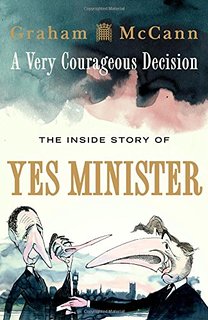
Book cover of Yes Minister - A Very Courageous Decision

Play it again Sam…(or Phil)

Webb was clear that changing pensions is pretty difficult and appears to be a low priority to either the Government of Civil Service. He gave an insight into the slow turning wheels of Whitehall, sounding much like an episode from Yes Minister. Given all the change that we have had (State Pension, Auto Enrolment, Pension Freedoms, Annual Allowance Taper, Lifetime Allowance…) he suspects and urges a period of quiet inaction from the Chancellor, Philip Hammond. This is particularly pertinent to those concerned about the loss or reductions of tax relief on pension contributions or changes to the tax free cash entitlement. He made the case that the public and financial planners could not plan ahead in confidence if the rules are changed every year, yet warned at Chancellors are easily tempted by ideas to collect more tax, however short-sighted.

Whilst on the subject of tax he made it clear that the Treasury are naturally inclined to taxing now rather than in the years ahead, so there is a very real pressure to take the view that tax relief reductions in the short-term outweigh the advantages of taxed incomes in the future, so by inference, a system of loss of tax relief and no taxation of pension income is a genuine prospect. He argued that this was evidenced by the Treasury’s love for ISAs and obvious contempt for pensions with the Lifetime Allowance reductions (and associated tax penalties) and the new tapered annual allowance. Personally he would scrap the LTA but retain a cap on annual pension contributions (which I certainly agree with). He did point out that of course putting trust in future Chancellors to honour a commitment not to tax pension income in the future required a high degree of faith, which  deliberately provoked some mirth from the audience.

Turning to Brexit, he simply outlined his view that interest rates are likely to be very low for a long time, which would place pressure on people to look for better returns than the puny sums they achieve from their savings. He argued that this would likely lead to yet more scams as people fall for yet more illusory promises of high returns. He also warned of the impact on final salary pension schemes which, because of the assets that they hold and the way calculations are performed, would have larger deficits in their pensions (due to low interest rates) probably leading to some, or perhaps a majority of companies trimming their dividend payments.. which in turn makes the task of achieving investment income harder still.

He seemed to have little regard for our regulator of whom he said was “not fit for purpose” and thought the new LISA was perhaps the most badly constructed investment idea for years. If you follow me on social media, you will know my thoughts on this already.

So, whilst Steve Webb found a receptive audience, I was left with the sinking feeling that there was little hope for common sense to return to the Treasury… but who knows… we all get to find out in a few weeks time for the Autumn Statement.

Dominic Thomas
Solomons IFA

You can read more articles about Pensions, Wealth Management, Retirement, Investments, Financial Planning and Estate Planning on my blog which gets updated every week. If you would like to talk to me about your personal wealth planning and how we can make you stay wealthier for longer then please get in touch by calling 08000 736 273 or email [email protected]
The Future of Pensions2025-01-21T15:03:17+00:00

Understanding Your Pension

Understanding your pension

I came across an example of an experience that most financial planners have from time to time. An adviser took on a new client. The clients believed that they had about, (let’s call it X) in their pensions, it surprised them and their adviser to learn that in fact they were worth considerably more (X + about £300,000).

The way the story was framed within the financial pages suggested that the adviser had created a huge return, in fact this was nothing to do with the adviser and rather missing the point. The point being that many people simply do not know what their pensions are worth. I do not believe that this is because of a lack of intelligence, but rather the very confusing statements issued by most pension companies.

Have a look at your pension statement, does it actually tell you what your pension (or investment) is actually worth? There’s the rub, sometimes admitting not understanding something because we are told “it’s rather obvious” is a very difficult admission. Yet I cannot emphasise enough that there are no stupid questions when it comes to your money. Any adviser that dismisses your question as “stupid” should be dismissed. His or her job is to sufficiently explain what you have, what it does, what it’s worth and why you’ve got it. If you don’t know, change your adviser.

There is no stupid question

Sadly it would appear that even senior economists that advise the Bank of England fail to understand their pensions – dare I suggest that such a statement may also be true of those that determine pension laws and tax rates.

In essence the concept of pensions is basic. Here it is. You save over time to enable you to live off the proceeds when you retire.  There are really two types of pension. One that is purely investment, so the size of the pot fluctuates daily, what you get is what you get. The other is a final salary pension – based on how long you worked for your employer and what your final salary was – you get a percentage of your final salary for life, with inflation. This type are now the equivalent of “gold dust”.

There are of course complexities, all of which were dreamed up by meddlesome politicians and their advisers to either encourage or discourage certain behaviours so that they could give the appearance of actually reflecting their stated manifesto values and aims. The UK pension system is particularly complex, the principles are not. To make matters worse, the jargon used has been made up by parties with vested interests (including financial advisers).

So help me to help you… to understand what you have so that you have a basis on which to make some sensible decisions. Do not leave it to the political elite.

Dominic Thomas
Solomons IFA

You can read more articles about Pensions, Wealth Management, Retirement, Investments, Financial Planning and Estate Planning on my blog which gets updated every week. If you would like to talk to me about your personal wealth planning and how we can make you stay wealthier for longer then please get in touch by calling 08000 736 273 or email [email protected]
Understanding Your Pension2025-01-21T15:03:36+00:00

Would that it were so simple

Would that it were so simple

There’s a new film “Hail Caesar” by the Coen brothers. A line which I keep finding myself repeating is spoken by Laurence Lorenz, a character played by Ralph Fiennes. He is trying to coach a stuntman with his acting – repeating the line “would that it were so simple”. It’s a funny scene, which I won’t spoil for you, but it is a phrase that I find appropriate with great regularity.

In a matter of weekends between broadsheets, the Chancellor appears to have done a U-Turn on changes to pensions. Of course had we not had all the speculation, leaks and reactions we would have been “none the wiser” of his apparent “flexibility is a strength”.

The truth is of course that we will not know what is in the Budget on 16th March until, well… 16th March and as they say a week in politics is a long time. The Chancellor is determined to control State spending and this has created a significant amount of ire and assessment in the media – as well as around dining tables in homes throughout the country.

Reshuffling the deck?

Whatever you think of Mr Osborne, as with all Chancellors, pain is delivered as discipline, where possible made to appear as a progressive change. Most of the time, there is little more being done than a reshuffling of the cards, hoping that this time, the hand will be sufficient to take home the equivalent of the jackpot.

The truth is that running the finances for the UK is not an easy task (and I am not attempting to make excuses for him). Tax revenues are based on assumptions about the future, costs are too – but there is inevitably the odd “unforeseen event” such as a plague, war or famine… which in practice aren’t really that unforeseen, because they occur regularly.

Nobody is really going to be pleased much of the time, whatever politicians tell us, we know that they have ambitions based on a concept that 4 years is the long-term, which is, as we all know, full of flaws. Would that it were so simple.

As for Hail Caesar – it is a film for our time about a film about another time, but the eternal golden rule – he that has the gold makes the rules.

Dominic Thomas
Solomons IFA

You can read more articles about Pensions, Wealth Management, Retirement, Investments, Financial Planning and Estate Planning on my blog which gets updated every week. If you would like to talk to me about your personal wealth planning and how we can make you stay wealthier for longer then please get in touch by calling 08000 736 273 or email [email protected]

Would that it were so simple2025-01-27T17:02:28+00:00

Should advisers fear being black listed?

Should advisers fear being black listed?

There are numerous benefits of social media. One is the ability of peers in any field to discuss topics and share ideas. Sadly this comes with the inevitable double-edged sword of whether to post under your real name or a pseudonym… or “nom de plume”. This I assume is connected to a fear of being black listed.

Of course there’s a lot to disagree about, and it appears that many will take considerable time to vent and click send. Not always a great choice, I’ve been guilty of it myself. There is a general perception, whether explicit or implied that somehow anything critical of those in power will result in some form of retribution. Hence many publish comments under false names for fear of being “black listed”.

Invariably the problem within my own sector is that of fear of the regulator. Of course on the one hand I think this is quite a good thing, advisers ought to be “afraid” of the regulator. That would really mean that they are surely there to keep people on the “straight and narrow”. So I welcome good, strong regulation – it’s in my interests (and yours). The hope is that strong regulation reduces the potential for people to be ripped off.

A critical voice brings change

On occasion, of course some criticism of the regulator is entirely appropriate (after all is anyone or any organisation perfect?). It is this that advisers fear (good ones too). The concern is rather obvious – raising a critical voice may be met with a sudden barrage of requests for information, which can prove time consuming and frankly unnecessary. I take the view that the regulator needs to be held to account and publish under my name. Frankly it is rare that I am critical of them – my main gripe is invariably a difference of approach to the way investors who have suffered scams or mis-selling are compensated following advice from “bad” advisers.

At present, the system is such that “bad” advisers rip off investors. The product, fund, adviser and their PI cover all fail and the remaining “good” advisers pay the compensation. By remaining, I really do mean a diminishing number. At one point there were about 250,000 “financial advisers” today there are about 22,000. Most advisers pass this cost onto their clients. To date, I haven’t despite a 30-day demand for payment increasing by 67% in 2015 on top of a 69% increase in the previous year! Hard to explain and pass on such fee rises in a period of virtually no inflation!

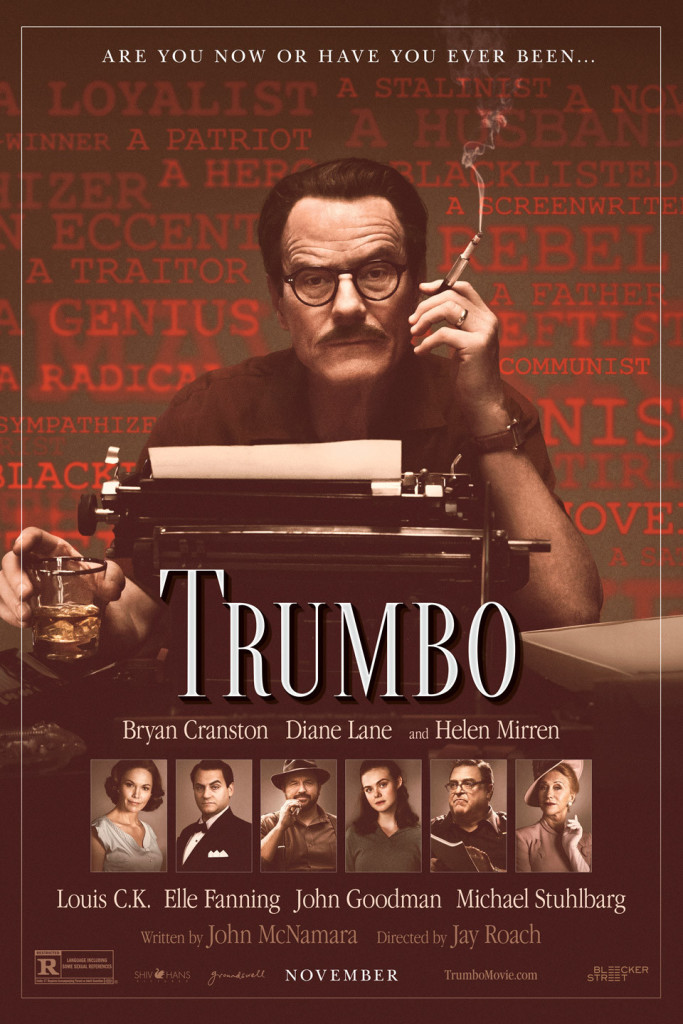
I don’t think I’m being too radical or inflammatory in my industry comments. This isn’t the 1950’s, McCarthyism has not returned (as far as I can tell). On which note, there is a very good new film out called Trumbo – the true story of a man that was blacklisted by some very unsavoury people in Hollywood. Trumbo was forced to write under a pseudonym to allow him to earn a living and he wasn’t ripping anyone off. I’m not so sure that advisers publishing under pseudonyms is really the same thing at all. I wish I had the creative writing skills of Trumbo! I only stand with him in the sense of being free to write or speak without fear of reprisal.

Oh, and you are welcome to check out my industry comments online at places like New Model Adviser, Financial Adviser, Professional Adviser.. but they are pretty dull and aimed at advisers.

Here is the trailer for Trumbo, you may recognise Bryan Cranston (who plays Walter White in Breaking Bad) and Helen Mirren has a small role, but has you piping venom… well it did for me. It has only just been released here in the UK… its one of the few films that I gave 10/10… but of course I may have been influenced by issues raised here!

Dominic Thomas
Solomons IFA

You can read more articles about Pensions, Wealth Management, Retirement, Investments, Financial Planning and Estate Planning on my blog which gets updated every week. If you would like to talk to me about your personal wealth planning and how we can make you stay wealthier for longer then please get in touch by calling 08000 736 273 or email [email protected]

Should advisers fear being black listed?2025-01-27T16:38:36+00:00

Auto Enrolment and Workplace Pensions

Auto Enrolment and Workplace Pensions

This is the year of workplace pensions – or auto enrolment. It doesn’t help that there are these two terms attempting to address the same issue. All employers, however small have to provide staff (which may be a spouse) a pension.

Strangely, in reality the selection of the pension is very much the least of the problems as in essence all this needs to comply with rules, ensuring that everyone (all staff) are properly assessed and informed about the pension being made available and then automatically enrolled. The employer and employee will both contribute, under auto enrolment terms, employees will pay more than employers.

This is really all about processes and being able to demonstrate compliance, much like VAT or PAYE. We do not set up workplace pensions, but are advising all employers to get and use some rather clever software by AE in Box. This will help you meet the deadlines and avoid fines. This year hundreds of thousands of small firms will need to comply.

January Sales

The software keeps you up to date and requires a minimal outlay. The initial set up fee of £79+VAT is being reduced to £1+VAT this month…. A bit of a January sale. The normal monthly license costs £29+VAT but only begins 9 months prior to your staging date. You will need to insert the promotional code at the online ordering stage which is: AEJANSALE

So it’s time to get cracking….

Please see our dedicated webpage for more information about this.

Here’s a good little video, (not by AE in a Box) but one of the better ones that I have come across.

…and one from AE in a Box

Dominic Thomas
Solomons IFA

You can read more articles about Pensions, Wealth Management, Retirement, Investments, Financial Planning and Estate Planning on my blog which gets updated every week. If you would like to talk to me about your personal wealth planning and how we can make you stay wealthier for longer then please get in touch by calling 08000 736 273 or email [email protected]
Auto Enrolment and Workplace Pensions2025-01-27T17:03:37+00:00

Pensions – more needless headaches the Lifetime Allowance

Pensions – more needless headaches

You may recall that Mr Osborne in his great wisdom has decided to reduced the current lifetime allowance even further, just to clarify – the Lifetime Allowance is the value of your pensions, either in payment or being built up. It currently stands at a figure of £1.25million but from 6th April 2016 will reduce to £1million.

It is very easy to calculate the value of your pensions, provided that they are purely investments pensions, such as personal pensions, SIPPs (self-invested personal pensions). You can also exclude the value of your State pension.

However, if you have an annuity in payment or old final salary pensions or perhaps simply a current final salary (or career average) pension (called a defined benefit pension scheme) such as the NHS or Teachers Pension, the sums are considerably more complex.

Long story short, once the value of your pensions has been calculated you may find that you have exceeded the lifetime allowance – which is reducing. So you will need to do something about this, which may well involve some uncomfortable decisions about future membership of pensions, even or perhaps especially, good ones, which is utterly daft.

Another bonkers pension policy

Yes, I did say bonkers. Despite what Mr Osborne may say about helping people to help themselves, he is actually restricting the amount that you can build in your own pension, actively discouraging saving, which does seem to be rather at odds with any historic Conservative policy in history, unless you count the lamentable decision by Norman Fowler to remove the rule that enabled employers to make membership of an occupational pension scheme a condition of employment, allowing the employee to contract out and not join the pension scheme. In fairness to Mr Osborne, with the benefit of hindsight, Mr Fowler probably takes the prize for arguably the most loopy pension decision for generations.

Mr Fowler was under the misguided impression that this brought about freedom for employees to decide if they really wanted to be in their employer’s pension. Mr Osborne can only be motivated by collecting more tax as there are 55% tax charges applied to amounts that exceed the lifetime allowance, unless you have the relevant protection, which is also not really guaranteed.

We are not talking about small sums of money here. So you need to gather your information, for two specific dates 5th April 2014 and 5th April 2016. This creates a headache for you, a massive task for me and in my opinion the lifetime allowance is one of the worst pension ideas in history – penalising both those that save and a successful investment strategy. This is a subject that I will return to frequently before 6th April 2016.

Dominic Thomas
Solomons IFA

You can read more articles about Pensions, Wealth Management, Retirement, Investments, Financial Planning and Estate Planning on my blog which gets updated every week. If you would like to talk to me about your personal wealth planning and how we can make you stay wealthier for longer then please get in touch by calling 08000 736 273 or email [email protected]

Pensions – more needless headaches the Lifetime Allowance2025-01-21T15:03:49+00:00

Ten million don’t check pensions

Ten million don’t check pensions

Wow! according to research conducted by AVIVA (who used to be Norwich Union) about ten million people are not checking their pensions. That is staggering. For many people their pension will be their second largest asset, their home being the largest.

ICM research surveyed 1500 people online, who were 45+ but under retirement age. A staggering 63% did not bother to check their pensions. AVIVA have extrapolated data from their research and widely known information about pensions published by the Office of National Statistics (ONS). Their data suggests that there are about 8.1m active occupational pension scheme members and about 8.2m with active private pensions. Active doesn’t necessarily mean “paying into” – after all these are pensions that alter in value each year (or day) and ultimately have a maturity date. Breaking down the numbers (a precarious exercise) results in AVIVA concluding that about ten million people do not check the value of their pensions.

So what?

Even if the numbers are vaguely correct, there are probably a variety of reasons why people do not check their pensions. Frankly it could be as simple as they lost them or didn’t know they even had them (from former employers). It might be the constant name changing of pension companies due to all the mergers and acquistions that have occurred over the last 20 years. It may be that they realise that the pots are so small that to check them seems rather trivial. Equally it may be that because they are small, few wish to be reminded of the reality of the pension provision.

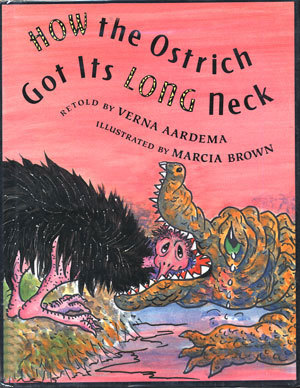
Not always the ostrich

It isn’t as simple as dismissing ten million people as little more than the proverbial ostrich. The reasons can be rather more complex. In any event, whilst the ostrich is known for its head-in-the-sand behaviour, it does have a rather large nest-egg and of course, whilst flightless, is a very fast and powerful runner, even being raced…

One problem is the simple number of pensions to keep track of . The research found to be the main reason why people consolidated pensions (of those that did). Consolidating pensions can make a lot of sense, but it needs to be done very carefully – some older style pensions have various guarantees which may be worth keeping. Some may have very high penalties for transferring them to a different pension.

Making the best of things

Whatever the reason, being prepared for retirement and knowing what you are aiming for is important to us all…. ask any pensioner! As a financial planner, I work with what you have built up and then we figure out together what you need and how to best get there. May I urge you, if you are not a client to begin by downloading my free guide to regaining control of your pension. If you are a client, please share this information. Drifing into retirement will result in serious disappointment.


Dominic Thomas
Solomons IFA

You can read more articles about Pensions, Wealth Management, Retirement, Investments, Financial Planning and Estate Planning on my blog which gets updated every week. If you would like to talk to me about your personal wealth planning and how we can make you stay wealthier for longer then please get in touch by calling 08000 736 273 or email [email protected]

Ten million don’t check pensions2025-01-21T15:04:13+00:00

Taxing Reforms for Pensions

Taxing reforms for pensions

There has been considerable “chatter” about the prospect of pensions being reformed even further. In particular, the tax of pensions is very much up for debate, making the prospect of tax reforms for pensions a genuine possibility.

In brief the Chancellor has already made huge changes to the pension system, enabling a pension to be taken as a lump sum or as income without any requirement to buy an annuity.  In addition, a pension can now be easily passed on to beneficiaries of your estate, rather than ceasing when you do.

Tax Overpayments

The new freedoms have already and will continue to mean that some people don’t do their sums properly and end up paying too much tax – unnecessarily, which of course is a good thing if you run HM Treasury… every little helps and all that.

In very simple terms, most people will currently find that whatever the size of their pension pot, they can take 25% of it as tax-free cash (these days “we” call it a pension commencement lump sum – or PCLS). The rest is taxed as income.

Reforming tax relief

At the moment, anyone that pays into a pension gets tax relief – either at 20%, 40% or even 45% depending on your rate of tax. Everyone gets 20% (from age 0 to 75). So an investment of £1000 actually costs £800 if you are a nil rate or basic rate taxpayer. If you pay more than 20% tax, you get to claim the balance back via your tax returns.

The Chancellor is reviewing this, because it costs the country a lot of money. The main problem being that employers make most of pension contributions each year and do so in part because it is treated as a deductible cost. If this were considerably altered, then most employers are likely to reduce or even stop (bar the minimum requirements of auto enrolment) their contributions. This would result in smaller pensions in retirement…

So he could simply reduce tax relief to a lower amount, in essence he has done this already for anyone earning over £150,00, who have their annual allowance restricted to just £10,000 (less than an ISA) if they earn over £250,000.

Tax relief provided in 2013/14 amounted to £34.3bn, whereas the tax on pensions generated £13.1bn a “cost” to the UK of £21.2bn. Most of which (2/3rds) is reclaimed by higher rate taxpayers… those paying 40% or more.

Shrinking the Pot

He has also reduced the amount that can be held in a pension (the Lifetime Allowance) which is set to reduce again from £1.25m to £1m next April. Anything above this will be subject to an excess tax charge of 55% as things stand at present. That’s what I call easy money for the Treasury and there isn’t that much that you can do about it, other than applying for protection where relevant.

Changing the Sweetener

Another option would be to make pensions tax-free in retirement instead of taxable. Whilst this sounds all well and good, the reality is that who would honestly trust any future Government not to change the rules later, when they realise that they need the income to be taxed.

Simplicity Seems Dead

I am of the opinion that pensions are going to change, how much and when, we simply do not know. However the Government wants to be seen not to help the “rich” which seems to include people paying 40% tax and everyone paying 45% tax. It would include anyone in the State Sector that has built up a long career – doctors, teachers, police, civil servants – all of whom seem to be the current “cat to kick”. It certainly includes anyone that has pension funds worth £1m or more. Though I would argue that £1m in a pension pot isn’t that huge (yes I know its relative)  but in practice that provides at £40,000 a year income… not enough to pay higher rate tax. The worst case to my mind would be to create a “before and after” system – which we have had before, which only makes life more complicated.

If I were Chancellor?

People need an incentive to save for the long-term. I would abolish the Lifetime Allowance making all current and previous protections irrelevant. I would restrict tax relief to a % of salary, perhaps providing it directly as a 5% tax cut, say 20% tax becoming 15% if payments are made to a pension. That way HM Treasury collect taxes, people are incentivized to save and earn. I would scrap rules that enable people to pay into pensions for children, which is essentially something that only the wealthy can do, so that pensions are only for those aged 18. However I would continue to tax pension income as income…

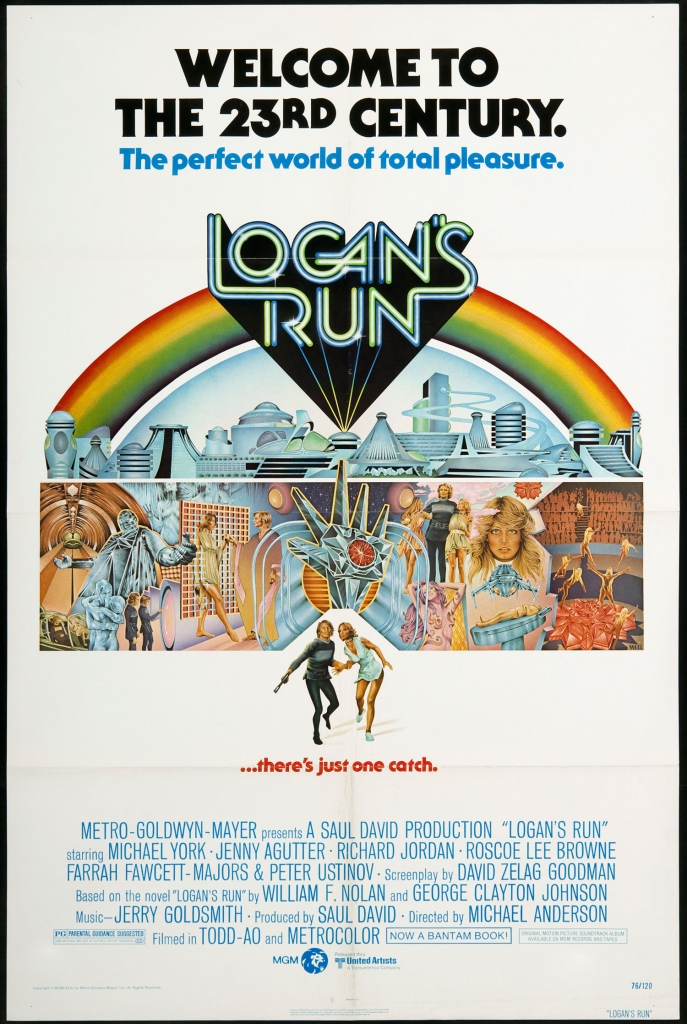
Sadly, for younger generations the prospects of good pensions looks fragile… of course there is the prospect of the solution as outlined in Logan’s Run….. there’s just one catch..

Dominic Thomas
Solomons IFA

You can read more articles about Pensions, Wealth Management, Retirement, Investments, Financial Planning and Estate Planning on my blog which gets updated every week. If you would like to talk to me about your personal wealth planning and how we can make you stay wealthier for longer then please get in touch by calling 08000 736 273 or email [email protected]

Taxing Reforms for Pensions2023-12-01T12:20:08+00:00

Lost your pension?

Lost your pension?

Many people have lost track with old pensions, frankly it is hardly surprising given the number of name changes, mergers and acquisitions of various pension companies over the last 40 years or so.  Perhaps you have lost your pension too.

Consider the various jobs that you have had over the years, however small, perhaps there is an old pension lurking somewhere in the midst of your curriculum vitae.

Pension evolution…. perhaps revolution

Pensions have improved dramatically over the years and almost unrecognisable from those I first understood over 20 years ago. The evolution continues and something that adviser firms like ourselves spend a lot of time researching and reviewing. Cheap is not always best, but then neither is the most expensive.

The media, consumer groups and various politicians have regularly made statements about the charges on pensions, some of which are accurate, some are not. However, I imagine you would like to know if your old style pension could be brought up to date.

Find your lost pension

The Pension Tracing Service (PTS) was set up to help find lost pensions. In essence everyone has a National Insurance number that is unique to them, this is the main tool used to search for lost old pensions. It is believed that there could around 50million dormant or lost pensions “in the system” by 2050 due to the growing number of small pensions (due to auto enrolment, or workplace pensions).

Once lost, now found

Last year the PTS was contacted over 145,000 times and we expect this to increase considerably. They aren’t always successful in tracing pensions, but last year managed to trace 87% of those believed to exist.

Regain control of your pension

So it would be advisable to check if you have any lost pensions and then check them (and any old pensions that you haven’t lost) to determine if they can be improved. I have put a free guide together about this, which I have called “Regaining Control of Your Pension”. You can download it for free (tell your friends and colleagues) simply by completing the online request below this item.

Dominic Thomas
Solomons IFA

You can read more articles about Pensions, Wealth Management, Retirement, Investments, Financial Planning and Estate Planning on my blog which gets updated every week. If you would like to talk to me about your personal wealth planning and how we can make you stay wealthier for longer then please get in touch by calling 08000 736 273 or email [email protected]

Lost your pension?2025-01-21T15:04:39+00:00
Go to Top