
The Big Short

The Big Short

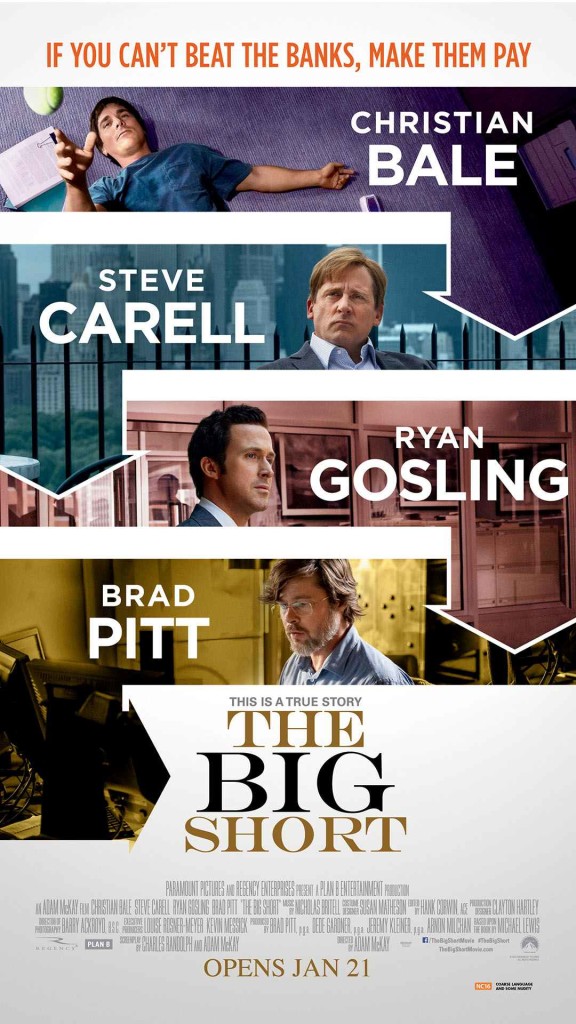
I have been looking forward to the release of “The Big Short” for some time. I suspect that many will yawn with incredulity at the prospect of watching a film about Bankers and the financial crisis… all that jargon, which is, lets face it, all rather dull and old news… I beg to differ.

This is a story well told, but a story that is frankly unbelievable, yet it happened. I would urge you to go and see it, I managed to do so on Monday evening (no I did not claim it as an expense). It will not change your mind about the Heads of Investment Banks or regulators, it will remind you of how utterly corrupt and complicit they have been in ripping off investors for years, and I see little evidence to suggest that this will alter.

The film makers attempt to explain some of the key terms that underpin the entire credit crunch. It is reminiscent of the musical about Enron – yes a musical essentially about accountants, but as with the musical, this is really an exposure of some rather foolish human behaviour.

Whilst the vast bulk of the film concentrates on the American story, the financial services industry is of course global and the setting for the story is largely irrelevant.
Are you sitting comfortably?

There are many that will not like the content of the film. The film is damning in its criticism of Government, regulators, bankers, credit rating agencies and mortgage brokers. The only group to have really been punished for the crisis in the US were the homeowners and the poor – by losing everything (a story told very well in the film “99 Homes” – see my piece on that too).

Here in the UK, we took the collective punishment of austerity, tax hikes and pay cuts. But at least the head of the regulator (then the FSA) was even knighted for services to the financial services industry (!).

You may have some questions after watching the film, both at the practical level and the “what one earth are they thinking?” level. Here is the official trailer to get you in the mood… oh and the film is nominated for an OSCAR. Mind you, I was even more incensed having watched “Four Horsemen“…  to my mind The Big Short is the softer option (pun intended).

Dominic Thomas
Solomons IFA

You can read more articles about Pensions, Wealth Management, Retirement, Investments, Financial Planning and Estate Planning on my blog which gets updated every week. If you would like to talk to me about your personal wealth planning and how we can make you stay wealthier for longer then please get in touch by calling 08000 736 273 or email [email protected]

The Big Short2025-01-27T16:38:37+00:00

Joy and Suffering

Joy and Suffering

Joy is the new movie by David O. Russell, bringing together key players from the 2012 OSCAR winning film “Silver Linings Playbook”. Joy (played by Jennifer Lawrence) is based on the story of Joy Mangano who invented the miracle mop.

The timing of the movie is pertinent (apart from award season) there is a growing unease about capitalism, consumerism and the American Dream. Joy Mangano is in one sense the definitive American Dream, and within the film is portrayed as a woman with a conscience and big heart.

The film is set in the dysfunctional family unit, where Joy embodies the sandwich generation, holding a household together of her parents, her children and a successful divorce. I am not sure how much of this is artistic license, but Joy’s former husband remains an employee of her business.

Entrepreneur?

Anyone that has ever started their own business will recognise many of the struggles and gigantic mistakes that she makes. One of the more pertinent is where and how to seek proper expert advice and encouragement. It’s also a movie for women whose struggles are invariably ignored, overlooked or simply neglected (by the movie industry and society at large).

A strong OSCAR winning cast give the film a sure footing, who relay the story carefully. Joy Mangano and her business Ingenious Designs LLC is now very much a success story, the miracle mop has sold in excess of $10million a year – but it’s not even her most successful product – huggable hangers. Her net worth was reported to be around $50 million in 2015.

Whilst there may well be some factual inaccuracies, the story is compelling and I thoroughly enjoyed the film. If you run a business or have any aspiration to do so, it’s one to seek out. Here is one of the subsequent Miracle Mop videos with Joy Mangano.

Dominic Thomas
Solomons IFA

You can read more articles about Pensions, Wealth Management, Retirement, Investments, Financial Planning and Estate Planning on my blog which gets updated every week. If you would like to talk to me about your personal wealth planning and how we can make you stay wealthier for longer then please get in touch by calling 08000 736 273 or email [email protected]

Joy and Suffering2025-01-28T09:55:27+00:00

Divorce

Divorce

Understandably, divorce is a sensitive topic. Yet it is a reality for many people. The subject of divorce rates is open to interpretation. Some will see this as failed relationships, others will see it as ending misery, of course each has its own context and trauma (or not).

Statistics are interesting, but as I have said on countless occasions, they are merely data that can be manipulated to assist argument. So with that in mind, the ONS (Office for National Statistics…. yes it does sound rather like something from 1984) released data this week revealing that divorce rates fell 2.9% in 2013, when compared with 2012.  Factually, 2013 saw 114,720 couples in England and Wales granted a legal divorce. The bulk of which were people aged 40-49, however notably it would appear that more younger women divorce than men.

Anecdotal experience would tend to suggest that generally wives are a bit younger than their husbands… emphasis on generally. In addition divorce rates at older ages are likely to be lower due to the fact that marriages also end when people die and there are very few divorces amongst those under 25. So there’s a degree to which one might ask… isn’t this simply stating the obvious? One might also suggest that fewer marriages take place, so it follows that fewer divorces do.

Chance of divorce

I’m being a little inaccurate with interpretation here, rather than the chance of divorce, a better and more accurate statement would be the percentage of marriages that end in divorce. According to the ONS, the percentage of marriages ending in divorce has generally increased for those marrying between the late 1960s and the late 1990s. For those married in 1968 20% had divorced within 15 years. Thirty years later, of those married in 1998 32% were divorced before a 15th anniversary. The current median duration of a marriage that ends in divorce was 11.7 years in 2013.

The ONS note that compared to data from 2005 the percentage of marriages that end in divorce reduced from 45% to 42%…. so a minor reduction. They suggest a couple of possible factors for this.

1. The age at first marriage has been increasing, data suggests those that marry at older ages tend to have a lower risk of divorce.

2. Cohabitation has increased, which acts as a filter for those contemplating marriage, so arguably fewer marriages then end divorce.

OK, so this is all well and good, but so what? Well…. the uncomfortable truth is that something like 4/10 marriages end in divorce. So it would seem logical to reflect on this when it comes to your financial planning, by ensuring that both parties in a couple are engaged in financial decisions, both are building and protecting wealth. I have only ever seen one painless divorce (which in reality I do not know much about) most are very painful. Your financial planning can be arranged to reduce such pain, should it occur.

To generalise again, women under the age of 35 are far more likely to divorce than men. Men over the age of 50 are more likely to divorce than women.

Christmas Stress

If you are experiencing a divorce or think you may be about to. Christmas and summer holidays are the time when most people decide to divorce. Understanding your finances, what you have and what you need is vital and I am constantly surprised at how few divorce lawyers every suggest some proper cashflow modelling to reveal what is possible.

Divorce or relationship struggles often make good drama. Here is the trailer for the film “The Story of Us” starring Michelle Pfeiffer and Bruce Willis.

and for some dvd’s on the theme…

Dominic Thomas
Solomons IFA

You can read more articles about Pensions, Wealth Management, Retirement, Investments, Financial Planning and Estate Planning on my blog which gets updated every week. If you would like to talk to me about your personal wealth planning and how we can make you stay wealthier for longer then please get in touch by calling 08000 736 273 or email [email protected]

Divorce2025-01-28T14:35:50+00:00

Spectre in Bond?

Spectre in Bond?

As a financial planner, I’m told that I’m meant to know a thing or two about the “Bond market”….I am sure that you will have seen some of the marketing about the new James Bond film “Spectre”. As I write, the film has grossed over £48m in its opening weekend. James Bond has been one of those familiar features of British culture, with strong themes of Queen and country… notably drawn upon in the London 2012 Olympic opening ceremony.

Despite this Bond is a character that has required considerable updating, partly due to the technology employed and partly due to changing attitudes in a more enlightened society. Here is the trailer for Spectre.

The struggle is a familiar and shared one, yet such attitudes are deeply embedded in culture.  The recent film “Suffragette” whilst shocking to some extent by todays standards, the more shocking details appear in the final end credits which reveal the year in which different countries gave women the vote.

Ladies and Gentlemen… not boys and girls

Anyway, back to Bond, despite the suggestion that this Bond is rather different, sadly it is simply rather disappointing. Perhaps I have become more critical, but I found myself feeling completely disconnected from the initial opening action scene a fight and flight pursuit in Mexico. This feeling persisted throughout, akin to a formula much like painting by numbers, whilst piecing together a finished product, felt disjointed and somewhat fraudulent. There is some dreadful dialogue and utterly unbelievable explosive consequences, of course.

However most disappointingly was the hype around the appearance of Monica Bellucci as the oldest actress to play a “Bond girl” Lucia, who was 50 when the film was made. Disappointing on several counts, that the term girl is continued to be used to describe a woman, (or is Bond a boy?). That she is in the film for probably no more than 2 minutes, her role is entirely superficial for moving the plot along.  Strikingly, her character serves merely to play the stereotype damsel in distress that takes a split second for Bond to reassure and to lead to bed. Ultimately Bond’s next conquest is the much younger Madeleine Swann, played by Lea Seydoux (29 during the shoot).

Whilst the rest of the world is moving towards more equal rights and attitudes about gender, Bond remains clearly confused, we get to peak into his flat, which appears to reflect a man without any significant connections, whilst frequenting a world of high living, the reality at home is rather different.

Given this, I am left feeling that Bond has been dealt the inevitable blow of consumerism dictating art… as is increasingly becoming commonplace. It would seem that there is now very little attempt to be subtle about product placement, with the film serving more as a long advert (and long it is at 2 hours 28 minutes). The question that we are left to reflect on is what does it say about us if we want to be Bond? as GQ seem to think many men would wish. Despite being all the action, there is some incredibly lazy thinking.

So with that in mind, here is a video I came across about how expensive it is to live like Bond… should you wish to do so.

Dominic Thomas
Solomons IFA

You can read more articles about Pensions, Wealth Management, Retirement, Investments, Financial Planning and Estate Planning on my blog which gets updated every week. If you would like to talk to me about your personal wealth planning and how we can make you stay wealthier for longer then please get in touch by calling 08000 736 273 or email [email protected]
Spectre in Bond?2023-12-01T12:19:49+00:00

Credit Crunched – 99 Homes

Credit Crunched – 99 Homes

The Credit Crunch may well be one of the defining moments of a generation, it has certainly altered the way many view investment and retail banks. The institute of which I have been a member for a number of years (The Institute of Financial Planning) merged this month with CISI – the Chartered Institute for Securities and Investment having been agreed in September.

One of the many good things about the IFP, who I regard(ed) as the best of the best, was the willingness of other members (in theory competitors) to share best practice. Indeed many have become valuable sources of wisdom for me (in what I hope is a two-way street) and have become professional friends. Understandably, many of us were surprised and perhaps concerned about the changes that the merger may bring about. After all, investment bankers were part of the problem that caused the credit crunch and haven’t we now just “got into bed with them”?

Ethics

In order to migrate my membership over to CISI I had to pass an ethics test. Being candid, it has always been something of a struggle to find and complete any CPD type stuff for the IFP on the topic of ethics – for which there is a required minimum of 2 hours a year (no that doesn’t mean being ethical for 2 hours a year, but demonstrating learning and application of the broad topic of ethical dilemmas).

I followed the online resource and was presented with a series of case studies, which I am pleased to say were interesting and based in the world of real life rather than a purely theoretical one. The overwhelming perspective being that if others follow the same path, I have had my faith and optimism significantly increased in the investment world, which if I’m being honest, I didn’t have before.

99 Homes

I have been greatly deflated and frustrated by the greed and bullying exhibited by large corporations and the relentless pursuit of gain without any thought of others. My opinion of the investment world, is almost certainly not that much different from yours. A recent film that captured this is called “99 Homes”. It stars Andrew Garfield, who you may have seen as Spiderman (perhaps not) or as Eduardo Saverin in The Social Network (the film about Facebook). Anyway, Garfield plays a character that has his home repossessed and, well… shall we say something of the gamekeeper turned poacher occurs. I found the film compelling and perfectly exposing the moral maze and ethical dilemma that people find themselves in. Here is the trailer…. seriously a good watch.

You can get the film on DVD here..

Dominic Thomas
Solomons IFA

You can read more articles about Pensions, Wealth Management, Retirement, Investments, Financial Planning and Estate Planning on my blog which gets updated every week. If you would like to talk to me about your personal wealth planning and how we can make you stay wealthier for longer then please get in touch by calling 08000 736 273 or email [email protected]

Credit Crunched – 99 Homes2025-01-27T16:38:38+00:00

Pensioners set to run out of cash

Pensioners set to run out of cash

The Social Market Foundation released a report yesterday called “The Golden Years – What freedom and choice will mean for pensioners“. This explores the new pension freedoms that were introduced and considers the experience of other nations where this has already happened to see what we might learn.

It will come as little surprise to anyone, that given the opportunity to take money from a pension, many people struggle to make it last for the remainder of their lifetime, yet this is precisely what underpins the point of a pension.

The report points to experience in Australia and the US where similar pension freedoms have been enjoyed. They note three main types of behaviour and problems.

  1. Cautious Australians – who withdraw less than 1% of their pension fund
  2. Quick spending Australians – one in 4 clear out their pension fund by 75
  3. Typical Americans – who withdraw 8% a year

Overspending and pessimism

I’m not going to pretend that this is an easy problem. As a financial planner I have to make lots of assumptions about the future and I typically advise clients that few of them will be accurate, but they are all reasonable, but just as importantly, they are reviewed.

In simple terms, financial planning attempts to ensure that you don’t run out of money. Great financial planning attempts to ensure that you get and keep the lifestyle you want. There are numerous assumptions that I have to make, not least of which is your life expectancy. Most people under estimate this. Pause for a moment. At the risk of boring you… as I say this to clients… if we take a conservative approach to your life expectancy and assume you live until you are 100, your money has to last longer and thus work harder… if we assume you live to say 80, then it doesn’t need to last as long or work as hard… but if you invite me to your 80th birthday party, I’m the least popular person in the room, because once we’ve had a drink, the cake and a bit of a dance, I turn the lights off. That’s it.

OK, you may have other sources of income (State Pension etc) which would continue, but the point is merely to help you grasp the significance of this assumption… which I find seems to work. Importantly we review this (its an educated guess)…  the day you die isn’t something that we can easily predict, but we can at least build scenarios into your plan.

The Destitute Pensioner

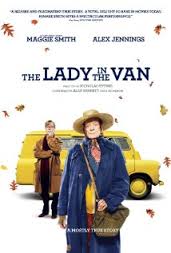
There’e a new film out which I plan to see as it stars the rather wonderful Maggie Smith. Its called “Lady in the Van” and is on general release on 13th November. Its based on a true story. I’m not sure if this was a lifestyle choice or something that was forced upon her, but it makes for a good script. Without proper financial planning advice, many pensioners are going to run out of money, the only way to properly engage with this prospect is to provide a proper financial plan which includes cash-flow forecasts, without it (as many advisers still appear to be) you are up the creek with the proverbial paddle. Here’s the trailer.


Dominic Thomas
Solomons IFA

You can read more articles about Pensions, Wealth Management, Retirement, Investments, Financial Planning and Estate Planning on my blog which gets updated every week. If you would like to talk to me about your personal wealth planning and how we can make you stay wealthier for longer then please get in touch by calling 08000 736 273 or email [email protected]

Pensioners set to run out of cash2025-01-28T14:35:50+00:00

Pensions: Annuities starting to improve?

Annuities starting to improve?

We appear to have witnessed a small upturn in annuity rates. In June the best open market annuity for a male aged 65, with £100,000 seeking a single life, level income with a 5 year guarantee rose to 5.35% or £5,350 in April and May the rate was 5.09%…. technically a modest increase of £260 a year in this example, but equivalent to an increase of 5.1% (Ok it is starting from a very low point).

Why?

Well, gilt yields have increased modestly too, these essentially drive annuity rates, along with mortality rates (as well as other health and geographic factors). The 15 year gilt yield bottomed at 1.76% in February this year, but has slowing started to increase. All this suggests a possible interest rate rise is probably coming.

Back in the day…

I wonder what your feelings are to this news. In October 1990 the same £100,000 for a 65-year-old male, also buying a single-life level annuity with a 5 year guarantee would have received an annuity rate of 15.64% or £15,640 a year (nearly three times as much). At the time the 15 year gilt yield was 11.74%. Gilt yields have historically always been less than annuity rates, tracking a very similar path but 2-3% less.

Of course to buy an annuity in October 1990 you would be born in 1925, the year Clara Bow starred in “The Plastic Age” and you would now be 89. Most men born in 1925 do not live to 89, (and some may have fought in WW2… just, being 20 when it ended) but for those that have survived until 2015 the average man would live another 4.32 years according to the ONS. Some will obviously live longer, some less (hence it being an average figure). If you are lucky enough to have a 15.64% annuity rate that started in October 1990 you would have already had £400,384 by the end of June 2015 from your £100,000. Living until the average 93.3 would provide a total income of £458,252… which really isn’t too bad is it.

What about inflation?

Since 1990 until the end of last year (2014) the average rate of RPI was 3.1%. As a result anyone with a level annuity has seen the effective value reduce by 3.1% a year (assuming that you believe the RPI data and buy the same goods and services – which is a significant point).  Of course £15,640 today is £15,640, but if we back date this to 1990, its worth the equivalent of £32,746, in other words a little more than twice as much…. or to put it another way £15,640 is worth about half what it was worth in the space of about 25 years.

Planning your retirement income

If only life were as simple as buying the best deals. In practice planning your retirement income is a fairly involved task, there are lots of choices – loads in fact. How much income you need and your thoughts about inflation are part of the discussion. The new pension freedoms make this a more valuable discussion than simply having to buy an income and living with the consequences, the downside is that greater choice, brings greater complexity and possibility.

Dominic Thomas
Solomons IFA

You can read more articles about Pensions, Wealth Management, Retirement, Investments, Financial Planning and Estate Planning on my blog which gets updated every week. If you would like to talk to me about your personal wealth planning and how we can make you stay wealthier for longer then please get in touch by calling 08000 736 273 or email [email protected]

Pensions: Annuities starting to improve?2025-01-21T15:50:48+00:00

Would You Risk It?


Solomons-financial-advisor-wimbledon-bloggerWould You Risk It?

I recently watched a Swedish film by Ruben Ostlund called “Force Majeure” which had me squirming in my seat. Its the story of a family on a skiing holiday in the alps, who get caught up in an avalanche, which of course is merely symbolic of everything else that is going on in their lives. It’s a convincing story if somewhat realist and slow in pace. As someone that has only been skiing once (which I loved) but also knowing many people that have had fairly miserable and even tragic tales from the slopes, this film ended any thoughts I had about taking my family on a skiing holiday, even though I am well aware that it can be a wonderful experience. force majeure

I won’t spoil the story for you and it probably isn’t what you may expect of the story from simply using the words family, holiday, skiiing, avalanche. However this is an exhausting look at how stress is handled, magnified in the dynamic of a family holiday. In the film, the couple (Tomas and Lisa) seem much more willing to take risks and lead their two young children in a way that I simply wouldn’t even contemplate – because I think of them as being unsafe. However its deeper than that.. its also the risks people understand and assess (or not) on a much broader level. The nation that build Volvo’s (the safest cars?) flips the notion of risk on its head when reduced to the individual and relationships.

The film prompted much discussion and reflection, but with my my financial planner hat on, I tried to draw a few lessons. On the one hand, the setting of busy people carving out time to spend with their family and friends and enjoying “the good life” is some of the “stuff” that is talked about in a financial planning meeting… ie. how do you really want to spend your time? what do you value? what’s the purpose/reason for you working so hard? This is only part of the start of a conversation, which invariably lasts much longer than a single meeting…. after all we are discussing your life plans right?

In the design and implementation of a financial plan and experiencing the “process” I believe that many of our clients look for a sense of leadership and guidance, not in a patronising way, but one that reflects a weathered, seasoned expert that has been on the track getting people from A to B. I do not believe that they expect me to take shortcuts, go off-piste or compose a different version of reality to suit my perspective. There is far more to it than simply getting from A to B anyway… its the journey and your unique values and “milestones”.

Many of us were brought up to ask questions, but soon learned that to do so exposed a lack of knowledge. The peer pressure of school for many is more than sufficient to have the opposite effect to the one your teacher hoped for. For many this carries into adult life, not wishing to ask “dumb questions” for fear of being seen to appear foolish. I believe that there are no “dumb questions”… none of us knows everything. So in the perilous world of investing and planning a life (which doesn’t come with an instruction book) it is sensible to get a guide, someone that you can trust to help you with your journey. Even the best skiiers were taught and the very best still get coached.

The final sequence in the film reveals someone that is paid to take people from A to B yet appears to possess none or very few of the required practical skills, let alone social ones. As for me, I may have a different take on the risk of skiing, those of you that are skiiers may think I’m daft… that’s not really my point, but merely to highlight and understand the risks involved. Thats also partly what I do for clients – helping them to see the risks that they are really running, be that taking too much (or too little) investment risk, banking their future on the sale of their home/business, gaining an inheritance and so on… none of which is “wrong” provided that you know what you are getting into… its not a matter of “a different perception” but of seeing what is there. Just because I wouldn’t risk it, doesn’t mean that you shouldn’t… but you may want to benefit from taking a moment or two to ensure that your thinking and assumptions are “solid” and that you aren’t standing on very thin ice… or hurtling down a mountain in the fog. So what are the risks you are running within your own financial planning? Why not begin a conversation with me to make your journey much more sure-footed.

← Back

Thank you for your response. ✨

Here’s the trailer. Do get out to support your local independent cinema and independent movies/arts if you can.

Dominic Thomas

Would You Risk It?2025-01-27T16:11:52+00:00

Faking It – Big Eyes

Faking It – Big Eyes

As you may have gathered, I enjoy stories, particularly those that seem to have something to say. As a financial planner, naturally I’m interested in money and how investors behave. However money is just a tool, what people really want are the choices that money offers. We all relate to money differently and history is littered with examples of good and not so good financial decisions.

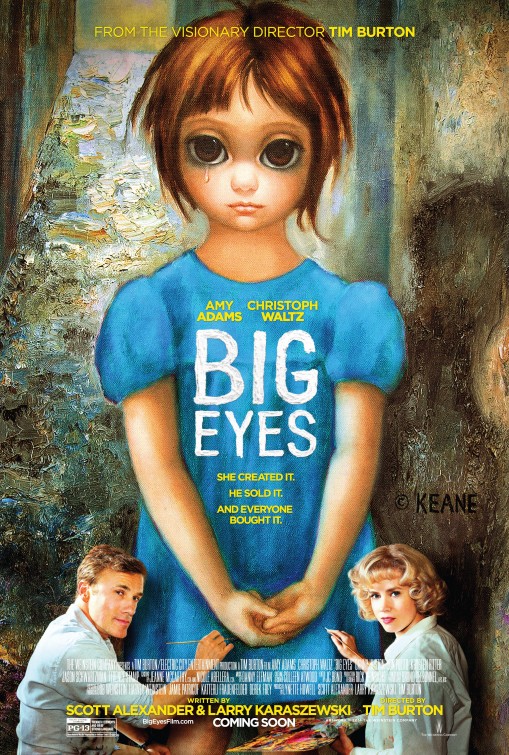
The new Tim Burton film Big Eyes explores the true story of artist Margaret Ulbrich (Amy Adams). Primarily this is an intriguing story about how a struggling single mother, plying her skills as a street artist meets a fellow artist Walter Keane. He is charming and encouraging, enabling her to regain some sense of confidence in her own ability. Following their marriage Walter exhibits his work and includes some of his Margaret’s which she has effectively now signed as Mrs Keane.  It is mistaken for his and unwilling to correct the error for fear of losing the sale, so begins a sequence of events in which he passes off Margaret’s work as his.

Oversized

The deception does not come naturally to Margaret, and the severity of her “crime” is exaggerated by husband so as to ensure her silence. Largely due to his skills the work becomes commoditized, world-famous and naturally very lucrative. As the money flows in her fear about the magnitude of the crime multiplies, leading her to feel trapped, friendless in her studio, unable to take any credit for her work. One wonders whether this would have been a very different story had Walter Keane not been such a brilliant salesman and marketer. The sadness of the story is that Walter is unable to recognise the value of his own skills, preferring to deceive and take full credit for the work and is unable to acknowledge the deception.

Ultimately, Margaret finds the self-confidence to leave her increasingly belligerent husband and gains the confidence to reveal her “crime”, though in practice this is more of an unmasking of the truth. What is surprising is how it took so long and why his deception was not uncovered sooner. Therein lies an uncomfortable truth – much like the emperors new clothes, sometimes the obvious observation isn’t spoken for fear of appearing foolish, even the art critics (the experts) misinterpret the source of the work. It is only a judge who assesses the claims with the obvious solution…much like King Solomon’s wisdom when two women argue over a baby…. so when it comes to assessing a fraudster, you need eyes to see.

Dominic Thomas
Solomons IFA

You can read more articles about Pensions, Wealth Management, Retirement, Investments, Financial Planning and Estate Planning on my blog which gets updated every week. If you would like to talk to me about your personal wealth planning and how we can make you stay wealthier for longer then please get in touch by calling 08000 736 273 or email [email protected]

Faking It – Big Eyes2025-01-28T14:55:30+00:00
Go to Top