
What We Cannot Measure

What We Cannot Measure

Financial scams are sadly all too common, we cannot measure how much we save clients by helping them to avoid the many thieves, scammers and general loathsome low-lifes that are keen to part you from your money. Yet that is arguably one of the most significant aspects of my work – helping clients to avoid making mistakes, or at the very least, making fewer of them.

I had to admit to living in a bit of bubble within my sector. When I started as an adviser (1991) I thought most of them were crooks and little of my early experience of helping people get out of rubbish rip-off arrangements altered my opinion. Admittedly for a more complex set of reasons, I was acutely aware that when I turned up to events, my car was one of the “worst” in the car park. Others were doing much better… and frankly I thought I knew why.

Skip forward quite a few years and my opinion changed dramatically as a result of being part of the institute of Financial Planning (IFP) who are now the CISI. The people I met there were open, genuinely keen to help each other do a better job for our clients and were adamant that clients must be put first. This is the bubble that I have been in for quite a long time now. I forget, (because I tend not to come across them) that there are still a lot of horrid individuals who would raffle their family.

The Ark Scam

I have followed the Ark scam with some exasperation, these scams impact our regulatory fees (which rise as a result). In many senses they feel like rewarding failure, but I do appreciate that it’s not an easy job to stop every scam. However this morning I saw a tweet from a decent-minded adviser I know about a post from another. It is the very shocking and desperately disappointing story of Sue Flood’s experience with Ark and her pension. She has been failed miserably.

I would encourage you to read the item on Henry Tapper’s blog page. It is a verbatim script of her account of things from a meeting yesterday. I wish it were very different.

All I can say is that it is about time that some justice was provided to these 500 or so victims. The authorities responsible should wake up and get on with resolutions and bringing the crooks into the safety of prison.

It is this sort of stuff that we help clients avoid. There is a lot of it out there. Frankly Bitcoin is another and most of the rubbish that is covered in the press is decidedly bad for your wealth. Sue did just about as much as anyone could be reasonably expected to do, she checked out her adviser and everything seemed fine. As an industry (we still are) we have collectively failed many, many people like this.

Here is the link to the article.

Dominic Thomas
Solomons IFA

You can read more articles about Pensions, Wealth Management, Retirement, Investments, Financial Planning and Estate Planning on my blog which gets updated every week. If you would like to talk to me about your personal wealth planning and how we can make you stay wealthier for longer then please get in touch by calling 08000 736 273 or email [email protected]

What We Cannot Measure2023-12-01T12:18:06+00:00

Some Good News

Some Good News

There is some good news today about pensions. A recent court case (23 January 2018) has concluded that 245 victims of a pension scam should be reimbursed by those that stole money from their pensions, to the tune of a whopping £13.7m. The High Court Judge Mark Pelling has ruled that 4 pension scammers must make redress to those that they scammed. Those four people being David Austin, Susan Dalton, Alan Barrett and Julian Hanson. These were all connected to a company called “Friendly Pensions” (as if!). You can google their accounts online to see who is who or see more detail here.

I say good news, because it often seems that my particular world if full of stories about people who are scammed and the culprits invariably get away with it. Thankfully the regulator and the Police are all having much more success in Court. Apart from being odious examples of human beings, the scammers simply break all rules, take money that is not theirs, blow it on an excessive lifestyle and pay no taxes, hopping from one financial jurisdiction to another. Thankfully this lot of reprobates were caught.

Usual Trick

These scammers all profited from cold calling and offering to move pensions but providing the investor with the incentive of a tax-free rebate from given up commission. I think the thing that distresses me most is the way that they hide lies amongst truths. Up until 2013 it was possible to give up commission (but only to improve – by reducing investment charges). As of 2013 commission was finally banned by the regulator and advisers had to agree fees with their clients for the work conducted. This can appear very similar to a commission (because the fee can be paid from the pension or investment), but it is very different in practice – in that it is determined and agreed between you and the adviser, not set by the product provider (manufacturer) of the pension (or investment).

Another thing to watch out for is the investments themselves – invariably unregulated investments are used due to the high charges that traditional (mainstream) funds do not have by comparison. In many instances, unregulated investments may as well be a bank account that a crook simply empties into their own account, usually via a network of other accounts.

Why I am particularly delighted is because usually the compensation bill is picked up and shared between the remaining adviser firms in the UK. Though not involved and most unlikely to ever recommend an unregulated investment, all are obligated to pay as demanded within 28 days by the FSCS – the Financial Services Compensation Scheme. So it’s a bill that in theory I won’t be having to pay, though I suspect that these crooks have managed to spend most if not all of the money, so we will probably have to anyway – such is life.

In short, take great care. I know its an industry full of jargon and a plethora of tables and charts, many of which are unhelpful, but get a sense of the adviser you are using and why he or she might be suggesting you change things that you have. There aren’t that many good reasons to move a pension – but reducing your investment costs would be one of them, perhaps better control and reporting if they are all in the same place, or access to some sensible investments, but frankly thats about it unless your old scheme is an utter rip off and isn’t delivering anything of value. Some old pensions do have valuable benefits and some have hefty penalties (still in 2018!).

Anyhow, at least 245 people are now legally entitled to compensation from those that defrauded them, which in my book is a good result.

Dominic Thomas
Solomons IFA

You can read more articles about Pensions, Wealth Management, Retirement, Investments, Financial Planning and Estate Planning on my blog which gets updated every week. If you would like to talk to me about your personal wealth planning and how we can make you stay wealthier for longer then please get in touch by calling 08000 736 273 or email [email protected]

Some Good News2023-12-01T12:18:15+00:00

Glengarry Glen Ross

Glengarry Glen Ross

The 1984 play by David Mamet opened in London last week. I had seen the 1992 film but had not the play. They are certainly different. To my mind the characters in the film generated more sympathy than those in the play. Whatever your view, the performances are strong, but perhaps not as strong as the language which is about as “locker room” as you can get, as clashing egos and dysfunctional ideas about masculinity are spat across the space between characters.

These are “men” that have a fluid understanding of truth, it seems that they believe that it serves their purpose to be economical with the truth. Selling whatever they can for as much as they can to whomever they can. We are all probably familiar with the hard sell and yet despite it being largely frowned upon here in Britain, we are all still regularly blitzed by people trying to grab our attention. This week I’ve had the customary junk emails, a few text messages and a call or two about an accident that wasn’t my fault and never happened. Selling, sadly, is a regular bedfellow of scamming.

Always Closing

Anyone in business will recognise the constant problem of attracting and obtaining new customers. Those that provide a particular product may only ever sell it once, as opposed to those that sell a service. It is telling that in the play, none of the characters really possess much by way of a sense of ethics. Sadly this is nothing new and of course the notion of hypocrisy (at best) lying (at worst) is familiar in almost any sector of society and unique to none. To the salesman (person) the enquiry or “lead” is their opportunity to close a sale. However bad or unethical selling can only lead to a failed business and one that closes.

A Brood of Vipers

I have never really understood those that knowingly and deliberately lie in order to make a sale. Financial services (my sector) is of course one where many sharks and charlatans have resided. Life may be harder for them now, but invariably they exist and find a way to part people from their money with apparent ease. Some “advisers” often refer to the “good old days” of financial services, by which they mean earning a commission for selling products. It may interest you to know that back in those good old days there were about 250,000 people selling financial products, primarily in person, often at your doorstep. Today there are around 25,000 authorised individuals who are able to provide advice and arrange “stuff”. Of those probably no more than 5,000 are financial planners, who, like me, don’t need to arrange “stuff” to get paid and provide a valuable service to clients, but of course most of us will arrange investments and the like as required.

Money Interest

Money is invariably the barrier to an honest conversation. In 2013 after much mucking around the regulator of the day banned most forms of commission (note I started the firm in 1999 completely removing commission). In January 2018 the rules will be taken to a higher level due to a European agreement (MIFID2). This will mean advisers and product providers need to be crystal clear about their charges and agree terms for their service. This is coming from a sensible, laudable intention of protecting investors, unfortunately I can see very few benefits at this stage, at least for those that are already provided with a costed and agreed service, as our clients are. If anything, people are more likely to make more bad decisions, focussed on cost rather than value. One of the new rules is quarterly valuations and prompt/immediate notification if a portfolio falls by 10%. These sort of actions tend to panic investors and shift their focus to the short-term rather than the long-term benefits of disciplined investing and having a proper financial plan.

Unintended Consequences… again

Your in-boxes will become fuller of correspondence, which will in turn lead to either inertia or anxiety, perhaps both. This is likely to be followed by the current serpent de jour, dressed as a helpful paramedic, but actually seeking to suck a pint of blood or two for themselves – the ambulance chasers will find some way to bombard you and convince some, many perhaps that their portfolio will only ever rise and if it doesn’t or didn’t, please take a ticket and join the queue for those seeking remedy or the fantasy of one. To my mind the equivalent of worrying that an egg was broken when the intention is to make an omelette. If I’m sounding fed up or perhaps “aggressive” this is because, well I am certainly tired of pointless changes, but equally aware that we will need to do more work, for no benefit, which will result in higher costs and fees, which will inevitably be passed on to clients. It won’t really deter the liars or crooks, perhaps it will make like marginally harder, but those are people that never play by the rules and would never offer you anything of value.

As for the play, well it’s on in London near Embankment tube. It has not been updated (if it has I cannot see where). It has contains some very uncomfortable language – racism and sexism which jar and are not helpful to the underlying message of the play. Of course it deals with bigger topics such as the dog-eat-dog world that forms of capitalism create, where collaboration isn’t in evidence, but rather ruining your peers helps your own cause. Starring Christian Slater, Kris Marshall, Oliver Ryan and Don Warrington to name a few. Get your tickets here – (warning – very sweary!)

Dominic Thomas
Solomons IFA

You can read more articles about Pensions, Wealth Management, Retirement, Investments, Financial Planning and Estate Planning on my blog which gets updated every week. If you would like to talk to me about your personal wealth planning and how we can make you stay wealthier for longer then please get in touch by calling 08000 736 273 or email [email protected]

Glengarry Glen Ross2023-12-01T12:18:21+00:00

HBOS scam, stranger than fiction

Dominic Thomas
Feb 2017  •  4 min read

HBOS scam, stranger than fiction

Yesterday I wrote about Venture Capital Trusts and explained that any business is reliant upon its management. You might recall my use of the new Trainspotting film T2 as an illustration of poorly suited characters for management of any business. If T2 is 20 years on then this must surely be Trainspotting 40 years on…

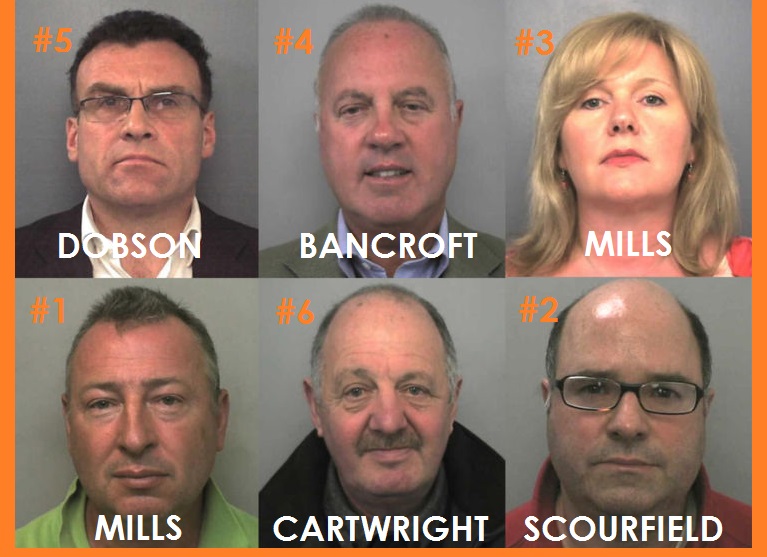
As is often the case, reality can be stranger than fiction. On 2nd February 2016 there was finally a successful conviction of fraudsters Lynden Scourfield and David Mills. They are guilty of a £245m loans scam. Scourfield was a manager at HBOS, supposedly tasked with helping struggling businesses. He was bribed by David Mills to pressure HBOS business clients to use a business services company called Quayside Corporate Services. Quayside was owned and run by Mills and his wife Alison. Together they set about extracting huge sums in fees from HBOS business clients who were being told that they would lose HBOS support and sources credit finance if they didn’t comply. Many ended up going bankrupt.

Like Characters from Trainspotting…

These three and three others (Mark Dobson, Michael Bancroft and John Cartwright) have finally been sentenced to prison, having spent huge sums on all the typical cliché trappings, all evident in both Trainspotting films. They ruined various businesses, who were trapped within the Bank, who issued fairly standard penalties which evolved into eviction notices with employees of the bank deceiving their own internal systems which then kicked in to the normal processes for how to handle a failing business (which you can imagine). Under pressure people do strange things, and a number of the business owners that were scammed, gave away control and or ownership of their own businesses. However this appears to be largely due to the complexity of the scam and a classic confidence trick, regularly reassuring the HBOS customers that the Bank was agreeing their finance.

Ripped off Businesses that were ruined

This is a deeply disturbing case of a major bank failing to understand that its own staff were scamming its customers. According to reports, the scam may have amounted to around £1bn, although official reports suggest £245m, all over a 4-year period between 2003-2007 (just before the credit crunch). Thankfully the six involved, have been rewarded with a collective 47 years and 9 months in prison. You may recall that HBOS was rescued by Lloyds TSB having notched up £45bn of bad debt and at one point it was reliant on a £25bn lifeline from the Bank of England. Well done Thames Valley Police.

HBOS scam, stranger than fiction2025-01-28T09:55:26+00:00

Ban Cold Calling Pension Scammers

Ban Cold Calling Pension Scammers

Since my post on 25 October about a petition by one of my peers to attempt to encourage the Government to address the problem of people being swindled out of their pensions, there is now a new dedicated website. Can I ask that you get involved by signing the petition and sharing it with your contacts.

Why? Well, if you are a client of ours you have protection and have our support and regulated advice. The new pension freedoms mean that many people in their late 50’s or older are being targetted to move their pensions into some very poor (rip off) arrangements. OK, so this may not be you, but pension funds can now last a lifetime, rather than until retirement, which was normally when people bought an annuity. Now most are holding the investments for life, meaning that ongoing advice will be required (to get the portfolio delivering what is needed each year)… but that also means that long after I retire you will likely still need advice for your pension portfolio. So imagine yourself in 15, 20, 25 or 30 years time, being bombarded by calls or emails promising you all sorts of wonderful things…. are you really going to resist?

So please sign the petition, we need to push through to 10,000 signatures. OK cold calling may not be banned, but the issue being raised may result in new policy or regulation that protects people from this.

BAN COLD CALLING WEBSITE

Dominic Thomas
Solomons IFA

You can read more articles about Pensions, Wealth Management, Retirement, Investments, Financial Planning and Estate Planning on my blog which gets updated every week. If you would like to talk to me about your personal wealth planning and how we can make you stay wealthier for longer then please get in touch by calling 08000 736 273 or email [email protected]
Ban Cold Calling Pension Scammers2023-12-01T12:19:01+00:00

Take Five…. for fraud

Take Five

Not to be confused with Jazz musician Dave Brubeck, “Take Five” is a new initiative to counter-act financial fraud, which is increasing at an alarming rate. According to the latest UK financial crime statistics over a million financial fraud crimes were committed in the first 6 months of 2016. As we live in an online, 24/7 culture, that equates to about one every 15 seconds.

You will have certainly had various emails, which look rather obviously like a scam, but increasingly there are emails from businesses and organizations that you probably recognize, often attaching a document, invoice or receipt. In many instances these are viruses, some more harmful than others. Of course if you aren’t expecting an invoice, you might be concerned that you are being sent one erroneously and wishing to correct the matter, but alas, this is part of the scam.

Many email and internet scams, try to imbed a “Trojan Horse” within your computer, which gathers data about what you look at and your keystrokes. This is an attempt to gather access to your contacts (more punters to try) and of course your own personal information so that money can be spent, stolen or extorted.

Pause for thought

The new campaign “Take Five” is essentially an call to pause, to think carefully before you act  – take five seconds to pause. This is because much of the fraud that occurs could be prevented with this very simple strategy. Research has shown that 26% of people continue to provide personal bank details even though they suspect that they should not. 43% said that they shared their details because they felt the person seemed genuine, and 39% said it was because they felt pressured.

Catching you off guard

A staggering 38% of people report that they were busy and wanted to get them off the phone quickly. Of course, the fraudster is also very convincing. Surprisingly, about 37% of people thought they were being scammed during the conversation but still continued with the transaction and almost a quarter (23%) realised after the conversation had finished.

Fear and greed

Most things financial work around two basic dynamics, fear and greed. Fraud is no different; invariably the fraud appears to be helping you, perhaps providing protection for your computer or your bank account. The standard “confidence trick” in all its guises also reveals itself. Some frauds even dupe people into believing that they are assisting with catching a fraudster – playing on your goodwill and sense of social responsibility.

For more information on the Take Five campaign and various frauds please check this website.  For music by Dave Brubeck, well…


Dominic Thomas
Solomons IFA

You can read more articles about Pensions, Wealth Management, Retirement, Investments, Financial Planning and Estate Planning on my blog which gets updated every week. If you would like to talk to me about your personal wealth planning and how we can make you stay wealthier for longer then please get in touch by calling 08000 736 273 or email [email protected]

Take Five…. for fraud2025-01-21T15:43:59+00:00

Business Owners Beware

Business Owners and Employees Beware

Business Owners and Employees need to be aware of fraud that could cost a business its existence. Technology is fantastic, it enables us all to do things much more quickly and also opens up so many new opportunities. However, we all know it is a double-edged sword which can work against us. I imagine that everyone with an email address has had some form of email scam or fraud – everything from the rather obvious “I need you to help part $X million in your account and will pay you a share” to much more sophisticated scams.

The real problem is that in a world where you make purchases all the time from people and businesses that you have never “met” invariably this reduces your ability to spot a scam. There is an interesting story on the BBC website about how the Accountant to a business was pressured into sending €500,000 from one of their clients’ accounts. On the surface it seemed legitimate, but thankfully was caught.

Time Pressure

Often fraudsters will use the pressure of time for a deal or lost opportunity (increasingly common in many marketing campaigns as it is). However, some firms produce lots of information – for example online diaries, showing when people are available (capitalising on times when they are unavailable). So a sense check is often the first thing you should do. Where money is concerned, a good financial planner is someone that you will have a trusted relationship with. So he or she should have a pretty good idea about your plans – assuming that you provide information honestly and that suitable questions have been asked.

In the case the BBC highlight, the Accountant was informed that the money was to be used to buy a business in Cyprus. One would hope that the business would have discussed such a plan with the Accountant in advance (if true) so it would not be something out of the blue. Similarly, a financial planner, really should have a good idea of when you might need money – for school fees, a wedding, a property purchase and so on. In practice few expenses should be a “surprise”. This relationship is likely to mean that fraud can be spotted more easily, but in no way guarantees it.

Anyway, be mindful that anyone that has access to any of your accounts – business or personal might unknowingly sign off something believing it to be true. You are responsible for your accounts and need to ensure that you have a process to sense check financial transactions. Here is the BBC item. Click here to see.

Dominic Thomas
Solomons IFA

You can read more articles about Pensions, Wealth Management, Retirement, Investments, Financial Planning and Estate Planning on my blog which gets updated every week. If you would like to talk to me about your personal wealth planning and how we can make you stay wealthier for longer then please get in touch by calling 08000 736 273 or email [email protected]

Business Owners Beware2025-01-28T09:55:27+00:00

Financial Scams – Be Warned

Financial Scams – Be Warned

Believe it or not July 2015 is financial scam month…. given all that is going on in relation to Greece, the ECB, IMF and European Union….not to mention FIFA, perhaps the timing is perfect. Anyway, there is a whole month being dedicated to warning you about financial scams. Sadly there are a lot.

Let me be very plain. A scam works because you are caught off-guard. It is not only the “foolish” that get scammed. Anyone is a potential target. As with most deceptive crime, emphasis is placed on appearing to help you, to warn you of impending problems and to then offer what seems like a logical or sensible solution – such as withdrawing all your money from your “compromised account”. One of the most despicable crimes is to then involve you in the entrapment of the fraudster…. when actually you are simply at a deeper level of the scam.

Your telephone number is a bit like a front door key. You answer the phone, the line is open. Invariably the fraudster passes themselves off as a Bank representative or a large well-known shop and they report that your card appears to have been compromised. If they are pretending to be your Bank, it is unlikely that they reveal which “Bank” they are calling from, simply allowing your mind to fill in the gaps. If they pretend to call from a shop, well frankly you aren’t likely to be that suspicious as you are being helped and advised that fraud was committed on your card in their shop.

Open Line

Your guard is down, because you think you are being helped, it doesn’t occur to you to ask the caller to confirm YOUR name or your bank account number. The caller with mind distracted asks you to check your card… the details, is there a number on the back to call the bank? yes… ok, call them. Goodbye. But actually the fraudster is still on the open line – even if you have hung up, the line is open (a problem that telecom companies have failed to address properly). You call back, but are essentially on the same call… answered by a colleague of the fraudster or even the same one, who then simply harvests your personal information to use… name, address, account information etc.

Another scam involves a fraudster posing a police officer, who suggests that they want to entrap the criminal. S/he suggests you withdraw as much as you can from your account and send it to them for assessment or tagging, perhaps sending a “secure” delivery car to your home to collect it from you. This is a scam, you won’t see the money ever again.

I know that these things seem “obvious” but in the heat of the moment, being caught off-guard and thinking you are being helped and could also help catch the fraudster, you are simply the next victim. Here is a link to a video from the BBC about this.

What you can do

Firstly if someone calls you offering to solve a problem with your banking or IT , challenge them with the sort of questions that your Bank asks you when you phone them…. but go full hog. Do not give them your details but ask them to tell you your details (which they are highly unlikely to have). Go further by asking them to confirm the last 5 payments that you made, the amounts, dates and sources. The fraudster will quickly give up and hang up.

I have had a fraud call centre call me warning that my computers at home had a virus. I knew this was bogus, but quickly appreciated how easy it is to be duped. Normally in those circumstances they ask you to download something to your computer… which is essentially a trojan horse, tracking your banking, which of course can lie dormant for some time, so you forget all about the call and think  you were helped by someone pretending to be from BT or whoever.

The 2008 film The Brothers Bloom is well worth watching to remind yourself at how skillful confidence tricksters can be and how little regard they have for the “relationships” that they create.


Dominic Thomas
Solomons IFA

You can read more articles about Pensions, Wealth Management, Retirement, Investments, Financial Planning and Estate Planning on my blog which gets updated every week. If you would like to talk to me about your personal wealth planning and how we can make you stay wealthier for longer then please get in touch by calling 08000 736 273 or email [email protected]

Financial Scams – Be Warned2025-01-21T15:56:43+00:00
Go to Top