When did Bringing Up Baby get political?

Dominic Thomas
Post written: March 2026  •  Published: May 2026
4 min read

When did Bringing Up Baby get political?

I was intrigued by a headline in the New Scientist “The Real Reason Birth Rates Are Declining Worldwide”. We are all aware that this has become a rather politicised topic, particularly amongst the right wing, who when pushed want to tax women who don’t have children and make it harder for mothers to work, instead staying at home to raise the children. A return to the archetypal post-war era and infused with regressive politics, religious ‘doctrines’ and patriarchy, all dressed up as “traditional family values”.

The declining birth rate is an important issue in the context of a world population approaching 8.3 billion. As populations age, the theory is that elderly people need more care and medical help, which is increasingly expensive and invariably paid by the State (taxpayers). This impacts Government tax policy and planning. The increase in life expectancy places further pressure on the durability of State pensions, which whilst to some extent paid for whilst working, are generally paid from current taxes, not previous ones. Whilst your State Pension is a record of your National Insurance contributions, that is all it is, there is no pot of savings, merely an account of what you paid and the theory of what you are entitled to. An ageing population also means reduced available housing stock.

These issues have an impact on us all, but particularly on younger people who struggle to find work well paid enough to get themselves onto the property ladder. Unlike most of us, they also had to take on student loans to get a Degree (or two) which increases their personal tax rate by 9%. These very real and practical challenges mean that notions of starting a family often make little financial sense, but it’s dangerous to make too many generalisations. The reasons behind the delay are more nuanced, according to Paula Sheppard (lecturer in Evolutionary Anthropology) from her research at Oxford University.

Global birth rates were 5.1 in the 1960s but have fallen dramatically to around 2.3 today. In Europe it is much lower, at 1.4 to 1.6, even lower in Japan (1.2) and South Korea (0.75). The required ‘replacement rate’ is 2.1 babies per woman.

Sheppard’s research poses the question, “why are people deferring having children?” we may all be able to cite plenty of reasons, but this is research, evidence and data on a grand scale and then subject to interrogation, nuance and insight.

It would seem that much of the research to date leads to the need for secure relationships, University educated women tend to want their partner to be more hands on in the joint care of children and to have a degree of financial security. This cuts to the rub of that “work/life balance” thing, a terrible phrase and somewhat lacking meaning. However in essence, this is about the need for flexible work for both parents. For others housing, or more accurately, good housing in a community with good schools is important.

It is the full time job of politicians, particularly the nasty ones, to conflate these issues rather than consider them methodically. Pointing at problems and blaming it all on the changes in society since the war. The world has moved on, sadly a lot of people have not. Change is invariably frightening and used as a tool to elicit your vote.

What Sheppard points out in her piece in NS, is that predictions from data are invariably fraught with problems. Fertility rates had been ‘worryingly’ low before WW2, we then had the unpredictable ‘baby boom’.

What remains clear is that people will continue to defer having children whilst housing and finances remain substantial challenges.

For your amusement – the trailer for the film Nine Months (1995) Directed by Chris Columbus starring Hugh Grant and Julianne Moore. The actors were both 34 at the time of filming.

Your Feedback & Any Questions:

Email to [email protected] with the blog Post Title in the Subject Line
Please share this with a friend

When did Bringing Up Baby get political?2026-05-18T08:42:03+01:00

Was this the biggest moment of the year?

Dominic Thomas
Post written: March 2026  •  Post published: May 2026
4 min read

Was this the biggest moment of the year?

We are all aware that all is not well in our own nation. You are right, society does need to change, but possibly not for the reasons you think. This is a political piece, it may offend you, that is not my intention.

As yet another person is murdered by ICE, and the Trump Government lie about it, attempting to justify extreme violence towards an ordinary person like you and me, calling the individual a domestic terrorist (again) as part of their plan to remove opposition or dissenting voices through intimidation, arrest and execution.

It is the total lack of remorse, accountability or integrity that is displayed. These people are who they show themselves to be, as much as some wish to pretend otherwise, they are fascists and they won’t stop grabbing power and wealth until they are ended and it won’t be by “democratic means”.

Here in the UK, thankfully we don’t have anything like the same level of weapons or guns, but remember the Reform leader and his candidates invariably support Trump or Putin in their authoritarian approach. They don’t condemn heinous crimes by them, in fact they want their own version, they want to copy it and they push false narratives about anyone not white. If anything, their push for Brexit and independence has made us more vulnerable and isolated.

I understand why poor people might feel unheard, disrespected, ignored and don’t seem to have many prospects in life, want change – but they are being lied to, that this has anything to do with skin colour or religion or people fleeing war, starvation and persecution. How things appear often isn’t how they actually are. It is the structure of society and the truly wealthy and multinational companies not contributing a fair share to the social pot. The marches and the flags are attempts to be seen, but are also designed to intimidate and threaten. This is deeply wrong and racist and not what Britain is. Our flag should be something to gather around in celebration of what we are today, not stolen by white nationalists trying to tell us what we are not. Epsom take note.

Those who are ‘well off’ (our clients) have money and financial security, with connections and a sense of place in society. Many of you pay a lot in tax, some of which I would agree is desperately unfair. However, as noted in Spotlight, tax rates are actually lower than they were 40 years ago. Our top rate of tax is 45%.

None of us like to see our money wasted, yes it is easy to spend other people’s money, yes you are not thanked properly, yes we have to acknowledge that you need to look after your own, the tax system isn’t good, it’s far from simple and far from perfect, I know that very well, but it’s that which needs to change, not simply to cut away from those who need our support so that we can have a thriving and just society.

We need entrepreneurs who create jobs and wealth and are encouraged to do so, but this should not be at the expense of people. Nobody needs a billion, nobody. Those who feel hard done by that make a lot of noise in the media really should reassess their good fortune. We also need artists, poets, carers, thinkers, therapists, medics, engineers, designers and community leaders to inspire us to better. We need proper investigative journalists to bring corruption to light and the law to act justly. We need each other – wasn’t that the learned message from the pandemic?

You know that London isn’t a war zone, that actually it’s a thriving city, in fact you prosper as it does. The only shame I feel about London is the fact that we have homeless people. They need help. We are told that we pay tax to support lazy people, yet it’s these people (people like me and you) who can largely select our hours of work for a good income. Yet the irony is that these beliefs and arguments are very reductive lazy thinking.  Granted, we may have worked hard, but we had opportunities, tools, sufficient encouragement, health and even the setbacks were things we could overcome, we don’t work 2 or 3 jobs with vile employers just to be able to feed ourselves. We have not lost any rights or advantages other than those reduced by Brexit.

Racism isn’t always deliberate or obvious, it’s born through the gradual acceptance and accumulation of bad data. We all have unconscious biases and fears. It is the continual work of character formation that helps understand ourselves and change. Often we need confronting about what we presume. It doesn’t help when we are fed easy answers to difficult problems, (who doesn’t want easy solutions!) by people who have no intention of understanding, but merely regurgitating their own badly formed opinions.

Racists eventually hate any minority in any form because they are afraid of difference. Just because Reform has some women and some non-whites in view, does not mean that they want this, as ever, it’s a means to an end (power) and if once established, you will see the same regressive policies as in the US…(yes Donald Trump does the window dressing with plastic women, he’s a salesman) which at best is a gradual removal of economic and social independence, dismantling democracy, but ends with no jobs for women, increasingly reducing their freedoms (no say, no vote, no personal property) and of course removal of anyone who isn’t on board with the white replacement nonsense. This is deceitfully packaged at true patriotism, or traditional values or even ‘Christian’. This is what far right is. Any male with a mother, sister, aunt, wife, daughter, niece or female friend should think very carefully.

There will inevitably come a point where I won’t be able to see the good in those whose default position is to defend the indefensible racist garbage, where people are viewed as non-people.

These are dreadful individuals, vile – yes that’s Trump, Farage, Musk, Theil, Fox and those that platform them and their inner circle. They don’t care about society and certainly don’t care about you and me.

There is a heap of evidence about all this, it is deeply concerning and pretending that it’s not the same here is naive – look at the way American democracy is being rapidly destroyed, listen to Mark Carney. As he said in Davos:

“We know the old order is not coming back. We shouldn’t mourn it. Nostalgia is not a strategy, but we believe that from the fracture, we can build something bigger, better, stronger, more just. This is the task of the middle powers, the countries that have the most to lose from a world of fortresses and most to gain from genuine cooperation.”

Of course, Trump attempted to chastise Carney in his own ‘speech’, but as ever, he can barely string a few words together coherently. As Greenpeace say, if you are not part of the solution, you are part of the problem. Hating is never a solution and we have a diverse group of clients who we like and serve.

Carney video: https://youtu.be/JnE2HTfDivQ?si=dz7qygn4Dfmims0W

Was this the biggest moment of the year?2026-05-03T22:04:07+01:00

I CARE A LOT

TODAY’S BLOG

I CARE A LOT

Many of us have been under something akin to house arrest over the last year. One of the recent movies that you may have come across on your media platform is “I Care A Lot”. Why am I writing about film again? Well, it’s a pertinent story, here is why…

RESIDENTIAL CARE

Many of us may have to contemplate Residential Care for ourselves or our loved ones. I have very few clients that relish this prospect. Most prefer to stay in their own home for as long as possible, retaining their independence and dignity as they see it. Most people will therefore be likely to only find themselves in care if a life, lived at home is not really possible. The cost of residential care can be significant, the weekly fees can be eye-watering and probably far exceed any weekly that you have achieved in your entire lifetime. Those of you that have faced this already will know this already.

THE LETTER OF THE LAW

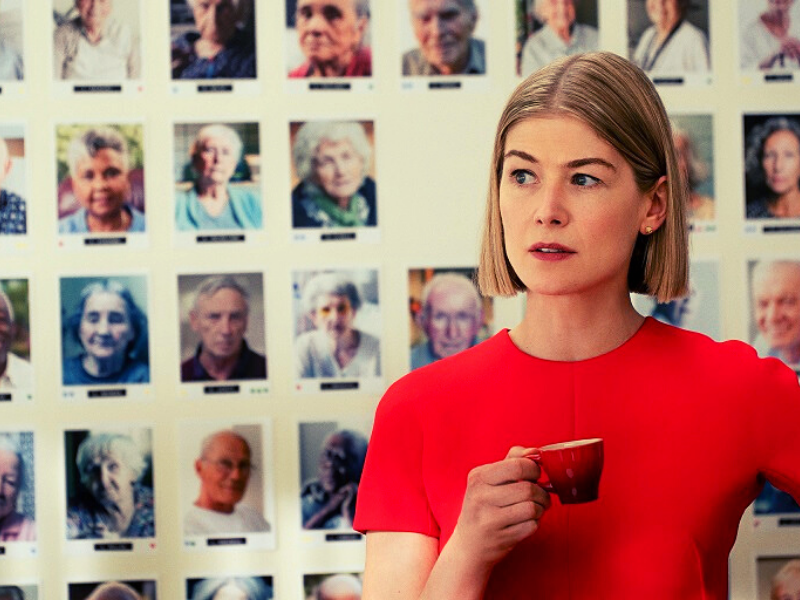
The basic plot of the movie “I Care A Lot” sees lawyer Marla Grayson (Rosamund Pike) present the façade of caring for people in this predicament. She is using the law to imprison people in a care facility and then take over managing their assets making a fortune in fees in the process.

She abuses the system, fools the judiciary, bribes the medics, funds the care home managers and manipulates her way to a fortune. The first 30 minutes of the movie had my blood boiling as she serenely executes her targeted imprisonment of Jennifer Peterson, (Dianne Wiest) someone that is clearly able to look after herself and is well resourced. In a courtroom Marla’s arguments are well rehearsed, tried, tested and watertight – they seem reasonable. “You can’t care for someone by doing what they want. You have to do what they need and I can care better than a family member.” We suspect and the court knows that this is sadly often the case. We are left to face the uncomfortable truth that we can see the legal point, even if its wrong.Sadly, this part of the film is alarmingly believable, later elements are not, but I will leave those for you to discover.

SOLOMONS BLOG I CARE A LOT MARLA - ROSAMUND PIKE

TAKING CONTROL

In the UK having Power of Attorney can or should ensure that this sort of abuse of power cannot happen. Whenever the State is permitted to step in, there will always be strings attached and likely little contextual thinking as the State is an institution, designed for box-ticking and box sorting to answer bigger questions of taxation rather than the nuances of individuality.

Having a Will and Power of Attorney drawn up properly and discussed with the people you intend to hold positions of responsibility (Attorney, Executor or Trustee) is a fundamental task of good financial planning for the future.

TRUSTED ADVISERS

We might all want professionals to be trustworthy, but we know that they are simply people and have their own pressures. Money is a sure way to attract the wrong people and illicit the worst responses from them. As also developed in the excellent six-part mini-series “Behind Her Eyes” starring Simona Brown, Eve Hewson and Tom Bateman (also on Netflix).

TAKING INITIATIVE, PLANNING AHEAD

Last week I took on a very bright new client who has given this much thought. Perfectly capable today, but with a clear appreciation that the day may come when that is no longer the case, and perhaps (probably) “I wouldn’t even know”. Your planning should be designed to give you peace of mind, not anxiety. The great difficulty is finding someone in whom you can place a high degree of trust. Following the law does not demonstrate trust, clarifying, documenting and understanding your own expectations is, which is why reviewing and checking progress with you each year is so important. A year ago, few would have considered the challenges that we have faced together. They have presented tests for our values and hopes. Have you kept us up to date with any changes to yours?

For a dramatic way to grab your attention, here are the trailers for the movie and the series mentioned.

Dominic Thomas
Solomons IFA

You can read more articles about Pensions, Wealth Management, Retirement, Investments, Financial Planning and Estate Planning on my blog which gets updated every week. If you would like to talk to me about your personal wealth planning and how we can make you stay wealthier for longer then please get in touch by calling 08000 736 273 or email [email protected]

GET IN TOUCH

Solomon’s Independent Financial Advisers
The Old Mill Cobham Park Road, COBHAM Surrey, KT11 3NE

Email – [email protected] 
Call – 020 8542 8084

7 QUESTIONS, NO WAFFLE

Are we a good fit for you?

GET IN TOUCH

Solomon’s Independent Financial Advisers
The Old Mill Cobham Park Road, COBHAM Surrey, KT11 3NE

Email – [email protected]    Call – 020 8542 8084

7 QUESTIONS, NO WAFFLE

Are we a good fit for you?

I CARE A LOT2025-01-21T16:33:30+00:00

BETTER NOT CALL SAUL

TODAY’S BLOG

SELLING TRUTH YOU WANT TO HEAR

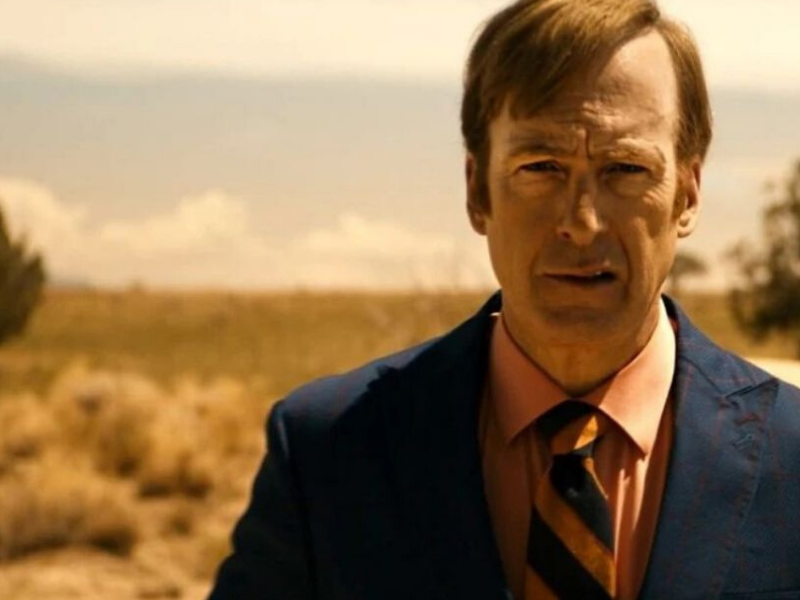
One of the TV series I enjoy is a spin off from Breaking Bad – Better Call Saul, which you can find on Netflix. In simple terms it is the story of James “Jimmy” McGill who is the younger wayward sibling of two brothers. Regularly in trouble, Jimmy is nothing like his responsible, pedantic brother Charles who is a very successful lawyer. Despite their differences, Jimmy is close to his brother, tending to a peculiar illness which is debilitating.

Jimmy is a low-level conman, who has a talent for spotting a fool and parting him from his money as most confidence tricksters do. His observational skills and self-confidence combined with a malleable relationship with rules are the perfect combination for selling a different version of truth, a lie that people want to believe. It becomes apparent to him that perhaps being a lawyer requires a similar skill set. Most believe that lawyers are crooks with a Degree and Jimmy can smell opportunity.

The numerous series chart his misdemeanours, and these run parallel to the mirroring characters of the drug world. Instead of law firms and partners, read gangs and cartel all pushing the same freedom fix, but with grave penalties for error.

Better Call Saul - Netflix

TO WHAT PURPOSE?

The series raises lots of relevant questions – fundamentally what is our purpose? Who is Jimmy? Why is he endowed with the skills he has and how could these be put to more rewarding, purposeful use. We witness him genuinely attempt to do good, to remove or reduce harm, to expose corruption and to protect the vulnerable, yet his efforts are met with the resistance of indifference and judgement that prevents him from straying outside of his box. A societal box that others have placed him in. This is of course particularly timely as we all consider the challenges that face anyone that is genuinely interested in equality, justice and fairness.

It isn’t often that I would encourage you to pay attention to someone that is essentially a corrupt lawyer, but there are many valuable insights to be found. These are as basic as understanding the mechanics of a scam, hiding in plain sight and how to find hidden fees. However we also have to face the reality of understanding depth, capacity, risk and the difference between problems and trouble.

Many of the problems that Jimmy faces are problems that many of us may experience at some point – whether that’s the importance of a Will, care costs, business partnerships, deals and the value of what we provide to others. However at its heart of the story is the strength and weaknesses of relationships – whether that’s between siblings, employers, family or friends. Jimmy is largely making decisions in reaction to those relationships, as are others. Every character has a story but as ever, being able to see the solutions to your own problems is often aided by an impartial other.

One of the lessons I have been reminded of this week, today in fact, is that as a planner, I help provide objectivity and accountability – helping clients keep on track with their stated values and plans for a great life. Jimmy could have had a very different story if someone had shown him how his skills could be applied, if he had received the right support and encouragement. It may not have been as dramatic (and worthy of a TV series) but it would certainly have ensured prosperity in the fullest sense of the word.

Dominic Thomas
Solomons IFA

You can read more articles about Pensions, Wealth Management, Retirement, Investments, Financial Planning and Estate Planning on my blog which gets updated every week. If you would like to talk to me about your personal wealth planning and how we can make you stay wealthier for longer then please get in touch by calling 08000 736 273 or email [email protected]

GET IN TOUCH

Solomon’s Independent Financial Advisers
The Old Mill Cobham Park Road, COBHAM Surrey, KT11 3NE

Email – [email protected] 
Call – 020 8542 8084

7 QUESTIONS, NO WAFFLE

Are we a good fit for you?

GET IN TOUCH

Solomon’s Independent Financial Advisers
The Old Mill Cobham Park Road, COBHAM Surrey, KT11 3NE

Email – [email protected]    Call – 020 8542 8084

7 QUESTIONS, NO WAFFLE

Are we a good fit for you?

BETTER NOT CALL SAUL2025-01-28T10:08:04+00:00

On Chesil Beach

On Chesil Beach

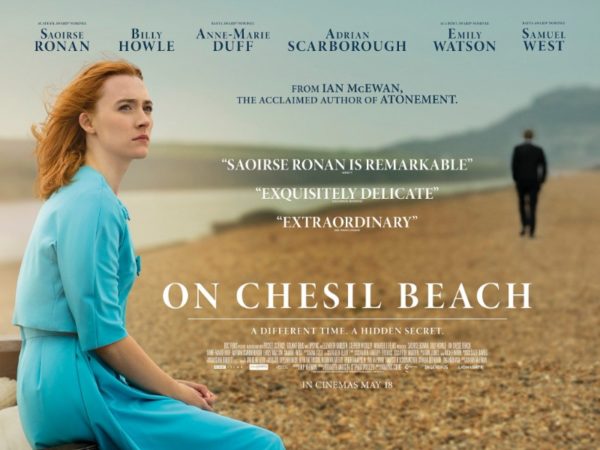
The new film On Chesil Beach of the book by Ian McEwan is now in cinemas. It will perhaps bring back some memories for anyone that married in the 1960s, with the period captured wonderfully. Set primarily in 1962, it is the story of a newly-wed couple Edward (Billy Howle) and Florence (Saoirse Ronan) who discover that they are unprepared for the intimacy of marriage.

At the time of the story, the “sexual revolution” of the 1960s had barely begun, indeed Penguin Books had only recently (November 1960) won their case to publish Lady Chatterley’s Lover. Despite the reality of millions of daily lives, Britain was generally rather poor at sex education. Edward and Florence lack any real understanding of each other intimately. The church would of course argue that a lifetime of marriage would gradually facilitate intimacy, whilst such an answer for many is workable, where trauma and intimacy collide, there is little comfort in glib answers. Florence offers a different option, one that Edward simply cannot face.

Sweet Sorrow?

Spoiler alert – the marriage does not last the day and is annulled. Unlike the book, we do not follow the characters much beyond the moment of decision on Chesil Beach. Decisions are made, tempers are lost, and parting was not a sweet sorrow.

In our contemporary society, relationships now take various forms, it was not until 1973 that the Matrimonial Causes Act made the case for divorce clear (beyond annulment). This despite all our somewhat hypocritical history about personal conduct in aspects of sexual intimacy and marriage. Henry VIII managed to get what he wanted and created the Church of England as a consequence. The law is flexible for those with power, as perhaps you noticed in the recent BBC dramatization about Jeremy Thorpe (A Very English Scandal).

Life can be Messy

The problem with most financial planning is that real life tends to get in the way and muck things up. Life is not nice, neat straight lines, well not for most. We might wish that everything was very each to model, but the truth is that it is of course complex, nuanced and on occasion vexing. One of the most significant aspects that will impact your financial planning will be your marital status. Any change in this will create an obvious need to review your plans, yet many don’t see past the Form E (financial statement required for a divorce) and to be blunt, I’m always surprised that lawyers do not wish all sides to undergo some basic (or complex) financial assessment with proper cashflow modelling for their new scenarios. Perhaps few have experienced the benefit of this.

In any event, life is messy. Sometimes we all need to make changes that we did not expect. This might be marriage, divorce, redundancy, addictions, debt… and so on, a plethora of possibilities that were not expected. So, I tend to get a little, well, dismissive of advisers who think that a cashflow plan is the done deal – the future is mapped out, life is now a beach…. I would be quick to point out the massive advantage of cashflow planning, we use it for all our clients, but it does have its short-comings and like anything else, garbage in, garbage out, but reading a forecasted future as anything other than an option would be unwise at best. We may all crave certainty, but there is none when it comes to living life. I advise all clients that the plan is not set in stone, it will be wrong, but it is today a very good guess about he future, based upon sensible assumptions that need regular reviewing.

The Unvarnished Truth

It is not a crime to admit things need to be changed. That your plans must alter, that is normal. What is a crime (in a sense) is pretending that everything is ok when it isn’t. You may never have a Chesil Beach moment, but may I propose that a relationship with a financial planner, requires honesty and the ability to listen, discuss and think together.

On Chesil Beach is now in cinemas, here is the trailer. I enjoyed the film, beautifully shot and poignant storytelling 7/10.

Dominic Thomas
Solomons IFA

You can read more articles about Pensions, Wealth Management, Retirement, Investments, Financial Planning and Estate Planning on my blog which gets updated every week. If you would like to talk to me about your personal wealth planning and how we can make you stay wealthier for longer then please get in touch by calling 08000 736 273 or email [email protected]

On Chesil Beach2025-02-03T10:37:20+00:00

Power of Attorney

Power of Attorney

Clients will know that I advise everyone to arrange Power of Attorney. Often people believe that because generally older people are the ones who suffer from loss of faculty, only the aged need Power of Attorney. I would suggest that this is a very dangerous assumption to make.

Anyone can find themselves unable to make their own decisions. Being hospitalised due to an accident and being “comatose” would be one example. As society becomes rather better at understanding mental health issues (slowly) this can also result in the need for a Power of Attorney.

In essence, an Attorney is meant to act in your interests, as though they were you. This prevents the stressful and lengthy process of going to the Court of Protection, which, like many State institutions is currently “swamped”.


Protection in Action

A Power of Attorney is rarely overturned, but last month just such a case occurred. On 13th October 2015, the Court of Protection revoked the powers of an attorney who charged his elderly mother expenses of £117,289 for visiting her in her nursing home and acting as her attorney. The attorney applied the daily charging rate that he used when he was a self-employed independent consultant.

The judge made the comment that ‘one would be hard pressed to find a more callous and calculating attorney, who has so flagrantly abused his position of trust’ with Senior Judge Lush adding that ‘charging one’s elderly mother a daily rate of £400 for visiting and acting as her attorney is repugnant’.

Even though the son, Martin is named as the sole beneficiary of his mother’s estate, attorneys must never take advantage of their position or profit from it, apart from receiving gifts where the law allows it.

The law actually states:

“A fiduciary duty means attorneys must not take advantage of their position. Nor should they put themselves in a position where their personal interests conflict with their duties. They must also not allow any other influences to affect the way in which they act as an attorney. Decisions should always benefit the donor, and not the attorney. Attorneys must not profit or get any personal benefit from their position, apart from receiving gifts where the Act allows it, whether or not it is at the donor’s expense.”

When Martin suggested that the appointment of a panel deputy would be a waste of time and money because his mother’s estate is effectively already his.  Senior Judge Lush disagreed, stating that, “the panel deputy will, for the first time in eleven years, place Sheila at the centre of the decision-making process, rather than view the preservation and enhancement of Martin’s inheritance as the paramount consideration”.

For more details of the case click here.

Dominic Thomas
Solomons IFA

You can read more articles about Pensions, Wealth Management, Retirement, Investments, Financial Planning and Estate Planning on my blog which gets updated every week. If you would like to talk to me about your personal wealth planning and how we can make you stay wealthier for longer then please get in touch by calling 08000 736 273 or email [email protected]

Power of Attorney2025-01-21T15:48:31+00:00

Where there’s a Will – part 2

Where there’s a Will – part 2

I asked Alex Truesdale for her thoughts on the ruling by the Court of Appeal and am thankful for her very valuable insight, here are her thoughts and observations.

The Court of Appeal’s judgment in this long-running dispute confirms that disinherited children are permitted by a 1975 statute to challenge their parents’ Wills if reasonable provision for their maintenance is not made. “Maintenance” means the child’s cost of daily living at whatever level is appropriate to them. The question of what is “reasonable” is dealt with by the court exercising its discretion to consider a number of factors laid down by statute, including the child’s needs and circumstances, the needs and circumstances of the beneficiary who has inherited instead, and the parent’s conduct. Here, Arden LJ endorses the lower court’s description of Melita Jackson’s conduct towards her daughter Heather Illot, since their 1978 estrangement, as “unreasonable, capricious and harsh”, before replacing the lower court’s £50,000 award with a sum of £163,000. This, Arden LJ reasoned, would allow Mrs Illot to purchase her house, receive a modest income, and potentially arrange a pension through equity release, all without compromising her state benefits.

This is not new Law

None of this is new law. But it is inevitable that this high profile victory for Heather Ilott – albeit one which sees her receiving just over 1/3 of her late mother’s estate – will encourage further challenges to Wills which seek to disinherit family members, particularly if there is no connection between a testator and the charity which has benefited from a windfall legacy. A costs order has yet to be made but will be considerable: Melita Jackson’s insistence that her executors defend to the hilt any attempt by her daughter to contest the Will will already have eroded the value of her estate, and so now the charities themselves face a smaller residual legacy and their own costs bill. There may be a further appeal to the Supreme Court, but I would suspect that the charities will take a view on the reputational as well as financial damage they risk in prolonging a dispute which has run since 2004 and, arguably, since the estrangement in 1978.

Where does this leave testamentary capacity? Much as it was before – the award made in this case turns on its own facts, and does not represent any further curtailment of one’s freedom to leave one’s estate as one pleases, so we should all still be making Wills.

Think ahead and think carefully

However, I would encourage those who do wish to exclude family members from their Wills to leave contemporaneous evidence of their reasoning not only to exclude a particular beneficiary, but also to favour other beneficiaries. This is particularly important if, in the case of charities, the testator has no connection with, or history of donations to, charity during their lifetime. I have been instructed on a number of cases where we have done just that by way of a side letter, to try to avoid the washing of too much dirty linen during probate, a process which makes Wills public. And those asked to act as executors should always check whether they are risking accepting a poisoned chalice that may compel their involvement in a protracted legal battle. As in this case, that may, sadly, become the testator’s most enduring legacy.

Alexandra Truesdale MIPW

Alex Truesdale Wills Limited | Registered in England and Wales no 7275445 | Registered office: 27 Mizen Close Cobham Surrey KT11 2RJ

Alex Truesdale Wills Limited is a member of the Institute of Professional Willwriters and complies with its Code of Practice

You can read more articles about Pensions, Wealth Management, Retirement, Investments, Financial Planning and Estate Planning on my blog which gets updated every week. If you would like to talk to me about your personal wealth planning and how we can make you stay wealthier for longer then please get in touch by calling 08000 736 273 or email [email protected]

Where there’s a Will – part 22025-01-21T15:48:52+00:00
Go to Top