
FREEDOM BRINGS RESPONSIBILITY

Freedom Brings Responsibility

I hope that you are aware that since April 2015 pensions have had considerable improvements. Rather than having to buy an annuity anyone with a pension can simply take income from age 55 however they want (note that this age is gradually rising to be within 10 years of your State Pension Age which you can check here). As income it is taxable, but your pension fund has the benefit of 25% of anything “crystallised” being tax free. This you may remember, concerned some that there would be a rush on Lamborghini’s… which didn’t materialise. Mind you at £270,000 for a new Aventador, you would need to withdraw around double that to be able to pay the net price.

Many of you have been accessing your pensions under these new conditions. According to the latest HMRC data in Q2 (April to end June) of 2018 the number of individuals to whom payments were made reached 264,000. A total of £2,269m was paid out to them. The system has now been in place for 3 years and the value of all payments is now nearly £20,000m (some would say that’s £20bn).

Gone in 0-60 Seconds?

The basic caveat is that once your pension fund is spent, well… its gone. There have been many mistakes made – particularly in terms of taking too much money out and paying tax unnecessarily. As the income from the pension is assessed as income, those that believe that they can simply have their money are right, but invariably forget that the amount means that they must pay 40% or 45% income tax. Clever, or rather sensible planning can keep tax at 20% or less.

The Government and HMRC are probably rather pleased with this, it means that they are taking way more tax than they would have done, particularly as many of those drawing money from pensions are doing so before they are even retired.

Tax First, Ask Questions Later

HMRC also apply their own brand of logic, which is tax first, ask questions later. In other words, you must reclaim tax when too much has been taken. Despite lobbying by financial advisers and the pension industry generally, HMRC aren’t budging on changing their approach, claiming that people are better off paying too much than too little and then having to find money to pay their tax. Since the start of pension freedoms this “over-taxing” has amounted to more than £280m. So hardly a surprise that they won’t budge. Of course, this ought to be reclaimed… but therein lies the problem of theory and practice and in any event the Office of Tax Simplification recently warned that pension freedom withdrawals are poorly understood… one might be forgiven for wondering what on earth the OTS achieve.

To put your mind at ease, you need to complete the snappy titled “P55”to reclaim overpaid tax on your flexible pension. You can find the form here.

Here’s a video of an Aventador being tested by Autocar… no need to form a queue.

Dominic Thomas
Solomons IFA

You can read more articles about Pensions, Wealth Management, Retirement, Investments, Financial Planning and Estate Planning on my blog which gets updated every week. If you would like to talk to me about your personal wealth planning and how we can make you stay wealthier for longer then please get in touch by calling 08000 736 273 or email [email protected]

FREEDOM BRINGS RESPONSIBILITY2025-01-21T15:51:59+00:00

What We Cannot Measure

What We Cannot Measure

Financial scams are sadly all too common, we cannot measure how much we save clients by helping them to avoid the many thieves, scammers and general loathsome low-lifes that are keen to part you from your money. Yet that is arguably one of the most significant aspects of my work – helping clients to avoid making mistakes, or at the very least, making fewer of them.

I had to admit to living in a bit of bubble within my sector. When I started as an adviser (1991) I thought most of them were crooks and little of my early experience of helping people get out of rubbish rip-off arrangements altered my opinion. Admittedly for a more complex set of reasons, I was acutely aware that when I turned up to events, my car was one of the “worst” in the car park. Others were doing much better… and frankly I thought I knew why.

Skip forward quite a few years and my opinion changed dramatically as a result of being part of the institute of Financial Planning (IFP) who are now the CISI. The people I met there were open, genuinely keen to help each other do a better job for our clients and were adamant that clients must be put first. This is the bubble that I have been in for quite a long time now. I forget, (because I tend not to come across them) that there are still a lot of horrid individuals who would raffle their family.

The Ark Scam

I have followed the Ark scam with some exasperation, these scams impact our regulatory fees (which rise as a result). In many senses they feel like rewarding failure, but I do appreciate that it’s not an easy job to stop every scam. However this morning I saw a tweet from a decent-minded adviser I know about a post from another. It is the very shocking and desperately disappointing story of Sue Flood’s experience with Ark and her pension. She has been failed miserably.

I would encourage you to read the item on Henry Tapper’s blog page. It is a verbatim script of her account of things from a meeting yesterday. I wish it were very different.

All I can say is that it is about time that some justice was provided to these 500 or so victims. The authorities responsible should wake up and get on with resolutions and bringing the crooks into the safety of prison.

It is this sort of stuff that we help clients avoid. There is a lot of it out there. Frankly Bitcoin is another and most of the rubbish that is covered in the press is decidedly bad for your wealth. Sue did just about as much as anyone could be reasonably expected to do, she checked out her adviser and everything seemed fine. As an industry (we still are) we have collectively failed many, many people like this.

Here is the link to the article.

Dominic Thomas
Solomons IFA

You can read more articles about Pensions, Wealth Management, Retirement, Investments, Financial Planning and Estate Planning on my blog which gets updated every week. If you would like to talk to me about your personal wealth planning and how we can make you stay wealthier for longer then please get in touch by calling 08000 736 273 or email [email protected]

What We Cannot Measure2023-12-01T12:18:06+00:00

Warning to Landlords (and others)

Warning to Landlords (and others)

The Government has made it very clear that tax evasion (not paying due taxes) is illegal and will be prosecuted. Whilst we may all have an opinion about the fairness of the law, failing to pay taxes invariably carries with it the real prospect of prison.

Richard Fuller found this to the cost of his liberty. As a landlord with various properties he failed to properly declare and pay the capital gains tax that was due on those he sold between 2006 and 2013. As a result, he evaded £157,725 of capital gains tax. As of last Friday, he has now begun a 27-month prison sentence and of course assets are being taken to pay the correct tax.

Hidden costs but not hidden taxes

Whilst there will always be people that do well from property investments, the reality is that property is not very liquid. There are also many forgotten or hidden costs – such as purchase and sale costs, insurance, lost rent, improvements, accountancy costs and of course tax on the gains.

It is never worth evading tax. It is illegal and anyone doing so will still find plenty of room at her Majesty’s prison service, despite reports of overcrowding. Mr Fuller was found guilty of cheating the public revenue and fraud by false representation by a jury at Winchester Crown Court.

What the Taxman said..

Richard Wilkinson, Assistant Director, Fraud Investigation Service, HMRC, said:

“Fuller thought he was above the law and decided not to declare or pay the tax due from the sale of some of his property portfolio. It is simply not acceptable to steal from UK taxpayers.

“HMRC will continue to pursue those who attempt to hide their gains on assets, their income, and investigate those who attack the tax system. We ask anyone with information about suspected tax fraud to contact our Fraud Hotline on 0800 788 887.”

Evasion is not Avoidance

In short, don’t mess with HMRC. It is never worth it. Tax evasion is illegal, tax avoidance (which is using legitimate arrangements within the tax laws – such as ISAs, pensions etc) is something that the Government encourage to help reduce reliance upon the State and invest in the UK economy.

Dominic Thomas
Solomons IFA

You can read more articles about Pensions, Wealth Management, Retirement, Investments, Financial Planning and Estate Planning on my blog which gets updated every week. If you would like to talk to me about your personal wealth planning and how we can make you stay wealthier for longer then please get in touch by calling 08000 736 273 or email [email protected]

Warning to Landlords (and others)2025-01-21T16:34:24+00:00

Is HMRC watching you?

Is HMRC watching you?

In an ever connected world, it should come as no surprise that HMRC are using technology to catch those that do not properly declare their income. In essence they are watching you (and me). I am informed that a new “snooper computer” is being rolled out this month, in time for those that are submitting information about their income for 2015/16. Whilst Government departments have rarely bought or invested wisely in computers (I guess suppliers see them coming… in fact I know they do)… this represents a £100m project.

Why is this important? well…. failing to accurately report and pay your taxes is one of those crimes for which you can expect a custodial sentence. Indeed HMRC powers have increased so much over the last 10 years that they can take money from your bank account until you can demonstrate that you don’t owe it to them (I kid you not).

Declaring Your Income

Under self-assessment we are all responsible for reporting and declaring our income. As everyone has observed, the UK, like most countries, has rather a lot of debt and is currently living beyond its means. The basic reality of maths is that either more income (taxes) has to be generated or less has to be spent and debts renegotiated. So as 31st January 2017 looms as the deadline for declaring and paying income from the 2015/16 tax year (ended April 5th 2016) expect little sympathy from the Government, HMRC or indeed most voters.

The new computer system is a way for HMRC to focus attention on those that appear to declare modest income, whilst also having involvement with organisations where money is clearly involved. So if you’ve bought a house (as I did in 2016) then you had to pay stamp duty… where did this come from? (data triggered from the Land Registry) or you are fairly active on e-bay, do some Airbnb, or rent a property, perhaps sold some things at a car boot sale, or have a Paypal account, bought a car… and, and, and… in short they are looking proactively for various sources of income that you are not declaring.

So what income have you forgotten about?

Income is paid on dividends from shares, invariably these are taxed at 10% automatically, but higher rate taxpayers will need to pay more. Have you declared all the income from those privatisation shares you’ve had for years? how about from non-ISA accounts? Auto enrolment (or workplace pensions) has begun for most firms, so this is yet another opportunity to see data about income. Interest from savings (don’t laugh!) is also income and taxable – except for the first £1,000 – which means most people will not pay tax on it.

For what its worth, you are likely to be the sort of person that is worried about not paying your tax properly. The threat or fear of possibly going to prison is more than sufficient to keep most people “on the straight and narrow” yet there will be some, for whom prison is no real “threat” – frankly that’s probably the very rich, who can afford to live outside of the country and legally avoid UK laws… such as top sportstars, business people that you’ve actually heard of or those that are the beneficiaries of mega Trust Funds (so dont own the assets – the Trust does) such as the Duke of Westminster. Perhaps I’m being a little cynical, but doubt that my remark is far off the mark.

Of course our app (which is free to download) has a load of calculators and tools, loads of tax tables and useful information which is designed to help you to not forget to report your income properly. You can get it on either the Android or itunes platforms, just search for Solomons Financial Planning.

Dominic Thomas
Solomons IFA

You can read more articles about Pensions, Wealth Management, Retirement, Investments, Financial Planning and Estate Planning on my blog which gets updated every week. If you would like to talk to me about your personal wealth planning and how we can make you stay wealthier for longer then please get in touch by calling 08000 736 273 or email [email protected]

Is HMRC watching you?2025-01-27T16:08:37+00:00

Inheritance Tax and BPR

Dominic Thomas
Nov 2015  •  4 min read

Inheritance Tax and BRR

You will recall that I have been blogging about various HMRC inheritance tax forms,  and last week I also discussed Power of Attorney and the Court of Protection. Today I am high-lighting some planning opportunities that address these issues in a practical way using BPR – or Business Property Relief.

Inheritance Tax (IHT) is the second most resented tax in the UK. IHT is currently payable at the rate of 40% on an individual’s estate which exceeds the ‘nil rate band’, currently £325,000. Estates which comprise a family home and few other assets can incur a large tax liability. There are many options available to those who wish to mitigate their estate’s IHT liability. Trusts and gifting are the most common strategies employed, but both take 7 years in order to be fully effective. For clients who are elderly or unwell, this is often too long a timeframe.

Business Relief, or Business Property Relief (BPR) as it is commonly known, is a UK IHT relief that was introduced by the Government nearly 40 years ago (7 April 1976). It was designed to allow business owners to pass on businesses to beneficiaries without incurring an IHT liability. In 1996, it was made more widely available to private investors and now allows any qualifying investment held for at least two years, and at the time of death, to benefit from 100% IHT shelter. Most unquoted, UK registered companies will qualify for this relief. This two year timeframe makes this form of planning the quickest way of sheltering assets from IHT.

BPR and Power of Attorney

Another area when BPR could be of use is when Power of Attorney (POA) is in place. Take a look at this example.

Mrs Jones is 70. Her son has Power of Attorney (POA) over her financial affairs and due to her poor health, he can make financial decisions on her behalf. Gifting and trust planning may not be possible in this case, because a number of restrictions exist to avoid attorneys abusing their positions. One of the main rules states that attorneys cannot give away access to a donor’s (Mrs Jones) funds, without applying to the Court of Protection for approval. Trust work and gifting both involve a change of ownership and it would be difficult for Mrs Jones’ son to successfully put either in place. It may also be unsuitable given the 7 year timeframe and Mrs Jones’ health status.

Mrs Jones’ son could, however, invest in a BPR qualifying company/a portfolio of companies on her behalf. Since the investment remains in her name, he has not changed the ownership for the funds and since a BPR investment only requires 2 years to become effective for IHT purposes, it may be the most suitable option.

Unquoted companies are usually riskier than those listed on a major stock exchange. Whilst there are a number of risks associated with investing in unquoted companies, many investment companies offer BPR investments that target capital preservation. These investments involve companies with long-term, index-linked and stable cash flows.

Want to know more? just get in touch.

Inheritance Tax and BPR2026-03-16T12:34:20+00:00

Til death do us part… more IHT issues

Til death do us part…

If you have ever taken marriage vows, you were probably not bothered by the inheritance tax advantage that couples enjoy. More accurately, it is of course the beneficiaries of the estate that will actually enjoy any inheritance tax benefit from marriage.

This is because everyone has a “nil rate band” and whilst much has been made of this “allowance” it is a personal one, so a couple naturally has a doubling advantage. Sometimes people set up their finances so that on the first death, an amount of assets is released from the estate to the beneficiaries, rather than them having to wait for their inheritance.

This does come with some rather obvious potential snags – such as where does the money come from to be released and how best to achieve this. Of course the surviving spouse may have his or her circumstances significantly altered since such an agreement was originally made, so may also be reluctant to release funds if they believe that they are needed.

Nil Rate Wedding Bands

It is quite a common practice for solicitors and Will writers to include the transfer of the “nil rate band” upon death, so you ought to think through if this is right for you. Just because it was good advice at the time does not mean that it will remain best advice.

Think about how the money might be released and to whom. If it does pass to your children, please remember that around 1 in 3 marriages end in divorce, so should that happen to one of your children, the inheritance might be “diluted” as a result of divorce. This is where Trusts can protect family wealth as the money isn’t paid to an individual but to a Trust. The Trustees, then will be directed by the terms of the Trust and depending on how it is set up have discretion about how to pay funds.

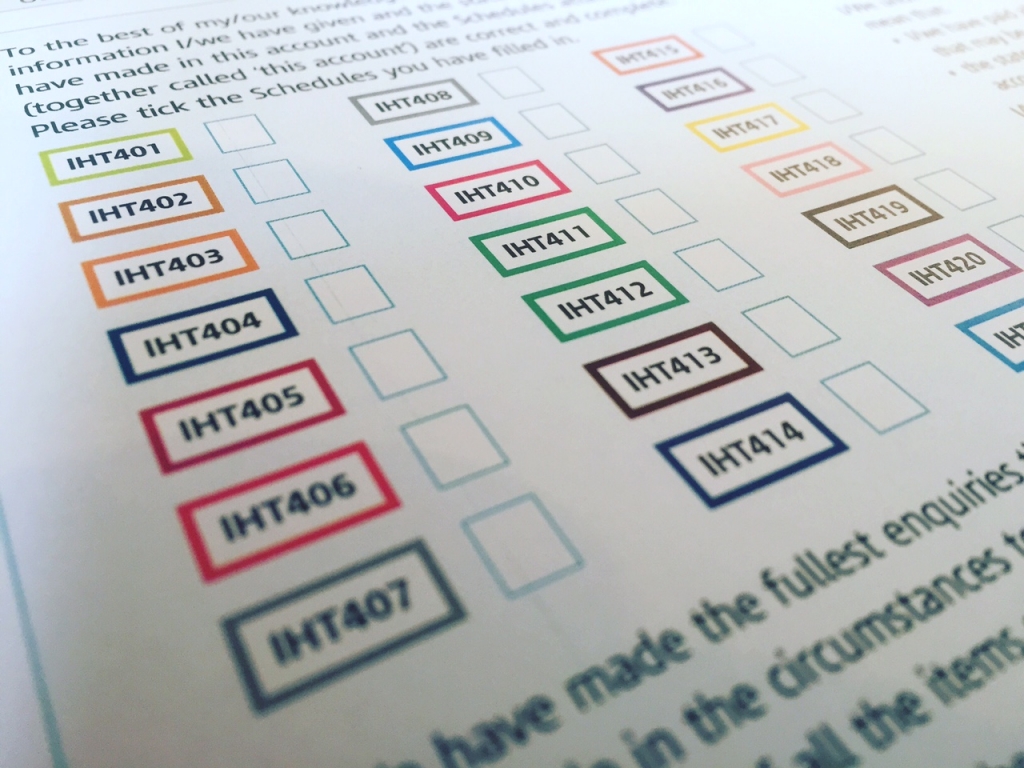
IHT402

IHT402 is a form that is used to transfer the nil rate band and any unused relief. It is worth downloading and having a look at (click on this text to open a pdf of it). You should review your Will regularly to ensure that it remains suitable. However perhaps more importantly, the bigger question you should reflect on before gifting or transferring any substantial sum is to ensure that you aren’t going to run out of funds yourself. Hence a financial plan will keep you up to date and on track and rather vitally, will explore this fundamental concern.

Dominic Thomas
Solomons IFA

You can read more articles about Pensions, Wealth Management, Retirement, Investments, Financial Planning and Estate Planning on my blog which gets updated every week. If you would like to talk to me about your personal wealth planning and how we can make you stay wealthier for longer then please get in touch by calling 08000 736 273 or email [email protected]
Til death do us part… more IHT issues2025-01-21T15:48:50+00:00

Budget 8 July 2015

Budget 8 July 2015

Following my recent email and Mr. Osborne’s announcements, I am pleased to confirm the following changes and amendments have been made to our App (which is available free of charge for iphone, ipad and Android platforms).

As the 2016/17 rates are being added after the Autumn Statement, there is only one small change to the 2015/16 rates and the change has already been made earlier this afternoon and is live in your App. The change was within the Main Capital and Other Allowances section of the tax tables and related to the change to the Annual Investment Allowance from 1st January 2016 from the previously announced limit of £25,000 to a new limit of £200,000.

On a separate note, the chancellor has, from April 2016, abolished dividend tax credits. This will fundamentally change 3 of the tax calculators so they will need to be changed when we complete our updates prior to the April 2016 budget. However for the remainder of this tax year, all calculators and tax tables remain fully accurate.

Dominic Thomas
Solomons IFA

You can read more articles about Pensions, Wealth Management, Retirement, Investments, Financial Planning and Estate Planning on my blog which gets updated every week. If you would like to talk to me about your personal wealth planning and how we can make you stay wealthier for longer then please get in touch by calling 08000 736 273 or email [email protected]

Budget 8 July 20152025-01-21T16:34:27+00:00

Overseas Pensions

Overseas Pensions?

I wonder if you have been persuaded to invest in an overseas pension? The new flexible pension rules that permit earlier access to a pension fund have caused more than the odd ripple in the global pensions world. We are highly connected to other jurisdictions and particularly those within the Commonwealth.

82% culling

HMRC recently reviewed its list of pensions that it “recognises” (which isnt the same as endorses or approves) but clearly suggests a connection. Earlier in June there were 3,811 overseas pensions on the HMRC ROP list, this has now been culled to just 663 – a reduction of about 82%. See the list here: HMRC site

It may well be that there are some “reinstatement” in time, but essentially the vast majority of overseas pensions failed to respond to the HMRC, who wanted the schemes to confirm that investors could not access their pension before the age of 55 unless, and only if, the member of the pension scheme is in ill-health – for which read – seriously unwell.


Australians in Wimbledon

A lack of response meant cut from the list. Those with Australian pensions this is a particular blow and today there is only one recognised Australian pension. Not so great for all you Australians living in Wimbledon and parts of south-west London. This will impact anyone in the process of moving their pension to an overseas pension and could result in hefty punitive “unauthorised payment charges”…. which can be 55%.

Not Just the Aussies

Obviously it isn’t just Australians that this impacts, London has many people from all over the world that are here for perhaps a short working period in their lives or much longer. This also impacts British domiciled people who wish to emigrate.

Loopholes – a pension is meant to be a pension

The motivation for this is that pensions are meant for retirement. Tax relief is provided on contributions here in the UK, but ultimately income would be taxed. Historically it has been possible in some circumstances to transfer a pension abroad – largely if you are emigrating or returning home. However, as with many things offshore, some loopholes are exploited where terms are more favourable – largely because tax relief in those jurisdictions wasn’t provided in the first place.

Overseas pensions requires specialist advice and not something that should be entered into lightly.

Dominic Thomas
Solomons IFA

You can read more articles about Pensions, Wealth Management, Retirement, Investments, Financial Planning and Estate Planning on my blog which gets updated every week. If you would like to talk to me about your personal wealth planning and how we can make you stay wealthier for longer then please get in touch by calling 08000 736 273 or email [email protected]

Overseas Pensions2023-12-01T12:40:13+00:00

Pensions: Lifetime Allowance and Mad Max

Solomons-financial-advisor-wimbledon-bloggerPensions: Lifetime Allowance and Mad Max

You have probably heard of Mad Max – its latest incarnation is currently in UK cinemas. You may have heard about the Lifetime Allowance – which has been part of the pension vocabulary since 2006 or “A-Day”. Suffice to say that I believe that the Lifetime Allowance is rather mad.

In the event that you are a politician and reading this, may I ask why you think pensions are important? To my mind, pensions should be encouraged. The end result of a pension should be that people living in the UK are able to provide for themselves above the State Pension, so support their lifestyle. This has several obvious benefits – creating financially independent adults, not requiring State support. Having income means that income tax can be levied and collected to help pay for our society. Let’s also not forget that income is there for using (spending) which enables trade to occur and wealth to be created and so on.

A World of Plenty?

It would seem that politicians generally think not having a rising burden on the State is a good thing. Indeed encouraging pensions with tax relief is the “sweetener” or “bait”. Much like the film Mad Max, we probably don’t want to create a society reliant upon the occassional benevolence of the prevailing “Lord”. Surely we would like a society where all prosper? OK we know the UK has limited resources, so adjust the tax relief, but don’t make it hard or even pointless to save. Even the current regime isn’t tempting enough for millions of people that don’t or cannot save for their future.

Mad Max

Scarcity

At present pension contributions are restricted, which seems fair enough, but the amount that the pension pot grows to is also restricted by the Lifetime Allowance. This is currently £1.25million, which sounds like a reasonable sum, but in practice isn’t as much as you’d like to think, given that it has to last for the remainder of your life. The Lifetime Allowance has already reduced over the years from £1.8m and if the Chancellor does what he suggested he would in the last Budget, it is likely to shrink to £1.0m next April. In other words £250,000 of the Lifetime Allowance will be lost – or more accurately invoke a tax penalty of £137,500.

Mad Max and Excess Tax

If the Lifetime Allowance is exceeded, there is a tax charge of 55% on the excess. OK there are some ways that you can protect your higher pre-legislation allowance, but these are designed by bureacrats and “problematic” to say the least. Essentially this excess tax charge punishes those that save or get good investment results….  let’s not forget that the income from pensions is subject to income tax anyway. So I fail to understand why we don’t simply abolish the Lifetime Allowance and all the protections that have surrounded it. Your pension fund should be just that – a pot that you can actually use with confidence.

Mad Max – Fury Road is currently in UK cinemas, starring Charlize Theron, Tom Hardy and Nicholas Hoult. The Chancellor, George Osborne has his next Budget on 8th July 2015…

Dominic Thomas

Pensions: Lifetime Allowance and Mad Max2025-01-27T17:04:13+00:00

The Budget 2015 – A New Mad Max

Solomons-financial-advisor-wimbledon-blogger

The Budget 2015 – A New Mad Max

So, the Budget is already ancient history, the political hoo-hah has been left to fester, tweak and develop into an election manifesto campaign. So what, if anything grabbed my attention?

Jilted Bribe

Firstly, I have to admit that I was expecting there to be a little more of an electoral bribe. Whilst the Chancellor certainly made much of the fact that he wasn’t going to (and thus seek to be understood as prudent or sensible) the truth is that, well… he didn’t really offer a bribe (unless its one I missed). Frankly with the national purse in the shape its in, I was rather glad, (though I remain open to the possibility of  solving the problems differently).

ISA with tax relief? – future implied?Mad-Max-5

That said, the first time buyer ISA does sound like a good idea. The detail needs further examination, but in essence there is 20% tax relief on the annual ISA allowance for people that are 18 or over and don’t (and have never) own a home. £3,000 of the £15,000 ISA allowance will be paid by the Government. Whilst everyone that qualifies will benefit, in practice, this will be a very good way of saving if you qualify… if not you, perhaps your children… opening up further options for more wealthy parents.

Pensions and Politicians… taking the …point?

As for pensions, I have to admit that the utter folly of politicians in relation to pensions has shifted gear over the last 10 years. Whilst knowing that we all need to save more so that there is less reliance on the State system… perhaps even the prospect of a means-tested State pension (who knows?) they are determined to punish successful investing and saving.

Here in the UK we are now restricted on how much can be paid into a pension and how much the pension fund can be worth. Utter madness. Yes £1m is a lot of money, but are we also going to cap how much can be held in a bank account or the value of property? what about the value of a business? These are measures to appear a poorly informed crowd by a poorly informed media. I would immediately abolish the Lifetime Allowance and simply restrict how much tax relief is provided on payments to pensions. It doesn’t have to be more complex than that. However we have a new maximum pot size for your pension. To say that this complicates life further for anyone in a Defined Benefit (DB) pension such as the NHS, would be a masterful understatement. Just so that we are clear… the Lifetime Allowance has reduced from £1.8m to £1.25m already and the Budget has reduced this to £1m in 12 months time. Ok, there will be some form of protection, but if recent experience is to go by, this is about as useful as pushing someone out of an aeroplane with an umbrella instead of a parachute. As for those that put a commercial property in their pension pot… good luck with that! The Annual allowance is now £40,000 a year as the maximum value of contributions to pensions, which may as well be written in algebra when attempting to calculate this for DB members.

Final note: our free APP is updated with all the changes announced for personal allowances, savings rates and so on.

Dominic Thomas

The Budget 2015 – A New Mad Max2025-01-27T17:04:13+00:00
Go to Top