

The Happy Prince

The Happy Prince

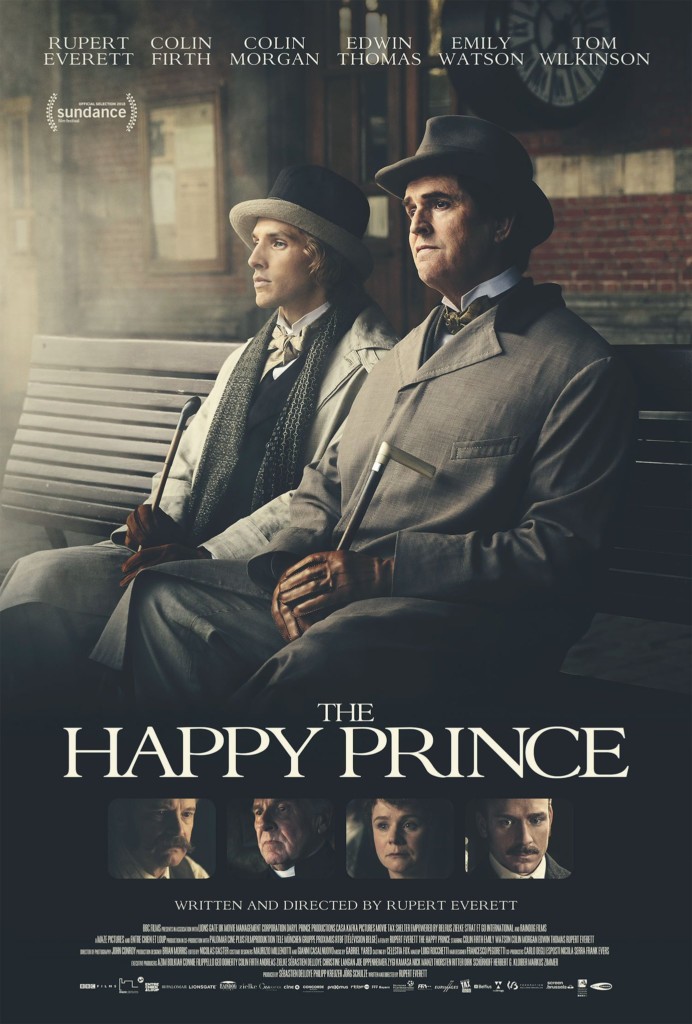
There is a new film about Oscar Wilde – The Happy Prince currently in cinemas. It is a wonderful portrayal of the literary genius, but desperately sad. Oscar is played by Rupert Everett, who extends the character he played not so long ago on stage in “Judas Kiss”. Wilde was an obvious genius whose fall from favour and grace was spectacular only in its indictment of Britain then.

As we all know Wilde was a married man, who was also homosexual. These days it is hard to fathom how this is either anyone else’s business (though of course our culture remains just as preoccupied with what happens out of sight) let alone how this detracts from his obvious literary accomplishments.

In this portrayal, Everett makes plain the self—destructive path of addiction. In this case Wilde’s frankly inexplicable addiction to the loathsome Lord Alfred “Bosie” Douglas (Colin Morgan). It is his inability to manage his feelings and actions which lead him to penniless ruin, living in the squalors of Paris.
Self-Destruction

Whilst much has changed in society since the life and times of Oscar Wilde, one cannot fail to realise that whatever the form an addiction takes, it has the capacity to lead to ruin. There are moments in the film in which Wilde’s friends Reggie Turner (Colin Firth) Robbie Ross (Edwin Thomas) and wife Constance (Emily Watson) all urge him to take a different path, to forget the selfish indulgence of Bosie. Yet knowing the consequences of being financially cut off, Wilde follows his self-destructive desires all the way to the grave.

Drama, Drama

We are all prone to addictions… how is that smartphone addiction? Or perhaps an addiction to the media? These may seem like rather innocuous addictions, with little apparent consequence, certainly unlikely to suffer illness or death, yet there is growing evidence that many are suffering from an overload of information, a sense of powerlessness and being overwhelmed in a world that appears outside of our control…

When it comes to investing, our addictions to the news and perhaps following the markets are likely to cause us to make poor decisions. Responding and reacting to “the news” yet this invariably has little to do with our own lives and financial plan. Chasing the illusive winning funds is a habit that many have developed. Yet the reality is that we can control very little, but what we can control, we do indeed need to focus on.

Don’t make a crisis out of a drama

Attempting to time the market, second guess the best performing funds or shares is nothing short of speculation, it is not a proper investment strategy. It is a very good way to run out of money and the FCA recently produced a report outlining the errors of holding too much cash in a pension fund. Presumably investors do so because they don’t trust pensions, the market, advisers or all of those them and simply attempting to time the opportune moment to invest. This, it has been found leads to dramatic underperformance and penury.

Here is the trailer for the film.

Dominic Thomas
Solomons IFA

You can read more articles about Pensions, Wealth Management, Retirement, Investments, Financial Planning and Estate Planning on my blog which gets updated every week. If you would like to talk to me about your personal wealth planning and how we can make you stay wealthier for longer then please get in touch by calling 08000 736 273 or email [email protected]
The Happy Prince2023-12-01T12:18:00+00:00

The Leisure Seeker

The Leisure Seeker

Those that are not retired have many rather cliched ideas about retirement. Invariably these involve lots of leisure, cruises, golf and gardening. Most of the retired people I work with often voice that they are busier than ever, its simply that they don’t have to turn up for paid work.

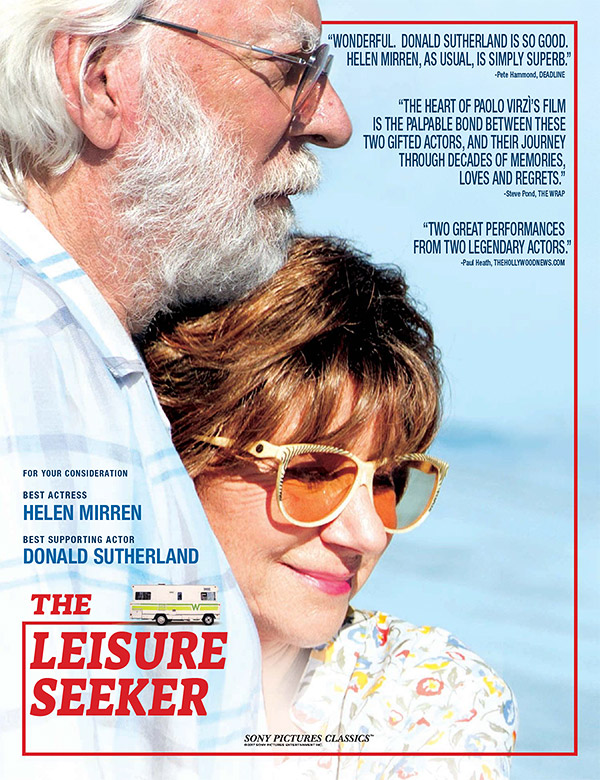
The Leisure Seeker is a gentle movie about the Spencer’s, John (Donald Sutherland) and Ella (Helen Mirren) who decide to take one last once in a lifetime trip together in their recreational vehicle, a leisure cruiser. Their adult children are left confounded at what they perceive to be irresponsibility, given that John is clearly suffering from signs of dementia.

Memory Lane

The couple take a trip down memory lane, with mixed results. Johns dementia creates a scenario where his confusion about who, where and when he is, leads him to expose some deeply buried secrets. He is also paranoid that Ella is having an affair with Dan Coleman, who he believes is the secret motivation for their trip together.

The cruel irony of John’s dementia means that he is not even aware of the loving nature of their trip, a special excursion to Hemingway’s house in Key West, John’s literary hero, of whom he has recounted many insights to his English students throughout his career.

How does it End?

Any good financial planner will inevitably address the question of your life expectancy. All planners work on the basis of attempting to ensure that your money lasts just a little longer than you do. Naturally, this is educated guesswork and requires regular reviews. However, we also need to be mindful of the difficulty of an ending of a life. Simplifying arrangements where sensible to do so, without ruining years of sensible investment strategies and estate planning.

The film exposes the need to discuss these issues with someone trusted, certainly it would make sense for your planner to have an idea or awareness of your intentions, as it would be for your family, though the emotional dynamic of family relationships makes such a conversation problematic and rich material for drama.

The truth is that all of us face an ending, it’s simply a question of how, why and when. Here is the trailer for the film, which being small, is now reaching the end of its run in selective cinemas.

Dominic Thomas
Solomons IFA

You can read more articles about Pensions, Wealth Management, Retirement, Investments, Financial Planning and Estate Planning on my blog which gets updated every week. If you would like to talk to me about your personal wealth planning and how we can make you stay wealthier for longer then please get in touch by calling 08000 736 273 or email [email protected]
The Leisure Seeker2025-01-27T16:07:36+00:00

Lean on Pete

Lean on Pete

There has been a variety of research conducted about child poverty in Britain, regrettably I find it hard to decipher the politicisation of interpretations of the results of such reports. Lean on Pete is a fresh look, perhaps a more comfortable one, as it is set at a “safe distance” against the backdrop of the world’s most wealthy nation – the United States. Of course, we all know that many of the issues are pertinent in any developed nation.

The film centres around a Charley, (Charlie Plummer) who lives with his father Ray in what can only be described as poverty. The story unfolds how even someone with very little still has much to lose. He encounters some degree of encouragement in the form Del, (Steve Buscemi) a horse owner/trainer whose own version of coping with a life that hasn’t worked out as planned, compromises the security of all that he has. Some would say “desperate times call for desperate measures” yet when this is more likely to harm your own well-being, it seems entirely counter-productive.

Horses for Courses

Some warmth and tenderness arrive in the form of Bonnie, (Cloe Sevigny) a jockey that has already had more than her share of misfortune and setback yet even this more caring figure, is forced to overlook the love that Charlie develops for the horse in his charge “Lean on Pete” who is seen simply as a commodity. Home life takes a turn for the worse and the prospect of Pete being sold due to his own failing health is too much for Charlie to contend with, so he and Pete head off on a journey in search of the care and love that they both crave.

I really enjoyed the movie, which is currently showing in a small number of cinemas – but you can see it on Curzon Home Cinema. This is a tender film, revealing how quickly circumstances can alter, how money or its lack has considerable consequences for each of our stories. However, much you have, I was reminded of something I heard… you are the sum of the books you read and the people you meet. Sadly, this isn’t always good.

Against the Rails

Of course, Charley being a minor, isn’t a likely client for any financial planner, more likely the adults would be, though in truth, it is improbable that they would seek advice. Any decent financial planner will investigate the “worst scenarios” that life can throw at you, hopefully ensuring that you have adequate financial protection, certainly sufficient to prevent a very hard financial landing. Perhaps more than that, the regular, ongoing ability to check progress, seek an impartial sounding board for ideas and ultimately to identify and prevent “financial self-harm” that most people drift into without realising. It’s your journey, but a good planner is coaching and encouraging each step.

Here’s the trailer.

Dominic Thomas
Solomons IFA

You can read more articles about Pensions, Wealth Management, Retirement, Investments, Financial Planning and Estate Planning on my blog which gets updated every week. If you would like to talk to me about your personal wealth planning and how we can make you stay wealthier for longer then please get in touch by calling 08000 736 273 or email [email protected]

Lean on Pete2025-01-21T15:41:31+00:00

I, Tonya – it figures

I, Tonya

I have to admit to having only a vague recollection of the infamous events surrounding Tonya Harding in the early 90’s. Figure skating is not something that I know much about, I grew up within a family that watched a fair bit of sport on TV. I can just about remember John Curry winning his gold Olympic medal in 1976, but more significantly Robin Cousins, who was “a local” and became an Olympic champion in 1980. Then of course came Torvill and Dean who blew us all away in 1984.The new and somewhat controversial film about “the incident” is currently playing in cinemas and raises plenty of questions.

Chaos, Controversy and Context

Controversy centres around the accuracy of the portrayal of the facts, which are all important. The film attempts to clearly state that some of the “facts” are inaccurate, but others, are a bit more one word against another. In reality the film is all about relationships.  The Tonya Harding (played by Margot Robbie) of the movie is young and hard-edged having lived without much affirmation. She receives constant criticism from an authoritarian, punishing mother (played by Allison Janney) who regularly struck her. This provides fairly much ideal circumstances for a relationship with a man that regularly beat her up.  Sadly, all lack any emotional intelligence and none of them appear to have received much of an education.

The Real Thing

Despite a life of struggle, Tonya is certainly a brilliant figure skater. She is the first American female to successfully complete a triple axel. Clearly her home is on the ice. The film is clear that her success and support is lacking due to her inability to fit with the required image. It is suggested that she is thwarted by judges who simply don’t want her kind in the same circles. This of course is a mixed blessing, earning her fans. Harding managed to break the taboos and gained a place on the US team for the Olympics.

Behind the Curtain

The film is of course largely concerned with the attack on Nancy Kerrigan, a team-mate and rival, who is assaulted with a baton, with the aim of preventing her from competing. The movie contends that Harding had no involvement, that she was at the very worst involved in agreeing to send threatening letters to spook Kerrigan. Those that carry out the assault are portrayed as, frankly inept, half-wits who can barely operate a kettle.

Skating on Thin Ice

It’s an engaging movie, it lacks depth or analysis, but it’s a decent story. How much is fact, or a work of fiction is very much up for debate. As Harding has seemingly changed her version of events numerous times, there will always remain some scepticism over any claim to truth. What struck me was the resulting unfairness (in the movie) of the punishment. This implied that the thugs had a short sentence, whereas Harding had a life-long sentence of being unable to teach, coach or compete in any skating event, ever. This was her one unique ability, her one chance of being able to carve a career that could provide for her and her family. Kerrigan went on to win a silver medal.

Technical Merit and Artistic Interpretation

Harding had sufficient focus and natural talent to be hugely successful and make a good life for herself from skating. This was extinguished through folly. I was at a conference recently where a similar message was delivered. People self-destruct, human nature is the enemy of successful investing. A significant part of being a financial planner, is being a coach, helping clients to alter their investment behaviours from those that are more innate and self-defeating, to those that are based on a disciplined approach, with a long-term mind-set. In a lifetime of investing, remembering the one fabulous investment you made whilst blowing the whole plan, has only one possible result and it strips you of both your dignity and independence.

Anyway, here is the trailer for the movie which is currently in cinemas.

Dominic Thomas
Solomons IFA

You can read more articles about Pensions, Wealth Management, Retirement, Investments, Financial Planning and Estate Planning on my blog which gets updated every week. If you would like to talk to me about your personal wealth planning and how we can make you stay wealthier for longer then please get in touch by calling 08000 736 273 or email [email protected]
I, Tonya – it figures2025-02-03T10:37:21+00:00

The Mercy

The Mercy

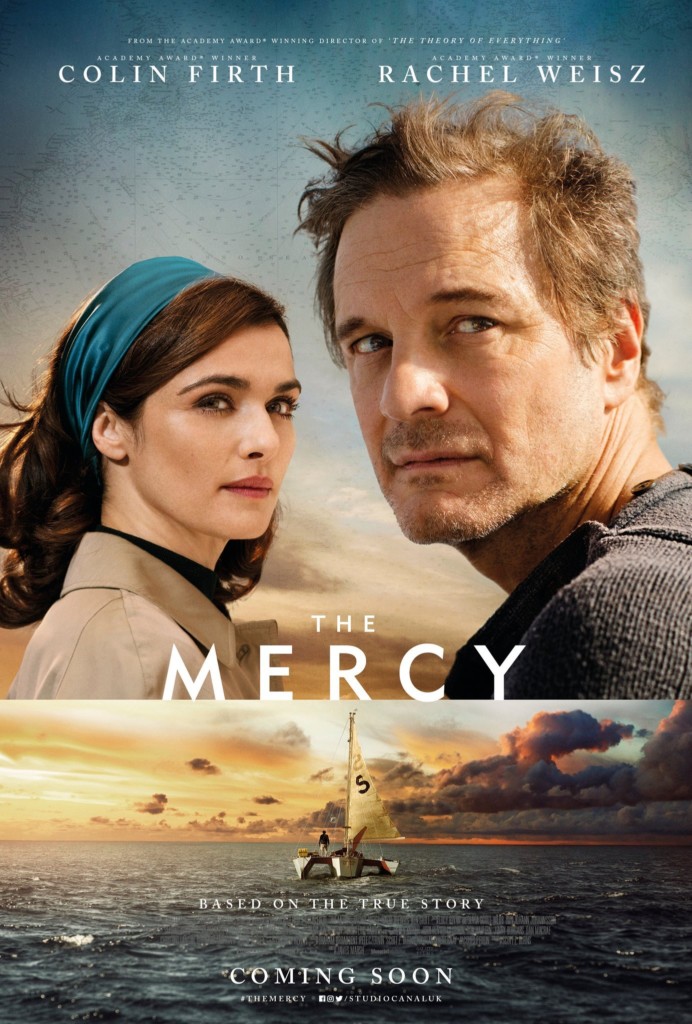
I have to admit that I was a little reluctant to see the new film “The Mercy” despite having three great leading actors Colin Firth, Rachel Weisz and David Thewlis). I was concerned that it was going to be the same film as the Robert Redford movie “All Is Lost” which was essentially a story of one man’s conversation with himself. Thankfully it isn’t.

The Mercy is based on a true story – set in 1968/69. It is the tale of Donald Crowhurst (Colin Firth), a business owner and amateur sailor. He is tempted to compete in The Times Round the World Yacht Race, hoping to become the first man or fastest man to single-handedly circumnavigate the globe. He designed his own boat the Teignmouth Electron, a trimaran.

Beware of Confidence

Thankfully we do not witness hours of footage of sailing single-handedly, but get the opportunity to explore some of the characters and their relationships. Crowhurst suffers from over-confidence, masking a deep sense of a lack of confidence. His boat is too costly for him, so he secures funding through sponsorship. However, it is clear that Crowhurst is not a good businessman, rarely able to come close to initial estimates and ends up signing over the deeds to his home and business should his venture fail. You can smell the inevitability of it can’t you.

Crunch Time

His delayed start to the race, quickly produces Crowhurst with a dilemma – to give up, return home but lose his house and business or to carry on, with little chance of success and at best a 50/50 chance of survival. This is the moment that is so often cited in books and films, where adversity births success. We continue to sail with Crowhurst as other competitors drop out, but soon realise that he is not up to the challenge with so little experience, something that many suspected all along.

False Reporting

Crowhurst sees no alternative but to concoct an alternative reality, 50 years ago this was considerably easier to do than it would be now. His ability to plot a false course and report false progress was arguably harder than an accurate one. Back on dry land an enthusiastic public wanting yet another British hero are fed fabrications about his record progress (again). He continues to make choices under immense pressure, failing to reflect on his purpose or at the very least his motivation, but then the image of anyone sailing single-handedly for months on end, might raise questions about motive. I won’t spoil the story for you.

Life Must Be Lived, What Gives it Meaning – Why?

I often use the analogy of a financial planning as a journey, one where we are clear about the destination, but needing to regularly adjust to get back on course and check progress. This is based on your purpose, your values, your “why?” without that, chances of success are very slight and rarely is it possible to emerge from financial storms without the necessary experience. My suggestion is that lessons can be learned from this.

Here is the trailer.

Dominic Thomas
Solomons IFA

You can read more articles about Pensions, Wealth Management, Retirement, Investments, Financial Planning and Estate Planning on my blog which gets updated every week. If you would like to talk to me about your personal wealth planning and how we can make you stay wealthier for longer then please get in touch by calling 08000 736 273 or email [email protected]
The Mercy2025-02-03T10:37:21+00:00

All the Money in The World

All the Money in The World

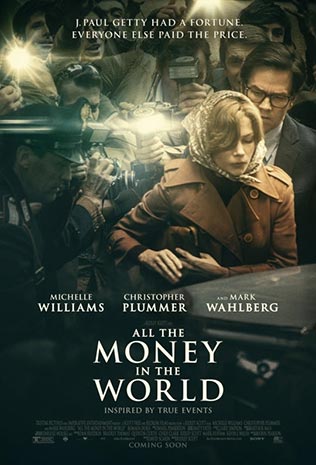
A film with a title to grab attention is currently on release. You may recall the story (from 1973 – which may test your grey matter) of a ransom kidnapping for $17million, add the spice of a well-known Director deciding to reshoot significant segments of the film due to revelations about the original actor Kevin Spacey and there is a bubble of interest.  Captain Von Trapp himself, (Christopher Plummer) a man still obviously enjoying working at the age of 89 stepped in for the reshoots.

Much like the story of Titanic, I’m not too worried about spoilers on this one, I assume that most know the basics of the story. The clear interest in this version of events is the struggle between Gail Harris, ex-wife of one of Getty’s sons (Jean Paul II), to persuade Getty to pay the ransom. Getty, whilst being probably the richest man alive, was a modern-day Scrooge. One can scarcely believe the red phone box installed at Sutton Place, just off the A3 before Guildford – his British home, for his guests to use, but it is an alarming accuracy.

Last on the list

I think it fair to say that the audience I was with were somewhat shocked by Getty. He is portrayed as a man that seems to care little for people, admitting that he had no time for his family as he had to focus on his business. He is reduced to a character that prefers possessions, very beautiful and expensive ones (he was an avid collector) over people. I cannot remember accurately what he says, but effectively that things don’t change, they cannot let you down, they are what they appear to be. In short, his experience of people (from his point of view) has been obviously disappointing. He was married 5 times, the first four each lasting 2-4 years, his final marriage to Louise Lynch lasted 19 years, though ended shortly after their son Timothy died from a brain tumour at the age 12 in 1958, Getty did not even attend his funeral. So, by the time of this story, Getty is divorced 5 times

Reflections Today

In many respects, Getty is Trump-like, in that he seems to have a very small circle of people that he trusts and lacks any significant depth of emotional intelligence. If Trump has read a book it was probably “How to be Rich” written by Getty.

The gasps from the audience at some of Getty’s actions and statements reflect the mood of today, mostly connected with the ultra-rich avoiding any taxes and structuring their affairs in a way that will ensure their preservation. The film suggests that Getty only eventually agrees to pay a reduced ransom as he is informed that there are tax advantages….

The sadness is the simple lack of any evident connectedness to another person. Money is simply a way of Getty feeling good about himself and importantly to him, making his own father seem like a pauper.

The Bully and the Buck

The ransom itself is largely about power, money is wanted by everyone, as one communist attests in the film. The very rich want more, perhaps because it increases their sense of security. It is implied that the mafia eventually takeover the ransom, like a business venture, resulting in entire communities unwilling to help a frightened juvenile. A by-product of successfully bullying is wealth.

As for Getty, here is a quick quote from the film, which is of course dramatized, based on true events but by no means a documentary.

Fletcher Chase: Nobody has ever been richer than you are at this moment.
Jean Paul Getty: I have no money to spare.
Fletcher Chase: What would it take for you to feel secure?
Jean Paul Getty: More.

Getty wouldn’t get it

Clearly as a financial planner, my role is to help you figure out how much is enough. Getty would not understand such a conversation because he also doesn’t understand living a successful life. There would never be enough, never any satisfaction, never any sense of contentment, never any rest.

Fortunately, a successful life is possible, and a great financial plan can help bring this into reality and last.  You don’t need the fortune of Getty, you need ears to hear and eyes to see and the ability to verbalise what is important to you.

Here’s the official trailer. I gave the movie 6/10. Its too long at 2 hours 12 minutes, you feel a little captive yourself.

Dominic Thomas
Solomons IFA

You can read more articles about Pensions, Wealth Management, Retirement, Investments, Financial Planning and Estate Planning on my blog which gets updated every week. If you would like to talk to me about your personal wealth planning and how we can make you stay wealthier for longer then please get in touch by calling 08000 736 273 or email [email protected]
All the Money in The World2025-02-03T10:37:22+00:00

Glengarry Glen Ross

Glengarry Glen Ross

The 1984 play by David Mamet opened in London last week. I had seen the 1992 film but had not the play. They are certainly different. To my mind the characters in the film generated more sympathy than those in the play. Whatever your view, the performances are strong, but perhaps not as strong as the language which is about as “locker room” as you can get, as clashing egos and dysfunctional ideas about masculinity are spat across the space between characters.

These are “men” that have a fluid understanding of truth, it seems that they believe that it serves their purpose to be economical with the truth. Selling whatever they can for as much as they can to whomever they can. We are all probably familiar with the hard sell and yet despite it being largely frowned upon here in Britain, we are all still regularly blitzed by people trying to grab our attention. This week I’ve had the customary junk emails, a few text messages and a call or two about an accident that wasn’t my fault and never happened. Selling, sadly, is a regular bedfellow of scamming.

Always Closing

Anyone in business will recognise the constant problem of attracting and obtaining new customers. Those that provide a particular product may only ever sell it once, as opposed to those that sell a service. It is telling that in the play, none of the characters really possess much by way of a sense of ethics. Sadly this is nothing new and of course the notion of hypocrisy (at best) lying (at worst) is familiar in almost any sector of society and unique to none. To the salesman (person) the enquiry or “lead” is their opportunity to close a sale. However bad or unethical selling can only lead to a failed business and one that closes.

A Brood of Vipers

I have never really understood those that knowingly and deliberately lie in order to make a sale. Financial services (my sector) is of course one where many sharks and charlatans have resided. Life may be harder for them now, but invariably they exist and find a way to part people from their money with apparent ease. Some “advisers” often refer to the “good old days” of financial services, by which they mean earning a commission for selling products. It may interest you to know that back in those good old days there were about 250,000 people selling financial products, primarily in person, often at your doorstep. Today there are around 25,000 authorised individuals who are able to provide advice and arrange “stuff”. Of those probably no more than 5,000 are financial planners, who, like me, don’t need to arrange “stuff” to get paid and provide a valuable service to clients, but of course most of us will arrange investments and the like as required.

Money Interest

Money is invariably the barrier to an honest conversation. In 2013 after much mucking around the regulator of the day banned most forms of commission (note I started the firm in 1999 completely removing commission). In January 2018 the rules will be taken to a higher level due to a European agreement (MIFID2). This will mean advisers and product providers need to be crystal clear about their charges and agree terms for their service. This is coming from a sensible, laudable intention of protecting investors, unfortunately I can see very few benefits at this stage, at least for those that are already provided with a costed and agreed service, as our clients are. If anything, people are more likely to make more bad decisions, focussed on cost rather than value. One of the new rules is quarterly valuations and prompt/immediate notification if a portfolio falls by 10%. These sort of actions tend to panic investors and shift their focus to the short-term rather than the long-term benefits of disciplined investing and having a proper financial plan.

Unintended Consequences… again

Your in-boxes will become fuller of correspondence, which will in turn lead to either inertia or anxiety, perhaps both. This is likely to be followed by the current serpent de jour, dressed as a helpful paramedic, but actually seeking to suck a pint of blood or two for themselves – the ambulance chasers will find some way to bombard you and convince some, many perhaps that their portfolio will only ever rise and if it doesn’t or didn’t, please take a ticket and join the queue for those seeking remedy or the fantasy of one. To my mind the equivalent of worrying that an egg was broken when the intention is to make an omelette. If I’m sounding fed up or perhaps “aggressive” this is because, well I am certainly tired of pointless changes, but equally aware that we will need to do more work, for no benefit, which will result in higher costs and fees, which will inevitably be passed on to clients. It won’t really deter the liars or crooks, perhaps it will make like marginally harder, but those are people that never play by the rules and would never offer you anything of value.

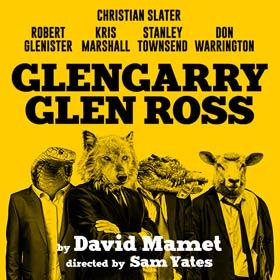
As for the play, well it’s on in London near Embankment tube. It has not been updated (if it has I cannot see where). It has contains some very uncomfortable language – racism and sexism which jar and are not helpful to the underlying message of the play. Of course it deals with bigger topics such as the dog-eat-dog world that forms of capitalism create, where collaboration isn’t in evidence, but rather ruining your peers helps your own cause. Starring Christian Slater, Kris Marshall, Oliver Ryan and Don Warrington to name a few. Get your tickets here – (warning – very sweary!)

Dominic Thomas
Solomons IFA

You can read more articles about Pensions, Wealth Management, Retirement, Investments, Financial Planning and Estate Planning on my blog which gets updated every week. If you would like to talk to me about your personal wealth planning and how we can make you stay wealthier for longer then please get in touch by calling 08000 736 273 or email [email protected]
Glengarry Glen Ross2023-12-01T12:18:21+00:00

Downsizing

Downsizing

Imagine a world where your wealth is sufficient for the rest of your life to fully support your lifestyle. Throw in the benefit of massive improvements to the environment and waste reduction and you have the plot summary of Alexander Payne’s new movie “Downsizing”.

This is a movie that is tipped for the OSCARS, given that it will be released in December in the US and January 2018 over here in the UK. Whilst having potential for perhaps both comedy and a sense of hope, this is a film that gets loses itself in a story that is both too big and too small. It’s a pity as the premise is pretty good and the trailer is typically engaging

As a financial planner, my job is to help clients figure out how much is enough to support their lifestyle (as they determine it) for the remainder of their lives. Most people do not appear to have a financial plan, very few have a clear idea about how much would be enough.

Side Effects

Downsizing begins with the scientific discovery that means it is possible to shrink cells without harm or side effect to about 3% of their original size. The one problem being that it is an irreversible process and not available to anyone that has a body with additions (implants, prosthetics, pace-maker etc) as these will not shrink.

Living the Dream

Paul Safranek (Matt Damon) is your average American, he was once on the path to a career in medicine, but his dreams were thwarted by an ill mother who needed his care. Now a somewhat frustrated physiotherapist, he is living in his late mother’s home, with wife Audrey (Kristen Wiig) and struggling to get by. At the perfectly imperfect setting of a school reunion, he is persuaded to consider Downsizing, the solution to his financial struggles.

Paul and Audrey head off to Leisure Land and receive a masterful sales pitch that extols merely the benefits of Downsizing, ignoring all of the drawbacks. The Safranek’s have assets of $52,000 but in the Downsized world this translates to $12.5million, to live on for life! The numbers do all the talking. Packing a delightful red keepsake box with their family treasures (wedding rings etc) the same box is delivered to the house in Leisure Land, but of course gold wedding rings now appear the size of buoyancy rings. I have to admit, that if I could arrange such a return for our clients I’d be winning every award under the sun. However, as with all things, there are no guarantees.

The Bigger Picture

The plan to save the world is to gradually miniaturise everyone over the course of 200 years. Despite a safe procedure (assuming removal of fillings etc) there are very real side effects in the larger world – economic, political and social. Its all very well that a mansion may now only require the space of a dining table, but property in the larger world still needs to be sold and therefore bought. Taxes need to be paid, production needs to continue and there is a debate about whether the Lilliputians should have a full-sized vote.

The film attempts a stab at all these issues as well as a rather fruitless assessment of a life of pleasure, the poverty divide, immigration and those that remain outside the system, where standards are never the same. Add a touch of impending environmental disaster and the naive, blancmange-like character of Paul Safranek who seems to lack either any sense of self-determination or self-awareness, chasing every ball thrown by anyone willing to bother. Ironically, all of the issues are far too big for the film which becomes as microscopic as its characters, lost in a world of complexity. It’s a pity. Much like Safranek, it appears nobody asked what it was that Alexander Payne wanted from this. Instead it’s a journey of happenstance, rather than any course being plotted. I suppose that this is the reality for most people, who live from day to day, month to month, year to year without any deeper sense of direction, like Safranek, frustrated through not identifying purpose. Nobody asks the right questions and so the thinking is as shrunken as the inhabitants of Leisure Land.

Here’s the trailer, the film is released in the UK in January (following its showing at the London Film Festival this month). Oh yes, the trailer is the best bit.

Dominic Thomas
Solomons IFA

You can read more articles about Pensions, Wealth Management, Retirement, Investments, Financial Planning and Estate Planning on my blog which gets updated every week. If you would like to talk to me about your personal wealth planning and how we can make you stay wealthier for longer then please get in touch by calling 08000 736 273 or email [email protected]

Downsizing2025-02-03T10:37:22+00:00

Film Stars Don’t Die in Liverpool

Film Stars Don’t Die in Liverpool

I have been enjoying several films at the BFI London Film Festival. One that stood out for me was “Film Stars Don’t Die in Liverpool” which is adapted from the book by Peter Turner. It tells of the unusual relationship between a young Peter Turner and former film noir femme fatale, who most are likely to have seen but perhaps not remember – Gloria Grahame.

Grahame’s career in film began with a small part in “It’s A Wonderful Life” you may recall how George Bailey gives Violet Bick funds to escape the small town and make a name for herself elsewhere. She won an OSCAR for her role on The Bad and the Beautiful and performed with some of the leading lights of the 1950s.

In A Lonely Place

The film is based on her encounter and 2-year relationship with Turner, who she initially meets in London whilst back treading the boards. Then in her mid-fifties, divorced 4 times and surrounded in scandal she begins a relationship with Turner, who at 27 wasn’t even born when Grahame had completed work on The Bad and the Beautiful. We are shown brief insights into her chaotic world and the scandals that inevitably ended her career in film. Her last husband, Anthony Ray, was her stepson (from her second husband) and the marriage lasted from 1960 until 1974 resulting in two children.

A Woman’s Secret

The film implies that Grahame was pretty much financially ruined, appearing to possess a mobile home / caravan on the Californian coastline. Perhaps because of 4 divorces or a career that was cut short, or even because of illness, but clearly the glamour and glitter of her star had burned out. (Spoiler) Ultimately her life is cut short due to a recurrence of cancer, though this is fairly evident as the likely outcome from the start of the film, so I’m not really spoiling it for you.

Odds Against Tomorrow

There are some broad financial lessons here. The audience laughter at a scene where two pints of beer are ordered for 90 pence, was probably the loudest in a film that clearly isn’t designed to be funny; but the long-term impact of inflation is not really the most obvious lesson here. Fame that brings financial success can be very short-lived. Life as an actor can be very harsh. Divorce is financially expensive, but of course the toll on emotional reserves may also be overwhelming. Love and tenderness are often found in unexpected places and whilst care costs, it may not have a monetary price. In a world of appearances many are in danger of making similar “mistakes” or having similar experiences.

The Cobweb

Financial protection is a modern-day (or should that be post-modern?) wonder for those without capital – providing financial stability in the event of life presenting “challenges”. Running out of money isn’t as bad as running out of time, but it’s probably a pretty close race. A proper financial plan will help reveal where your resources are and what you can do to sure them up. It enables you to take a look at the future and make some adjustments in advance if you don’t like the prospects.

Here’s the trailer for the movie, which reunites Jamie Bell and Julie Walters, this time as mother and son, whilst Annette Bening gives a great performance as Gloria Grahame.

Dominic Thomas
Solomons IFA

You can read more articles about Pensions, Wealth Management, Retirement, Investments, Financial Planning and Estate Planning on my blog which gets updated every week. If you would like to talk to me about your personal wealth planning and how we can make you stay wealthier for longer then please get in touch by calling 08000 736 273 or email [email protected]
Film Stars Don’t Die in Liverpool2025-02-03T10:37:22+00:00

Another Concerning Survey

Another Concerning Survey

If you have followed me for any reasonable time, you will have gathered that I am fairly suspicious about surveys and opinion polls, primarily due to the very small sample sizes and the eagerness to extrapolate data from, well, frankly not very much.

That said, yet another survey has revealed more of the problems that, if correct, are concerning for the country. Paymentsense (a card payment service) clearly have an insight into how people spend money. They surveyed 1000 people last month (July 2017) of all ages, whether this is a truly representative sample… well, it won’t be. However, the findings are certainly of concern.

30% of UK Have No Savings

Firstly 30% have no savings at all for a “rainy day”. Of those that had savings 21% used them for a holiday and only 17% put savings towards their retirement. Here is where I also have an issue with the line of questioning (which is unclear from what I have seen) but this could have been interpreted as using cash deposits to add to a pension (into which they may already be saving). Some people may of course be already retired and have no purpose in “saving for retirement”. In any event, a pension would be what springs to mind when asked about saving for retirement, but of course there are a huge number of ways to invest into something which will ultimately provide an income and/or capital.

Nothing in reserve?

However, the headline grabbing figure is really the extrapolation of the data. This leads to the conclusion that some 45.5m people have less than one month’s salary set aside in “savings”. The population is now an estimated 65.6m, which obviously includes children, pensioners and anyone simply unable to work and “earn” income. The current “unemployment” rate is 4.4% (for 16-64 year-olds). In short, a significant economic blip would be likely to cause significant hardship for a lot of people if they lost their income for whatever reason.

Signs of uncertainty shown in house sales

As Government continue with plans to leave the EU and a growing awareness of the likely implications for UK jobs, it would appear logical to be concerned. Hence the property market isn’t exactly booming, but property prices do continue to rise (4.9% over 12 months to June 2017) according to the Land Registry, however the number of sales continues to fall from 98,152 in August 2016 to 69,545 in April 2017. As a matter of note, the lowest number of house sales was in 32,752 in January 2009. The highest was June 2006 with 153,465 (for all the UK). If it is of interest, over the last 20 years, the average property in the UK was £65,092 in August 1997 and now stands at £223,257 (June 2017).

If you like short animated films, then Borrowed Time is a delightful one and a powerful message. Here is the trailer (almost as long as the film).

Dominic Thomas
Solomons IFA

You can read more articles about Pensions, Wealth Management, Retirement, Investments, Financial Planning and Estate Planning on my blog which gets updated every week. If you would like to talk to me about your personal wealth planning and how we can make you stay wealthier for longer then please get in touch by calling 08000 736 273 or email [email protected]

Another Concerning Survey2023-12-01T12:18:26+00:00
Go to Top