Sadly, we do forget

Sadly, we do forget

Well, it has been quite a week, something straight out of a Shakespearian plot, but then, Shakespeare endures largely because his assessment is that the human condition is all too predictable under certain pressures.

One thing that has not been predictable of late is the performance of the global stock markets. Well, now that I have said that, perhaps I’m not being fair. When there are times of significant uncertainty, there are usually rapid swings in the price of shares, both up and down and we have had a lot of that in the last week. However you voted in the referendum, the movements in the markets do not prove anything, other than that things are “uncertain”. This is all likely to drag on for a long time – at least if Article 50 is ever “triggered”.

As one client pointed out to me this week – there is no shortage of clowns at the moment. Indeed and perhaps many of us are wearing a smile and trying to make the best of things this week.

Something to remember

I wonder if you noticed how at times like these, we all (well many of us) tend to use words that are more akin to describing military hardware or actions? Our war of words seems rather sad and pathetic in the context of remembering the first World War and in particular the Battle of the Somme which happened 100 years ago today. The worst day in the history of the British Army with over 57,000 casualties on the first day. Can you imagine it! I wonder if we will ever learn. Shakespeare would probably suggest we won’t. There have been some moving and innovative ways to bring this to our attention. Perhaps you have seen the Because We Are Here website.

Waiting to hear from you

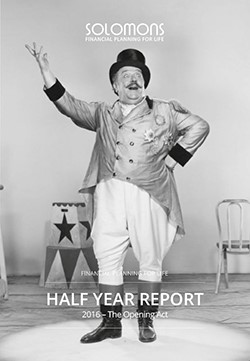
By now you should have received our 2016 Half Year Report. We sent it as both a pdf to your email address and also a hard copy. Our circus theme says all that needs saying, but clearly my crystal ball is working better than many.  Anyhow, when you get the chance to send me some feedback I would really appreciate it.

Dominic Thomas
Solomons IFA

You can read more articles about Pensions, Wealth Management, Retirement, Investments, Financial Planning and Estate Planning on my blog which gets updated every week. If you would like to talk to me about your personal wealth planning and how we can make you stay wealthier for longer then please get in touch by calling 08000 736 273 or email [email protected]

Sadly, we do forget2023-12-01T12:19:07+00:00

The Price of a Dress

The Price of a Dress

In this rather royal week in which we celebrate the 90th birthday of our Queen, there is another cultural icon who would have been 90 at the start of this month – Marilyn Monroe. For those of you that have an interest in cinematic things and perhaps alternative investments, you may recall I wrote about the auction of one of Marilyn Monroe’s dresses from the Seven Year Itch that sold for $4.6m five years ago. If that is something that interests you, then why not get along to the Design Centre in Chelsea Harbour for a Marilyn exhibition. It runs until 2oth June and is free.

The curated exhibition  includes Marilyn Monroe’s never seen before personal treasures and original costumes from notable films like ‘Niagara’ and ‘No Business Like Show Business’. Visitors will be taken on an epic journey through her life, transported into her world through the lens of style, photography and film.

Epitomising the high glamour of 1950s Hollywood, the exhibition represents iconic fashion pieces from the David Gainsborough-Roberts collection and includes the sheer beaded dress from ‘Some Like It Hot’. These will be complemented by her favourite jewellery, watches and accessories.

LONDON, ENGLAND - MAY 25: Costume, jewellery and private letters from Marilyn's personal collection at the launch of Marilyn Monroe: Legacy of a Legend exhibition at Design Centre on May 25, 2016 in London, England. (Photo by Stuart C. Wilson/Getty Images for Design Centre, Chelsea Harbour )

LONDON, ENGLAND – MAY 25: Costume, jewellery and private letters from Marilyn’s personal collection at the launch of Marilyn Monroe: Legacy of a Legend exhibition at Design Centre on May 25, 2016 in London, England. (Photo by Stuart C. Wilson/Getty Images for Design Centre, Chelsea Harbour )

Behind the scenes

In a stunning contrast between her personal life and her dazzling public persona, Marilyn Monroe: The Legacy of a Legend Exhibition will take a behind-the-scenes look at the screen actress’s life through a selection of incredibly personal papers from the estate of Lee Strasberg including Marilyn’s journals and hand written letters. Drawings, from naive still life to figure studies, are in a variety of mediums while her poetry hints at her intellectual curiosity, vulnerability and humanity.

Design Centre, Chelsea Harbour is a leading platform for a broad spectrum of creative disciplines in the capital. Best known as a world-leading destination for excellence in luxury interiors, it supports cutting-edge expression across the design agenda, making it a natural home for this exhibition.

“Claire German, managing director of Design Centre, Chelsea Harbour, said “Design Centre, Chelsea Harbour embraces and celebrates all creative expression, so we’re delighted to present such a multi-dimensional exhibition to the public for the first time. We’re curating it in a truly immersive and innovative way, all to be revealed on the 25th May.”

The exhibition, in collaboration with Julien’s Auctions, will be the first, and only time that this incredible collection of pieces is available for public viewing in the UK.

Click here for opening times for the Design Centre, Chelsea Harbour.

Dominic Thomas
Solomons IFA

You can read more articles about Pensions, Wealth Management, Retirement, Investments, Financial Planning and Estate Planning on my blog which gets updated every week. If you would like to talk to me about your personal wealth planning and how we can make you stay wealthier for longer then please get in touch by calling 08000 736 273 or email [email protected]
The Price of a Dress2023-12-01T12:19:11+00:00

The Internal Fight and Behavioural Finance

The Internal Fight and Behavioural Finance

There has been lots written in recent years about behavioural finance, in a nutshell this seeks to understand the reasons why investors (private and professional) behave the way they do, when invariably this produces very poor results. We all (hopefully) know that when it comes to investing you aim to buy low and sell high, of course this is not easy, particular in a world overloaded with information and noise. The struggle most investors have is essentially with themselves.

Perhaps this tension is reflected in recent films. There is a branch of investment theory that believes in looking for social signs that provide an investment advantage. Some take the hem line of dresses to reflect the direction of shares, the number of goals, the types of films… all essentially on the belief that more general “confidence” or lack of are displayed. Of course most theories hold a modicum of truth to even raise your attention, but as a long-term process, invariably amount to little more than highly spurious claims.

Over-confidence and Bad Behaviour?

Yet investors continue to display habits that are costly, panic and over confidence being two key elements. Investors find it very difficult to be dispassionate about their money, most believing that they are equipped sufficiently with common sense, market information of plain “insight” that provides advantage. The truth is rather different.

If you are persuaded that the big blockbuster movies are any indication of current sentiments, then perhaps the action-hero genre is worth consideration. As opposed to the usual theme of saving the world with the “good guy” we are presented with “Batman versus Superman: Dawn of Justice”, “Deadpool”, “Captain America: Civil War” and “Suicide Squad”. All reflecting concern about the assumptions we make about heroes and those we empower. Indeed also examining the conflict between friends, allies and team-mates when they disagree over the degree of Machiavellian behaviour required – ends justifying the means. Of course the deeper reflection is that we are ourselves each character, at war with ourselves. Something investors would do well to remember in the heat of trouble and why a rational, dispassionate, long-term, evidence based, sustainable investment approach is what we believe will ultimately protect and serve.

I’m hoping to put some posts together about the basics of behavioural finance, but in the meantime if you are struggling to see the enemy within, perhaps a trip to the movies may be helpful. Of course one might make the case that the current political backdrop and decisions being posed to us here in the UK are also reflected in film. We shall see quite how sensationalist, nationalistic and competitive our media become over the summer, an EU referendum, US Presidential campaign and ample national sporting events.

Here’s the trailer for the latest Captain America film “Civil War”. The Marvel franchise is very much alive to the complexity of character.

Dominic Thomas
Solomons IFA

You can read more articles about Pensions, Wealth Management, Retirement, Investments, Financial Planning and Estate Planning on my blog which gets updated every week. If you would like to talk to me about your personal wealth planning and how we can make you stay wealthier for longer then please get in touch by calling 08000 736 273 or email [email protected]

The Internal Fight and Behavioural Finance2025-01-21T15:53:26+00:00

What can investors learn from sport?

What can investors learn from sport?

I apologise to those of you that do not like sport, the purpose of this post is not to bleat on like some bloke at the pub who is attempting to name his best eleven… again… but to make an observation about the way people behave and in particular what investors can learn from sport.

I wonder if you watched the final of the T20 World Cup at the weekend. It was a thrilling match – (spoiler alter) England were eventually beaten by the West Indies. The “English” team (nationality in sport is debatable) started badly, losing Roy, Hales and Morgan very quickly. At 23 for 3 things looked pretty bad.

These days I delude myself that I can multi-task, so flicked between TV stations, watching football, Grand Prix, the cricket and keeping an eye on the social media (yes it would appear that I’m rather sad and lacking an attention span). However, getting to my point – social media exposes an array of reactions (commentators term them emotions) that people reveal as they experience an event.

Too early to call

Many had written off England with the fall of the third wicket, several used terms like “game over” before the team had even completed their attempt to score as many runs as possible within 20 overs. The game had not even reached its half-way point, but thousands had already conceded victory.

Its not over until its over

The English fortune turned around equally as quickly once the West Indies began to bat, crumbling to 11 for 3 and struggling for runs. Suddenly there was “hope”. Indeed by the end of the 19th over (of 20) another 19 runs were needed, which seemed out of reach for Carlos Brathwaite, the facing West Indies batsman, who had 10 runs to his name. England were in the proverbial “driving seat” and now expected to win. Brathwaite had other ideas and promptly smashed each of the next deliveries for six runs, resulting in a dramatic victory and tournament win. Of course sad and desperate for Ben Stokes, the English bowler.

Investor behaviour is invariably no different from those on social media at the weekend. Reacting too quickly, feeling depressed, exasperated, then gaining some hope , followed by over confidence, followed by…. Repeat.

Your goals, not someone else’s

Investing is not a hobby, it is not a sport (unless you really are very rich). It is no way to learn about yourself and no place for reactive emotions. We approach the end of the 2015/16 tax year tomorrow. The deadline invariably pushes prices up. Whilst I am obviously (I hope) of the view that allowances ought to be used when appropriate, any investing should only be done if it helps you to reach your goals, not those set by HMRC.

Part of my job is to keep clients disciplined, avoiding mistakes and sticking to their own plans (not mine). This has been termed “adviser alpha” and adds an unquantifiable amount of value, though many attempt to quantify this.

The media in all its forms constantly stirs feelings of anxiety or missing out on opportunity. The vast majority of commentary about investing is about as relevant to your financial plan as any sporting event – completely irrelevant! Trying to perfectly time the market (the opportune moment to buy and sell) is frankly impossible to achieve with consistency. In practice few do so and fewer still can demonstrate this as skill rather than luck.

Have a Successful investing experience

Unlike sport, investing does not have to be about “winner takes all”. Everyone can win if they are investing in a way that fulfils their financial planning goals. They key is remaining calm, disciplined and clear about what you are really trying to achieve.

Dominic Thomas
Solomons IFA

You can read more articles about Pensions, Wealth Management, Retirement, Investments, Financial Planning and Estate Planning on my blog which gets updated every week. If you would like to talk to me about your personal wealth planning and how we can make you stay wealthier for longer then please get in touch by calling 08000 736 273 or email [email protected]

What can investors learn from sport?2025-01-21T15:53:26+00:00

Bonfire of the Vanities and Awards

Bonfire of the Vanities and Awards

Perhaps you watched the BAFTAs at the weekend? It was certainly hard to miss Monday morning headlines, which largely featured Leonardo DiCaprio clutching his award for best lead male actor for his role as Hugh Glass in The Revenant.

The double-edge sword of social media is that anyone gets to have a say, which frankly is often unwise. If you follow twitter or any social media, you will probably be aware of the proverbial storm in a teacup following remarks the host Stephen Fry made about Jenny Beavan’s appearance. If you didn’t see it, well, she is a brilliant costume designer and was perhaps the only one that didn’t appear to dress up for the awards, which is generally regarded as a black tie/cocktail dress event. Though some men wear a regular tie rather than a bow tie. Ironic gesture, couldn’t be bothered, making a point, or didn’t read the memo. I have no idea, but as someone that was in London at the same time, one might consider another view that she was appropriately dressed for the weather on 14th February 2016. The truth is I have no idea.

Fury Road

Anyhow, she won a BAFTA for costume design for the film “Mad Max, Fury Road”. Mr Fry made a comment about her attire, which was met with gasps from the audience and a tidal wave of comment on social media. Mr Fry then chose to tackle this head on, saying it was a joke, with a close friend and people should.. well, find other uses for their time…. In fact had this all happened before the film was released, one could have been forgiven for thinking it was a PR stunt (Mad Max, Fury Road).

Et tu Brute?

So why bring this to your attention, what has it to do with financial planning? Nothing and everything. There isn’t a connection, but there is an observable behaviour that took place – that of the herd mentality. It seems that there are a great many people who are very quick to pass judgment without possession of all the facts and very quick to pronounce others as something unpalatable. There was the equivalent of a stampede to get one’s knife in… et tu Brute? The exchange between sides was fairly unsavoury, albeit without a single physical blow.

Investor Behaviour – the herd mentality

This happens with investors too. They panic in a herd and run for the lifeboats, just because someone seems to have yelled “lifeboats?” (or crash). There appears to be little thought of whether the facts are accurate, the context or whether to the lifeboat option is actually the safer approach. If you are RBS and your portfolio is full of rubbish, you might understandably say “sell everything” but if you don’t it makes little sense.

Investor panic is understandable in a world where the media is reporting doom and gloom, red exchange boards and falling stock markets. But remember that the media is there for a variety of reasons, not simply to provide “the truth”. It will never be held accountable for predicting the future other than in a joke about previous blunders.

As I hope you know by now, most investors underperform the market by attempting to time the market – trying to second guess when is the right time to buy and sell. They underperform by around 3%-6% a year. Yet all the time, there are those screaming – do something, sell, buy… whatever the herd is doing. If you don’t believe me check some easily found research at Dalbar.

The Subjectivity of Art

The BAFTAs and any other award ceremony is frankly nice, but just silly. They are highly subjective gongs for a very small number of people, selected by a lightly larger group of people. Yet even within the hallowed walls of such organisations, one wonders if everyone that voted actually saw the films they voted on. Frankly I suspect not. It is the only way I can rationalise some of the winners…. But then its subjective and nobody gets hurt… right?

Dominic Thomas
Solomons IFA

You can read more articles about Pensions, Wealth Management, Retirement, Investments, Financial Planning and Estate Planning on my blog which gets updated every week. If you would like to talk to me about your personal wealth planning and how we can make you stay wealthier for longer then please get in touch by calling 08000 736 273 or email [email protected]

Bonfire of the Vanities and Awards2025-01-21T15:53:26+00:00

Don’t Panic! Captain Mainwaring… don’t panic!

Don’t Panic Captain Mainwaring

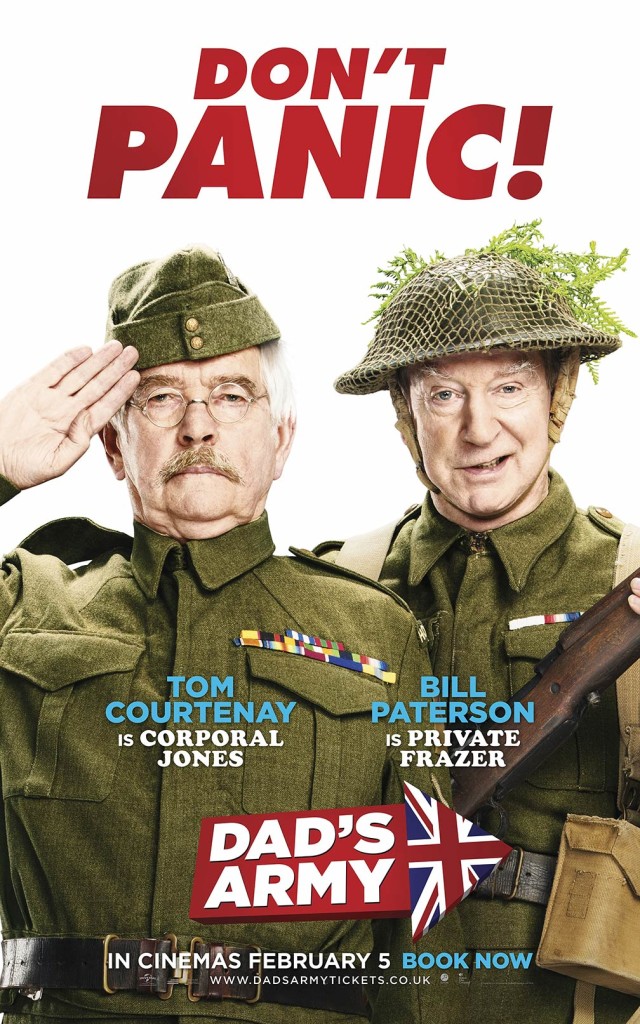
I find it increasingly difficult to resist the temptation to comment on the world stock markets. The media is constantly moving from positions of fear or greed, buy or sell. This serves their purpose of having something to say and of course becomes something that they then have to continue to say for fear of not providing “the news”. Of course panic is contagious and whenever I see it, I tend to think of Corporal Jones from Dad’s Army – don’t panic Captain Mainwaring.

So what is happening? The price of oil has fallen dramatically. The Chinese economy is not growing as quickly as it was. There is nervousness about the UK leaving the EU, the possibility of a thug winning the US presidential election, perhaps forcing a showdown with anyone with different opinion. Europe has little idea about what to do with thousands fleeing war in Syria or their own ravaged economies offering few prospects of employment. Our own austerity is causing our public services significant stress and of course there is the recurring fears about viruses, war, the environment and terrorism which all play into the narrative of “its bleak”.

Fear and Greed

Shares are part, ownership of businesses. The value of which is based in part on its actual physical assets (premises, stock etc.) and part on future revenue streams (forward orders, based on data from historic orders). There is also the matter of market share, industry sector and general perception of the company. The price of shares is therefore in part objective maths, part subjective opinion.

The problem with sudden shifts in price are invariably linked to a herd mentality – playing inevitably into two camps – fear or greed.

We know this when we invest. It is not new news, but it is certainly hard to live with, particularly when the noise is very loud and the doom-sayers are everywhere.

Any real changes?

If you have genuinely altered your long-term goals and do not wish to invest ever again, you probably should rethink your entire strategy, perhaps investing is not for you. I am being serious.

However if your long term goals remain roughly the same, then the key question is has anything really changed?

Diversification

Your portfolio is split across a variety of asset classes, shares, bonds, cash and commodities. There is a global spread. You have a diversified portfolio. We have established tried and tested evidence based analysis to check that you have the right “mix” of holdings to suit your attitude to risk. To date, whilst the markets have been “disappointing” (understatement) since April 2015, the degree of “shock” is within your tolerance, but it is of course deeply unnerving, very unsatisfying and frustrating.

Time in the market not timing the market

However we are holding to the long-term principles of disciplined investing, which have been proven successful over time. This is simply part of the investment experience, albeit “painful”.

It is very tempting to think that getting out of the market now (or 12 months ago) would provide some solidity. However this is based on the notion of being able to time the market and determine opportune points to get in and out of the market (and which market). This is really therefore a double decision, when to sell and then when to buy again.

Historically, investors (professional and private) get this very wrong. Invariably they panic and sell towards or at the bottom of a market, and then decide to invest again once they are confident in the recovery (which has already happened by the time they get back “in”). This leads to further frustration and doing the exact opposite of what we all know investing is about – sell at the top, buy at the bottom. Selling holdings is the only actual way to make a loss real.

Reserve Levels

Any discussion about your financial plan has involved thinking about an appropriate amount of cash to hold on deposit – your emergency fund. You may have used some of this, you may not. It is there as a buffer, and is designed to mean that you don’t have to take money from investments when they are suffering. Perhaps some adjustments may be prudent, but this is your choice, money should serve you, not the other way around.

I am not pretending that the market turmoil is not scary. This is a normal, understandable reaction to headline news. I know of nobody that likes to lose money. Everyone wants high rewards for low risk. However, unless your circumstances have really changed, if you are at the end of your tether with the concept of “investing”, then stick to the course, taking the life-long perspective.

Pain is part of growth, falls are part of average annual returns, finance is not magic and doesn’t provide any real account of who or what you are.

We remain vigilant, we continue to work in your interests but yes, your funds have reduced in value, but we have no good reason to believe that this will be a permanent status. We do not have a crystal ball and cannot predict the future with certainty, nobody can (despite inferences by others). We are doing our best in an imperfect world. Thankfully, this is 2016 and we are not on rations or at war with the world and whilst not dismissing our troubles (which are very real) perhaps some old school laughter might help.

Dominic Thomas
Solomons IFA

You can read more articles about Pensions, Wealth Management, Retirement, Investments, Financial Planning and Estate Planning on my blog which gets updated every week. If you would like to talk to me about your personal wealth planning and how we can make you stay wealthier for longer then please get in touch by calling 08000 736 273 or email [email protected]
Don’t Panic! Captain Mainwaring… don’t panic!2023-12-01T12:19:27+00:00

Should advisers fear being black listed?

Should advisers fear being black listed?

There are numerous benefits of social media. One is the ability of peers in any field to discuss topics and share ideas. Sadly this comes with the inevitable double-edged sword of whether to post under your real name or a pseudonym… or “nom de plume”. This I assume is connected to a fear of being black listed.

Of course there’s a lot to disagree about, and it appears that many will take considerable time to vent and click send. Not always a great choice, I’ve been guilty of it myself. There is a general perception, whether explicit or implied that somehow anything critical of those in power will result in some form of retribution. Hence many publish comments under false names for fear of being “black listed”.

Invariably the problem within my own sector is that of fear of the regulator. Of course on the one hand I think this is quite a good thing, advisers ought to be “afraid” of the regulator. That would really mean that they are surely there to keep people on the “straight and narrow”. So I welcome good, strong regulation – it’s in my interests (and yours). The hope is that strong regulation reduces the potential for people to be ripped off.

A critical voice brings change

On occasion, of course some criticism of the regulator is entirely appropriate (after all is anyone or any organisation perfect?). It is this that advisers fear (good ones too). The concern is rather obvious – raising a critical voice may be met with a sudden barrage of requests for information, which can prove time consuming and frankly unnecessary. I take the view that the regulator needs to be held to account and publish under my name. Frankly it is rare that I am critical of them – my main gripe is invariably a difference of approach to the way investors who have suffered scams or mis-selling are compensated following advice from “bad” advisers.

At present, the system is such that “bad” advisers rip off investors. The product, fund, adviser and their PI cover all fail and the remaining “good” advisers pay the compensation. By remaining, I really do mean a diminishing number. At one point there were about 250,000 “financial advisers” today there are about 22,000. Most advisers pass this cost onto their clients. To date, I haven’t despite a 30-day demand for payment increasing by 67% in 2015 on top of a 69% increase in the previous year! Hard to explain and pass on such fee rises in a period of virtually no inflation!

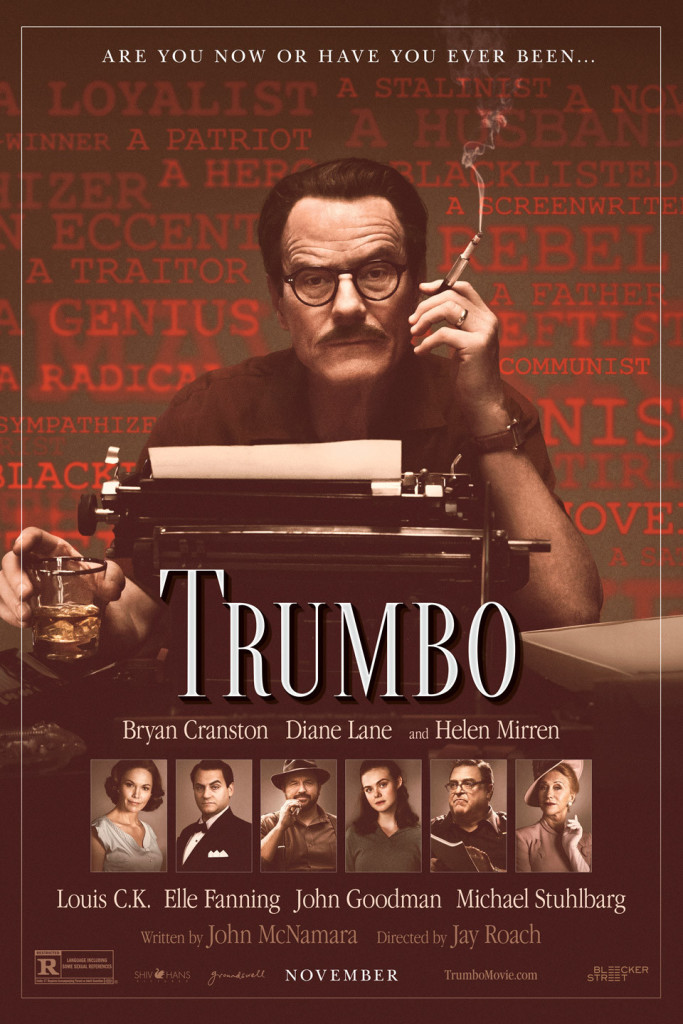
I don’t think I’m being too radical or inflammatory in my industry comments. This isn’t the 1950’s, McCarthyism has not returned (as far as I can tell). On which note, there is a very good new film out called Trumbo – the true story of a man that was blacklisted by some very unsavoury people in Hollywood. Trumbo was forced to write under a pseudonym to allow him to earn a living and he wasn’t ripping anyone off. I’m not so sure that advisers publishing under pseudonyms is really the same thing at all. I wish I had the creative writing skills of Trumbo! I only stand with him in the sense of being free to write or speak without fear of reprisal.

Oh, and you are welcome to check out my industry comments online at places like New Model Adviser, Financial Adviser, Professional Adviser.. but they are pretty dull and aimed at advisers.

Here is the trailer for Trumbo, you may recognise Bryan Cranston (who plays Walter White in Breaking Bad) and Helen Mirren has a small role, but has you piping venom… well it did for me. It has only just been released here in the UK… its one of the few films that I gave 10/10… but of course I may have been influenced by issues raised here!

Dominic Thomas
Solomons IFA

You can read more articles about Pensions, Wealth Management, Retirement, Investments, Financial Planning and Estate Planning on my blog which gets updated every week. If you would like to talk to me about your personal wealth planning and how we can make you stay wealthier for longer then please get in touch by calling 08000 736 273 or email [email protected]
Should advisers fear being black listed?2025-01-27T16:38:36+00:00

Should Risk be Contextualized?

Should risk be contextualized?

The media is full of stories telling us how much risk there is “out there”.  Whether its oil prices, fracking, stock markets, war in Syria, crowded cities, religious nutcases… its a wonder any of us make it through the week. Risk is real, but of course it needs a context.

Crossing the road is a risk, but looking each way, listening and crossing when its safe to do so makes it less risky. In such circumstances, we assume that we will make it to the other side – we don’t expect to collapse half way across or be struck by something falling from the sky…. or indeed someone driving something at 250mph.

So risk needs a context, we dismiss risk that is likely to be irrelevant, based upon our experience. We apply sensible practices (green cross code) and then make a judgement. We might be wrong, our “experience” may be under or over stating the actual risk.

For example, not swimming in the ocean for fear of being attacked and killed by a shark – yet the greater risk is drowning. You are more likely to be killed a mile from your home in an accident than being killed by a terrorist…. though I will of course quickly contextualize that to where your home is!

I don’t think its just me, but given all that has happened to investment markets in recent memory, I am always a little “alarmed” at how some businesses simply keep peddling the same myth… that becoming rich is easy.


Risk Warnings

So in a climate of anxiety about the state of the world, recent experiences of a credit crunch, a general concern and growing desire to state all risk warnings clearly. I was surprised and disappointed to see an advert on the home page of the London Stock Exchange website which is for a trading account, suggesting that you can become a trader in a matter of just 10 minutes. In all fairness, it doesn’t say become a good trader, a rich one – simply become one. I imagine that 10 minutes of investment experience of CFDs is likely to make you a very poor trader.

As it happens, this is trading CFDs… one of the more exotic forms of investing. I am not suggesting that Trade.com are a bad company, I have no way of telling if they are. What they offer ought to be aimed solely at wealthy investment experts who can afford to make enormous losses. I imagine that this would probably be who they also believe should be their target audience. However an advert on the LSE homepage, in fact two of them, rather implies something else… or is that just me? as for the risk warning… well “CFD trading is risky” (no kidding!).

Depending on who I listen to, even showing you the trade.com advert as I have above, might constitute a financial promotion… which may land me in trouble. Clearly I do not believe it is. I have made it very clear that there is a context for showing the advert, doing so and unless you fall into the category of the target audience that I have identified in the paragraph above, you would be mad to consider this an endorsement or worse still “advice”. Yet this plays into the current mindset of the day – blame someone else when something goes wrong.

If you ever switch on a commercial radio station, you will be aware of some adverts that end with someone talking very quickly about the terms and conditions of credit being made available, typically for car adverts. I might suggest that this is rather unnecessary, as anyone with half a brain that wants to take up such an offer has ample time to do some research to check the terms carefully, nobody is picking up a phone or firing an email off ordering a car (or whatever) as soon as the advert ends.

Somewhere there is a sensible amount of warning (about the potential for loss) for any type of investment or financial transaction. Clearly, we seem far from this (from my point of view). Why even bring this to your attention? Simply – just because the stock market is “risky” does not mean that other forms of investing are less risky, some are, most aren’t. Buying property abroad or a tree farm, ethanol plant, storage pod  or whatever via your pension, is almost certainly a bad decision.

Dominic Thomas
Solomons IFA

You can read more articles about Pensions, Wealth Management, Retirement, Investments, Financial Planning and Estate Planning on my blog which gets updated every week. If you would like to talk to me about your personal wealth planning and how we can make you stay wealthier for longer then please get in touch by calling 08000 736 273 or email [email protected]
Should Risk be Contextualized?2025-01-27T16:38:37+00:00

Empty Box – Part 2

Empty Box – part 2

As an update to the post “Pension Scams – The Empty Box” in December, you may wish to catch up with the Radio 4 show “You and Yours” of Wednesday 20th January 2016 which exposes the “problems” with investments into storage pods by Store First.

As if things were not bad enough, it transpires that many of the pods aren’t useable due to the shape, design and construction of the “pod”. Not only that but, the cost of renting a pod is largely made up of compulsory hugely inflated insurance, the rental income is a very small proportion of the overall cost and it is only this that “investors” are entitled to…. And according to the programme, many of the investors are even receiving this. The “occupancy rate” was also brought into question with the suggestion that rather than being 80% let, the real figures are closer to 14%.

Have a listen for yourself. It’s all rather sad and whilst I really do understand that many people are fed up with the volatility of the stock market, or loathe investment people, any sort of alternative investment must always be properly understood. This isn’t even a case of jumping from a frying pan into a fire, but more like not coping with the heat of a kitchen and deciding to burn the house down

Dominic Thomas
Solomons IFA

You can read more articles about Pensions, Wealth Management, Retirement, Investments, Financial Planning and Estate Planning on my blog which gets updated every week. If you would like to talk to me about your personal wealth planning and how we can make you stay wealthier for longer then please get in touch by calling 08000 736 273 or email [email protected]
Empty Box – Part 22025-01-27T16:38:37+00:00

The Big Short

The Big Short

I have been looking forward to the release of “The Big Short” for some time. I suspect that many will yawn with incredulity at the prospect of watching a film about Bankers and the financial crisis… all that jargon, which is, lets face it, all rather dull and old news… I beg to differ.

This is a story well told, but a story that is frankly unbelievable, yet it happened. I would urge you to go and see it, I managed to do so on Monday evening (no I did not claim it as an expense). It will not change your mind about the Heads of Investment Banks or regulators, it will remind you of how utterly corrupt and complicit they have been in ripping off investors for years, and I see little evidence to suggest that this will alter.

The film makers attempt to explain some of the key terms that underpin the entire credit crunch. It is reminiscent of the musical about Enron – yes a musical essentially about accountants, but as with the musical, this is really an exposure of some rather foolish human behaviour.

Whilst the vast bulk of the film concentrates on the American story, the financial services industry is of course global and the setting for the story is largely irrelevant.

Are you sitting comfortably?

There are many that will not like the content of the film. The film is damning in its criticism of Government, regulators, bankers, credit rating agencies and mortgage brokers. The only group to have really been punished for the crisis in the US were the homeowners and the poor – by losing everything (a story told very well in the film “99 Homes” – see my piece on that too).

Here in the UK, we took the collective punishment of austerity, tax hikes and pay cuts. But at least the head of the regulator (then the FSA) was even knighted for services to the financial services industry (!).

You may have some questions after watching the film, both at the practical level and the “what one earth are they thinking?” level. Here is the official trailer to get you in the mood… oh and the film is nominated for an OSCAR. Mind you, I was even more incensed having watched “Four Horsemen“…  to my mind The Big Short is the softer option (pun intended).

Dominic Thomas
Solomons IFA

You can read more articles about Pensions, Wealth Management, Retirement, Investments, Financial Planning and Estate Planning on my blog which gets updated every week. If you would like to talk to me about your personal wealth planning and how we can make you stay wealthier for longer then please get in touch by calling 08000 736 273 or email [email protected]

The Big Short2025-01-27T16:38:37+00:00
Go to Top