
Taxing Reforms for Pensions

Taxing reforms for pensions

There has been considerable “chatter” about the prospect of pensions being reformed even further. In particular, the tax of pensions is very much up for debate, making the prospect of tax reforms for pensions a genuine possibility.

In brief the Chancellor has already made huge changes to the pension system, enabling a pension to be taken as a lump sum or as income without any requirement to buy an annuity.  In addition, a pension can now be easily passed on to beneficiaries of your estate, rather than ceasing when you do.

Tax Overpayments

The new freedoms have already and will continue to mean that some people don’t do their sums properly and end up paying too much tax – unnecessarily, which of course is a good thing if you run HM Treasury… every little helps and all that.

In very simple terms, most people will currently find that whatever the size of their pension pot, they can take 25% of it as tax-free cash (these days “we” call it a pension commencement lump sum – or PCLS). The rest is taxed as income.
Reforming tax relief

At the moment, anyone that pays into a pension gets tax relief – either at 20%, 40% or even 45% depending on your rate of tax. Everyone gets 20% (from age 0 to 75). So an investment of £1000 actually costs £800 if you are a nil rate or basic rate taxpayer. If you pay more than 20% tax, you get to claim the balance back via your tax returns.

The Chancellor is reviewing this, because it costs the country a lot of money. The main problem being that employers make most of pension contributions each year and do so in part because it is treated as a deductible cost. If this were considerably altered, then most employers are likely to reduce or even stop (bar the minimum requirements of auto enrolment) their contributions. This would result in smaller pensions in retirement…

So he could simply reduce tax relief to a lower amount, in essence he has done this already for anyone earning over £150,00, who have their annual allowance restricted to just £10,000 (less than an ISA) if they earn over £250,000.

Tax relief provided in 2013/14 amounted to £34.3bn, whereas the tax on pensions generated £13.1bn a “cost” to the UK of £21.2bn. Most of which (2/3rds) is reclaimed by higher rate taxpayers… those paying 40% or more.

Shrinking the Pot

He has also reduced the amount that can be held in a pension (the Lifetime Allowance) which is set to reduce again from £1.25m to £1m next April. Anything above this will be subject to an excess tax charge of 55% as things stand at present. That’s what I call easy money for the Treasury and there isn’t that much that you can do about it, other than applying for protection where relevant.

Changing the Sweetener

Another option would be to make pensions tax-free in retirement instead of taxable. Whilst this sounds all well and good, the reality is that who would honestly trust any future Government not to change the rules later, when they realise that they need the income to be taxed.

Simplicity Seems Dead

I am of the opinion that pensions are going to change, how much and when, we simply do not know. However the Government wants to be seen not to help the “rich” which seems to include people paying 40% tax and everyone paying 45% tax. It would include anyone in the State Sector that has built up a long career – doctors, teachers, police, civil servants – all of whom seem to be the current “cat to kick”. It certainly includes anyone that has pension funds worth £1m or more. Though I would argue that £1m in a pension pot isn’t that huge (yes I know its relative)  but in practice that provides at £40,000 a year income… not enough to pay higher rate tax. The worst case to my mind would be to create a “before and after” system – which we have had before, which only makes life more complicated.

If I were Chancellor?

People need an incentive to save for the long-term. I would abolish the Lifetime Allowance making all current and previous protections irrelevant. I would restrict tax relief to a % of salary, perhaps providing it directly as a 5% tax cut, say 20% tax becoming 15% if payments are made to a pension. That way HM Treasury collect taxes, people are incentivized to save and earn. I would scrap rules that enable people to pay into pensions for children, which is essentially something that only the wealthy can do, so that pensions are only for those aged 18. However I would continue to tax pension income as income…

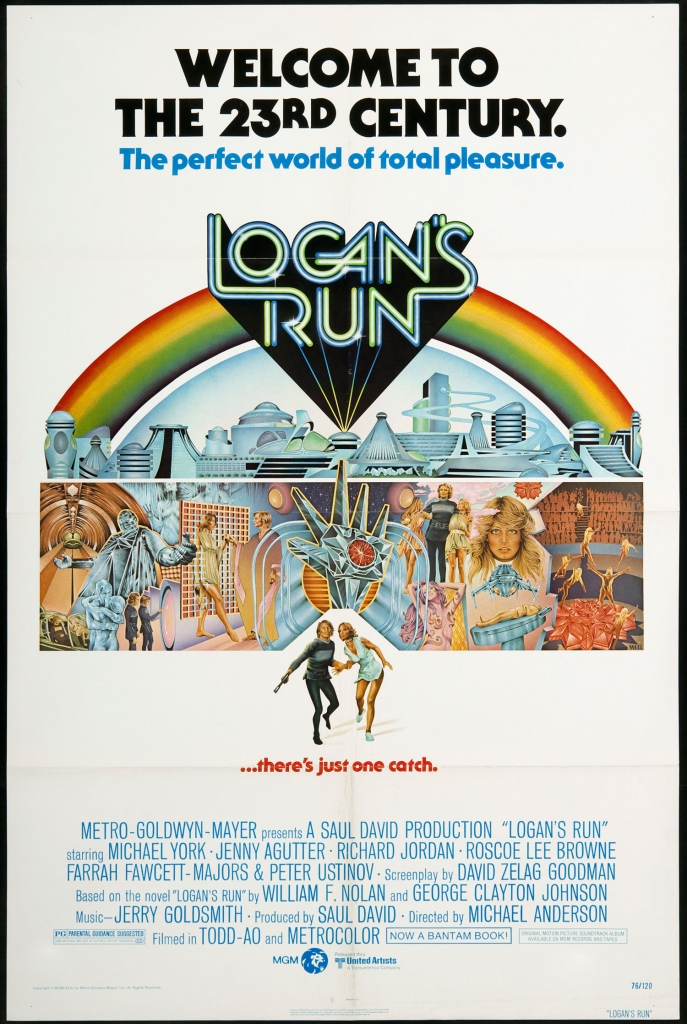
Sadly, for younger generations the prospects of good pensions looks fragile… of course there is the prospect of the solution as outlined in Logan’s Run….. there’s just one catch..

Dominic Thomas
Solomons IFA

You can read more articles about Pensions, Wealth Management, Retirement, Investments, Financial Planning and Estate Planning on my blog which gets updated every week. If you would like to talk to me about your personal wealth planning and how we can make you stay wealthier for longer then please get in touch by calling 08000 736 273 or email [email protected]

Taxing Reforms for Pensions2023-12-01T12:20:08+00:00

Budget 2015: Students

Budget 2015 – Students

I’m going to attempt to be non-political by explaining how the current student loan system works. This relates to “Type 2” loans, which started in September 2012. Having watched mainstream media coverage of the Budget, I was alarmed at the degree to which little was known about the cost of a prospective Degree… by both media pundits and potential students.

Your Starter for Ten

Being a student involves many things, but financially these are the basics – the cost of the course, the cost of the accommodation and the cost of living. Over the last 30 years the number of students has increased enormously, fuelled by the belief that higher qualifications result in better choices, better income, better national prosperity. As you will know Colleges and Polytechnics became Universities some time ago, for no other reason (I think) than appearing less elitist.

Anyhow, the cost of a University course varies relatively little, most are £9,000. Those not living at home, need accommodation, which realistically costs between £3,500 – £6,000 a year, depending on location and type. Once through the first year most are left to house share within the private sector. Then there is the cost of living… food, drink, books (depending on the course) and the occasional fun night out. I think its possible for most students to live on £80 a week for this.

Loans and Grants

That’s it. Those are the costs. You can pay yourself or you can apply for a tuition loan to cover the cost of the course and a living maintenance “grant” (also a loan) for the living part. Those from families with low incomes can also apply for a further grant, some of which can be a loan, some is a grant, never to be repaid. The Chancellor announced on 8th July that this bit is changing – so that its all wrapped up as a loan. Nothing gratis.


Student Debt

The debt clock starts once the 3 year course ends. Interest is added and so the debt increases, but the amount of interest added depends on income (RPI for those earning less than £21,000 and RPI up to 3% for those earning £21,000-£41,000, above that its RPI+3%).

Repayments are made via salary if you are employed, or via self-assessment returns if self-employed. No payments are made if income drops below £21,000. Leaving the UK means that the loan is repaid directly to the Student Loan Company… failing to notify them will result in penalties. The loan lasts for 30 years and then cancelled, whatever the balance.

So let’s suppose you have three years of tuition loans (£18,000) and 3 years of maintenance loans (say £15,000), a total debt of £33,000. In theory if you never work or earn more than £21,000 you will not repay a penny. Hopefully University was inspiring enough and helped to obtain a career in something that is rather better paid than £21,000 a year over time… so most will pay something.

The Repayments

This is where it seems that most of the misunderstanding occurs. Loans, however large are only payable if income is over £21,000. If income falls below this, payments stop, interest continues to accrue. In essence then the mechanics of this are more like an extra tax than a loan.

Gross Income Annual Payment Monthly Payment
£21,000 £0 £0
£22,000 £90 £7
£25,000 £360 £30
£35,000 £1260 £105


Perhaps you could think of a mobile phone contract… £30 a month seems pretty “normal” for a phone. So I fail to see how £30 a month is not affordable for a Degree. Of course many graduates would hope and expect to earn much more than £35,000. As they do so, their repayments rise. In fact repayments are calculated at 9% of pre-tax income over £21,000. So a graduate earning £150,000 would pay £11,610 a year or £967 a month (the monthly payments are always rounded down). Of course by that point one would expect the loan to have been repaid anyway.

The Politics

Frankly I would need to be persuaded (and open to being so) that going to University isn’t affordable under the current terms. However this misses the wider and more substantive political point. Do we want a well-educated society that one day will be “running the country”. Do we view higher education costs as an investment in our own population or not? The argument that better educated people get better paid jobs and therefore pay more income tax applies whichever side of the debate you stand.

It would appear that given the increase in courses and students, most believe that a Degree must provide better choices. In 1920 only 4,357 first Degrees (as in a Degree not a Masters) were awarded, by 1950 the number had increased to 17,337 and by 1970 51,189. 1990 saw 77,163 Degrees awarded and in 2000 this rose to 243,246. In 2011 the number stood at 350,800. This level of growth is pretty dramatic isn’t it. Since 1980 the number of graduates each year has increased five-fold or eighty-fold since 1920. [source: House of Commons Library, SN/SG/4252 27 November 2012]

Naturally a “free” University system is open to abuse, (every system is) the current one is too – its possible that a graduate could avoid repaying the loan by keeping income below £21,000 a year for 30 years… but I imagine that would be rather difficult, when allowing for real life and inflation.

Happy to be challenged, but let’s ensure the facts are right. The notion of starting adult life with a large debt isn’t pleasant, but in practice it isn’t a bad solution to help more people improve their education.

Dominic Thomas
Solomons IFA

You can read more articles about Pensions, Wealth Management, Retirement, Investments, Financial Planning and Estate Planning on my blog which gets updated every week. If you would like to talk to me about your personal wealth planning and how we can make you stay wealthier for longer then please get in touch by calling 08000 736 273 or email [email protected]

Budget 2015: Students2025-01-28T14:35:51+00:00
Go to Top
