
Ocean’s Eight

Ocean’s Eight

It is an odd thing that we have an affection for certain types of criminals. Those brought to life within a film invariably are the anti-hero. “The Italian Job” or the “Lavender Hill Mob” both hold an almost iconic cultural reference point. Ocean’s Eight is essentially a criminal gang of women, who steal. I’m not sure what the appeal really is, but it is undeniable. Perhaps there is something buried in childhood stories about Robin Hood, which leaves us marvelling the execution of a fantastic plan to outwit and outmanoeuvre authority.

The opening sequences of Oceans Eight may provide some insight. It is perhaps the force of brazen confidence that enable Debbie Ocean (Sandra Bullock) to take advantage of the unsuspecting. Frankly, this sequence ought to be shown to every retail employee as an example of what to observe and I have to admit to being a little concerned that it gives thieves more ideas.

The Double Bluff

Perhaps there is the sense in these films that somehow a balance is being restored in a rather Robin Hood-esque way. I’m sure that there are many examples where this might be the case, but the darker reality is that perhaps, we are all a little enamoured by the criminal mind and but for the consequences, fancy ourselves as a mastermind of bluff and double bluff that has a payoff. Perhaps it intrigues, because we don’t live our lives that way and for good reason.

Where is the promised Cold Calling Ban?

The financial world is full of scams, often by clever people, sometimes just by the downright brazen. As a victim the consequences are very real, having identity stolen or pretty much all your life savings. These are the reasons why we have laws and regulation. Yet it occurs on a massive scale every day. We all need to be vigilant and I am angered by yet further delays to the introduction of the Cold Calling Ban by the Government. I appreciate that Brexit is currently taking resources, but meanwhile criminals are stealing from pension funds and so on. Whilst often we are told “it’s not personal” having your home, bank account or pension fund broken into by a thief feels very personal indeed.

We are complex beings, both victim and perpetrator, but mainly neither. The traditional financial services industry calls this fear and greed, aligning its material accordingly. The job of a fiduciary, such as a financial planner, is to help spot these incidents and to avoid them. There are often not obvious indications and often the best place to hide a lie is in plain sight, between two truths.

As for the new film, I really enjoyed it. I think it is because of the clever planning and skill on display, but actually it probably helps satisfy my darker side. Here is the trailer.

Dominic Thomas
Solomons IFA

You can read more articles about Pensions, Wealth Management, Retirement, Investments, Financial Planning and Estate Planning on my blog which gets updated every week. If you would like to talk to me about your personal wealth planning and how we can make you stay wealthier for longer then please get in touch by calling 08000 736 273 or email [email protected]

Ocean’s Eight2023-12-01T12:17:59+00:00

The Happy Prince

The Happy Prince

There is a new film about Oscar Wilde – The Happy Prince currently in cinemas. It is a wonderful portrayal of the literary genius, but desperately sad. Oscar is played by Rupert Everett, who extends the character he played not so long ago on stage in “Judas Kiss”. Wilde was an obvious genius whose fall from favour and grace was spectacular only in its indictment of Britain then.

As we all know Wilde was a married man, who was also homosexual. These days it is hard to fathom how this is either anyone else’s business (though of course our culture remains just as preoccupied with what happens out of sight) let alone how this detracts from his obvious literary accomplishments.

In this portrayal, Everett makes plain the self—destructive path of addiction. In this case Wilde’s frankly inexplicable addiction to the loathsome Lord Alfred “Bosie” Douglas (Colin Morgan). It is his inability to manage his feelings and actions which lead him to penniless ruin, living in the squalors of Paris.

Self-Destruction

Whilst much has changed in society since the life and times of Oscar Wilde, one cannot fail to realise that whatever the form an addiction takes, it has the capacity to lead to ruin. There are moments in the film in which Wilde’s friends Reggie Turner (Colin Firth) Robbie Ross (Edwin Thomas) and wife Constance (Emily Watson) all urge him to take a different path, to forget the selfish indulgence of Bosie. Yet knowing the consequences of being financially cut off, Wilde follows his self-destructive desires all the way to the grave.

Drama, Drama

We are all prone to addictions… how is that smartphone addiction? Or perhaps an addiction to the media? These may seem like rather innocuous addictions, with little apparent consequence, certainly unlikely to suffer illness or death, yet there is growing evidence that many are suffering from an overload of information, a sense of powerlessness and being overwhelmed in a world that appears outside of our control…

When it comes to investing, our addictions to the news and perhaps following the markets are likely to cause us to make poor decisions. Responding and reacting to “the news” yet this invariably has little to do with our own lives and financial plan. Chasing the illusive winning funds is a habit that many have developed. Yet the reality is that we can control very little, but what we can control, we do indeed need to focus on.

Don’t make a crisis out of a drama

Attempting to time the market, second guess the best performing funds or shares is nothing short of speculation, it is not a proper investment strategy. It is a very good way to run out of money and the FCA recently produced a report outlining the errors of holding too much cash in a pension fund. Presumably investors do so because they don’t trust pensions, the market, advisers or all of those them and simply attempting to time the opportune moment to invest. This, it has been found leads to dramatic underperformance and penury.

Here is the trailer for the film.

Dominic Thomas
Solomons IFA

You can read more articles about Pensions, Wealth Management, Retirement, Investments, Financial Planning and Estate Planning on my blog which gets updated every week. If you would like to talk to me about your personal wealth planning and how we can make you stay wealthier for longer then please get in touch by calling 08000 736 273 or email [email protected]
The Happy Prince2023-12-01T12:18:00+00:00

Picking Winners – Financial Myths

Picking Winners – Financial Myths

Most of the financial services industry thrives on inertia and misplaced trust. The investing world can be broadly broken down into two categories – active or passive management of money. The terms are not helpful but can broadly be best described as active management is where Fund Managers attempt to outperform the market by use of skill, philosophy and information. Passive management basically says this is possible, but impossible to do with any repeatable success, so invest into the entire market (or index) to obtain the market return.

There are skills, systems and processes needed within passive management if truth be told, particularly when an index is forced to alter its constituents (much like the end of season promotions and relegations). However, costs are generally much lower – unless you are unfortunate enough to own a Virgin Money Index tracker. Generally active funds are more expensive – considerably. This it is argued, is due to better performance.

Anyhow, research from American Dimensional Fund Advisers, who rather pride themselves of academic research and evidence, recently concluded their study of US funds available to US investors. OK, its America not the UK, but given that the US is roughly 8 times the size of the UK stock market, let’s use it as a better sample.

Coldplay - A Rush of Blood to the Head No.1 Album in 2002
Atomic Kitten - The Tide is High No.1 single in 2002

The Unvarnished Truth

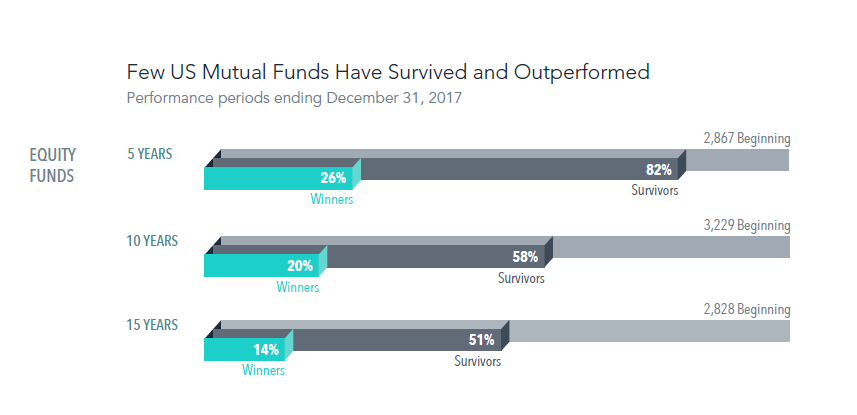
The evidence looked at equity funds and Fixed Interest Funds over 5, 10 and 15 years (2002-2017). Given that most people are investing for their lifetime, though behave as though they do so for about 12 months, these are sensible starting timeframes for such research. For the sake of brevity, I will discuss their equity fund findings (the results were much the same for both asset classes).

Of all the funds available, only 14% to 26% outperformed their Morningstar category index. The longer the time frame the lower the number that outperformed. So, in simple terms about 1 in 4 outperform over 5 years, 1 in 5 over 10 years and about 1 in 7 over 15 years.

Survival of the Fittest

However, even if it was as simple as simply picking funds on that basis, you are more likely to have picked a fund that closed. Over 5 years 18% of the funds did not survive (about 1 in 5). At 10 years this rose to 42% failing to survive (1 in 4). At 15 years, well just 51% of the funds you could have chosen from survived. That’s 1 in 2.

Top of the Pops Investing

As many advisers and most online sites promote and select “top performing funds” it may interest you to know that a Fund Managers historic performance does not ensure a decent future performance. The data revealed that top quartile performance for consecutive 3-year periods occurred on average between 17% and 33% of the time. In short, not many sustained even a short-run, or strong track records failed to persist. Coldplay and Atomic Kitten both had good years in 2002 (when the data range begins). Who remains “successful”?

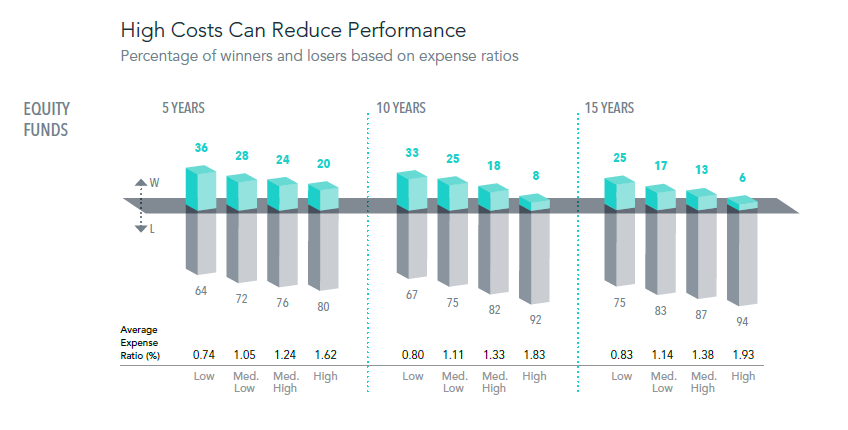
As stated, an often-cited argument is that active funds cost more because they perform better (we have established that some do – 14% of them over 15 years). Higher costs mean better results, right? Well not according to the evidence. Those with high charges (fund manager costs) with an average expense ratio (AER) of 1.93% almost entirely underperformed (94% of them). Those with the lowest costs (AER of 0.83%) delivered better results, with 25% of them outperforming.

The research also found that trading costs also impacted results (unsurprisingly). Some Fund Managers changed their portfolios almost entirely, the more they did and the longer the timeframe, the fewer that beat their benchmark. Yet this is typically claimed to be their true skill. Only 9% of high turnover funds beat their index over 15 years.

Hey Big Spender…

I have been in this game for quite some time, but it doesn’t need much experience to learn that those with more money have more money to spend…. On their version of reality (marketing) which is why many advisers, Product Providers and media swallow the myth that active management costs more because it delivers more. It can, but only in a very small number of cases and the chances of selecting such funds is virtually non-existent when most look at 3-year top quartile performance data.

There is another way, a better, cheaper way. We call it low-cost investment techniques rather than passive investing, because there is nothing passive about it. High costs and excessive turnover are likely to contribute to underperformance. You can avoid this completely, if you want to.

Dominic Thomas
Solomons IFA

You can read more articles about Pensions, Wealth Management, Retirement, Investments, Financial Planning and Estate Planning on my blog which gets updated every week. If you would like to talk to me about your personal wealth planning and how we can make you stay wealthier for longer then please get in touch by calling 08000 736 273 or email [email protected]

Picking Winners – Financial Myths2025-01-21T15:53:25+00:00

Lady Luck – The Domino Effect

Lady Luck – The Domino Effect

I have a growing awareness of my good fortune.  I might call it luck. This week I was on a training course and we had a very good talk about diversity. We examined the topic from several perspectives, but for the sake of time, this was for application to our own firms (how we employ and empower staff) and also for clients and prospective clients – how we engage in a way that is authentic and accessible.

There is no doubt in my mind that I am fortunate. Lucky to have many “natural” and geographic advantages. Lucky in so many ways and many that I will probably never truly appreciate.

The session prompted some thinking and will inform some of the decisions I make in the future. New, helpful, relevant information tends to do that, doesn’t it?

Luck is not a Superpower

On the train home, I thought about the new film “Deadpool 2”. OK, it probably isn’t everyone’s “cup of tea”. It is an ironic, send up of the superhero, by a superhero. Violent and full of choice language it pokes fun at itself and the cinematic world. There are many comedic moments, which are best understood in the context of superhero films, this is not really a family film, yet it is about family.

Domino (Zazie Beetz) claims that her superhero strength is “luck”. Deadpool (Ryan Reynolds) mocks her, claiming that “luck is not a superpower… it’s not cinematic”. It is unreliable and outside of anyone’s control…yet Domino uses her natural skills which are enhanced by luck, which of course makes for an amusing sequence of events in the movie.

Checking back to real life, many of us may fail to appreciate the luck we have. Few can fully do so, some give it a different name. However, when it comes to reliability, luck sometimes isn’t a lady (Guys and Dolls). Luck is not a plan, it is not a super-strength and it definitely has no place in a financial plan, unless your plan is to gamble.

Coming to terms with Carnage

Markets are what they are, hostile for those that do not appreciate how they operate, they have their own “natural laws”. One is a correction. Equities are volatile, we need them to be, that is precisely what provides long-term growth and value. Yet almost everyone behaves as though it is your enemy. The media will fill its vacuum with tales of Armageddon like carnage that neither Deadpool or The Juggernaut could possibly match. Yet this is the unvarnished truth… markets are volatile, they fall, and they rise again… repeat, ker-ching…

The great untruth, is that risk can be removed, that there is growth without pain. Risk can only ever be swapped, not removed.

OK, so here is the trailer… click play at your own risk, lots of F-word and violence. You’ve been warned.

Oh.. if you do go to see the movie, as with all Marvel films, there is more to come within the long rolling credits.

Dominic Thomas
Solomons IFA

You can read more articles about Pensions, Wealth Management, Retirement, Investments, Financial Planning and Estate Planning on my blog which gets updated every week. If you would like to talk to me about your personal wealth planning and how we can make you stay wealthier for longer then please get in touch by calling 08000 736 273 or email [email protected]

Lady Luck – The Domino Effect2025-01-21T15:53:25+00:00

A Certain Future

A Certain Future

Our culture is full of clamour for certainty… tell us the future? Why was your forecast wrong? (as a Radio4 presenter seem to berate The Bank of England this morning). Why didn’t you foresee such and such? It seems that we all want certainty – perhaps to affirm our own beliefs about life and people, or perhaps because deep down we know that life is anything but certain.

It appears this quest for certainty is intense at present, I say “seems” because I doubt that’s true, but we are bombarded with messages that would leave most rational folk with a deep sense of anxiety due to climate change, Brexit, technology, feckless politicians and a sense that perhaps, perhaps… the bullies are winning.

If only…

Investors are unsurprisingly startled by the normal behaviour of investment markets, when the “corrections” come. There is always anxiety over when is the best time to invest and when is a bad time to invest. None of us wishes to appear foolish.

Yet the basic law of investing (not speculating) is that markets are volatile, short term investing is unwise, long-term investing in a globally diverse portfolio is the best, most logical way to grow the value of money over time. In exchange you must live with seeing the “value” rise and fall rapidly and daily. If only we knew the future and had some certainty…

The Phlebotomist

I’m here to tell you that there is none. Yet we will search and research for it, developing theories to help us navigate the condition of life. This in mind, I was intrigued by a brief review of a new play “The Phlebotomist” by a young playwriter (Ella Road) which considers a not too distant dystopian future, where a blood test can reveal what illnesses you will suffer from, all rather like a credit score, but a health score.

I understand that this is explored in the context of a dating app, when people are forced to consider their choice of partner, given this pre-warning information. Sadly, I am not able to see the play at Hampstead Theatre which is sold out and runs until Saturday 19th May 2018. I hope that its success will lead to a wider, longer run. If you are going, please let me know your thoughts.

Life would be very dull if we knew what would happen. A sense of “Groundhog Day” is deeply unsatisfying. This fragile life, for all its faults is delightful (or potentially) precisely because of the lack of certainty.

Anyway, here’s a video from the cast of “The Phlebotomist” by Ella Road and directed by Sam Yates.

Dominic Thomas
Solomons IFA

You can read more articles about Pensions, Wealth Management, Retirement, Investments, Financial Planning and Estate Planning on my blog which gets updated every week. If you would like to talk to me about your personal wealth planning and how we can make you stay wealthier for longer then please get in touch by calling 08000 736 273 or email [email protected]

A Certain Future2023-12-01T12:18:10+00:00

If you are 68 or older – The Pensioner Bond

The Pensioner Bond

You might remember that when he was Chancellor, George Osborne announced the Pensioner Bond in December 2014 as a way of trying to offer some comfort to savers who were experiencing very low rates of interest on their savings. You may recall that the two new Bonds were to be made available from January 2015 to those aged 65 or over and hence called “Pensioner Bonds”.

Over £1bn was squirrelled away by savers, earning interest of up to 4% over 3 years. On Monday the 3-year bond, officially matures. NS&I will write to all those with holdings, offering the Guaranteed Growth Bond which currently pays 2.2%, which is clearly below the rate of inflation. The account also ties the savings up for another 3 years or suffer 90 days lost interest penalty (about 0.55%) if withdrawn early.

Not as good, but still better

Those that used the full £10,000 allowance will have about £11,300 to re-invest from Monday. Clearly the fact that the rate is lower than inflation makes it a poor choice as a long-term strategy, however if it is simply a cash buffer, it is hard to beat even 2.2% over 3 years in a very low risk cash account. By comparison you would need to consider a 3-year Fixed Rate Bond that pays interest at maturity. Whilst a couple of Banks come close to 2.2% most are generally much lower, even the 5-year Bonds are generally paying less or only a fraction more.

So, if you can accept the below inflation rate and a tie-in for 3 years, then the offer from NS&I looks attractive. Be warned, (£1bn attracts all sorts of scams and misleading products) there will likely be lots of adverts in the press or online or directly into your inbox, promising something much higher, but it certainly will not be on a like for like basis and highly likely to carry additional risk, which you would need to fully understand; and if you can live with the higher risk, it would rather beg the question, why not simply use a regular investment? One that we can implement, manage and monitor for you.

A bit extra

Important point – The NS&I Guaranteed Bond normally has a maximum of £3000, if you hold the Pensioner Bond you will be able to roll over all the proceeds from your existing Bond, which as stated earlier could be as much as £11,300. If this is your intention, you don’t need to do anything at all, NS&I will automatically do this unless you tell them otherwise.

Here is a link (yes click this sentence) to the document that NS&I will be mailing to you.

Dominic Thomas
Solomons IFA

You can read more articles about Pensions, Wealth Management, Retirement, Investments, Financial Planning and Estate Planning on my blog which gets updated every week. If you would like to talk to me about your personal wealth planning and how we can make you stay wealthier for longer then please get in touch by calling 08000 736 273 or email [email protected]

If you are 68 or older – The Pensioner Bond2023-12-01T12:18:19+00:00

The Base Rate

The Base Rate

After much media speculation, we can now expect the world to end as today the Bank of England has announced an increase to base rates (voting 7-2 to do so). The rate is now 0.50% instead of 0.25%. This is the first rate rise since July 2007. Seriously – over 10 years ago! One would hope that this would benefit everyone with some cash in a savings account at the bank, but we all know better than that don’t we? What is far more likely to happen is that lending rates for mortgages will gradually begin to increase. The nations largest Building Society currently has a standard variable rate of 3.99% and their base rate tracker rate is 2.50%, both considerably above the actual base rate at the time. Banks are generally a bit worse. So lenders may be inclined to sit on their hands and do nothing (for fear of being berated by minnows like me) though I suspect they are more likely to gradually increase their standard variable rate. But we now live in a world of image preservation, so perhaps they won’t all rush to increase rates.

People with Cash Savings

Frankly, I wouldn’t hold out too much hope of an immediate improvement to your savings rate. Inflation is currently 3% and nobody is offering anything near that on an instant access basis. You could shop around, but its a bit of a pain for the equivalent of a round of drinks for the year – and don’t forget the “safety” of the FSCS limits. Alternatively if you have £100,000 or more we can put you in touch with a service that will do this for you (and likely improve your FSCS cover).

Borrowers

There has been much talk about the impact of rate increases on borrowers, who are generally people that are working and repaying debt (hopefully). It is certainly the case that the low interest rate environment may well have lulled some into believing it was always this way, anyone older than about 25 frankly should know otherwise.

There is a tendency to chastise people for “borrowing too much” when this subject is reported in the media. However consider for a moment a couple of facts. Wages have not increased very much over recent years, house prices have largely continued to rise, unchallenged, except perhaps to apply some nervous brakes due to Brexit. However as Kirsty and Phil would suggest, prices are reflective of location, location, location. People have had to borrow significantly to buy homes. Those without mortgages looking to move or simply sell are stuck in the same “market” one that is dominated by sentiment. Anyone that has bought property in the last few years will be aware of the pain created by a huge tax bill – Stamp Duty Land Tax (SDLT). This was used to attempt to control property prices from spiralling ever upwards, has it worked where you live?

The increase, if passed on, will create additional outgoings, just when inflation numbers appear to reflect what we all know – prices are rising. The stockmarket tends to do well whilst there is ample inflation, not always, but often. Inflation helps reduce the “real” value of debt, so Government may say they don’t like it, but it kind of does their job for them without even trying. Some will find life a bit harder, as of today or indeed most of the last 10 years, few people expect rates to increase dramatically and nobody is predicting interest rates that are high.

As I have said previously, clearing debt, however good the maths works for having some, has an emotional value that cannot be overstated. Ask anyone without a mortgage.

Dominic Thomas
Solomons IFA

You can read more articles about Pensions, Wealth Management, Retirement, Investments, Financial Planning and Estate Planning on my blog which gets updated every week. If you would like to talk to me about your personal wealth planning and how we can make you stay wealthier for longer then please get in touch by calling 08000 736 273 or email [email protected]
The Base Rate2023-12-01T12:18:20+00:00

Not So Keystone Cops

Not so Keystone Cops

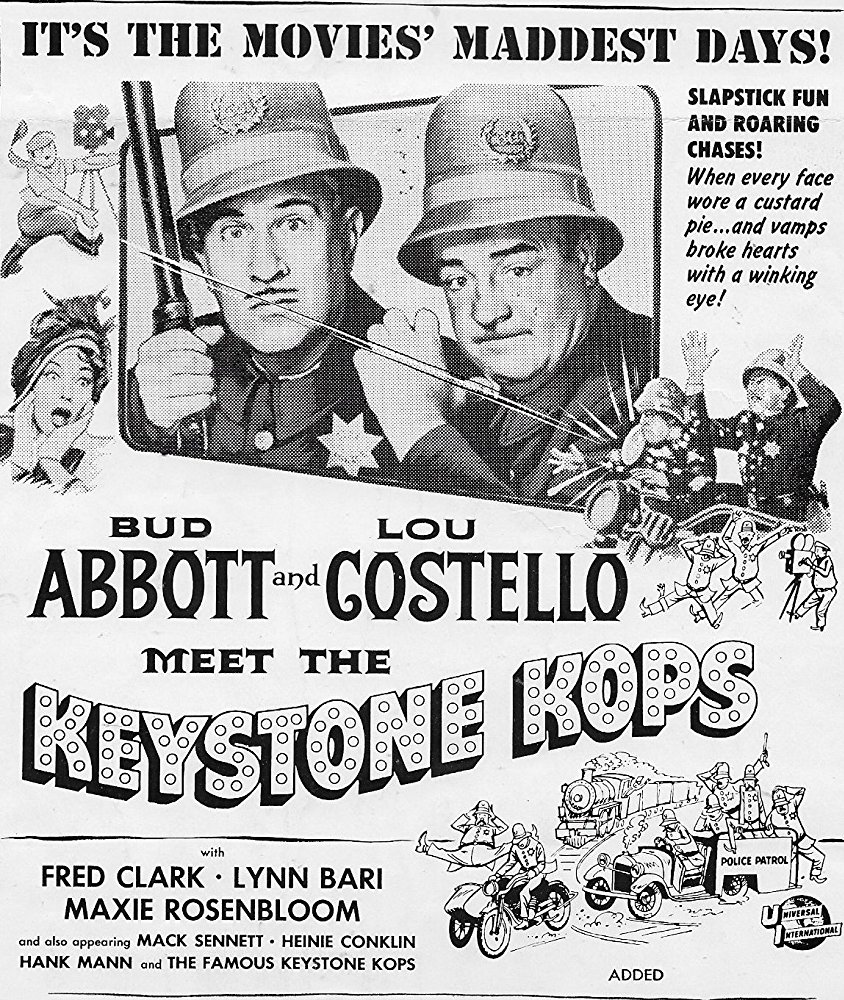
The danger of watching videos on social media or indeed many films or TV shows is that you can easily form the impression that the Police are fumbling in the dark without much of a clue. Whilst errors or judgement and malpractice are often correctly brought to light, it is rather foolish to assume that this is indicative of the majority.

It would appear that Abid Hussain was under the illusion that the Police were simply not up to the task of catching him for the crimes he committed – namely money laundering and fraud (at the least). Mr Hussain contacted the police in May 2016 claiming that a property that he owned in Acton had been sold without his knowledge or permission for £480,000. The case quickly landed on the desk of officers from the Complex Fraud Squad (FALCON).

The Backfire

The Police soon established the truth, that in fact Mr Hussain had sold the property through a legitimate, albeit complex process.  Perhaps hoping to create a web of intrigue, Mr Hussain then told the Police that he had received £770,000 into a bank account, which bore his name, but of which he had no knowledge. However, this was money from a re-mortgage on another property that he owned – that he had initiated (which he had denied in an attempt to further deceive the lender). CCTV evidence of Mr Hussain meeting a solicitor to sign the paperwork was used to disprove his version of events.

Money Bags

It also transpired that CCTV was also used to confirm that he used some of the money that he took from the sale and mortgage to buy a reasonably heavy 15kg of gold bullion, (20kg is the typical airline hold baggage allowance) which it is alleged he took with him to Pakistan shortly thereafter. Having been arrested in the summer of 2016 he was found guilty and finally sentenced on Friday to 5 years and 9 months in prison. The investigation into what happened to the gold bullion continues.

In essence, Mr Hussain has provided a false witness statement to the Police (who presumably he believed to be inept) and then reported transactions as fraudulent (when they weren’t) in order to make them void and leave the property company and lender at a loss. Long story short – he blew the whistle on himself, assuming that the UK police were more Keystone Cops than Sherlock Holmes. So congratulations to DC Richard Kirk who led the investigation of the £1.25m fraud… probably rather elementary.

Dominic Thomas
Solomons IFA

You can read more articles about Pensions, Wealth Management, Retirement, Investments, Financial Planning and Estate Planning on my blog which gets updated every week. If you would like to talk to me about your personal wealth planning and how we can make you stay wealthier for longer then please get in touch by calling 08000 736 273 or email [email protected]
Not So Keystone Cops2023-12-01T12:18:25+00:00

Remembering Montmartre 1899

Remembering Montmartre 1899

It is 1899 and I’m at the latest Secret Cinema event, transported back in time to Montmartre, Paris in 1899, arriving at la vie Boheme – the Moulin Rouge. We are greeted by Monsieur Zidler and shortly bump into a certain Henri, one Henri de Toulouse-Lautrec with friends and then serenaded by a new young writer. We marvel at the guests, who like ourselves are not themselves, but suitably attired for their profession in 1899.

Most will not be familiar with Secret Cinema, it is, after all, secret and has a tag line, reminiscent of Fight Club – Tell No One. The concept is simple – gather a crowd of film lovers to come along to watch a movie together. The twist is that its immersive to the extent that there is a successful attempt to create the feeling of being in the movie, with not simply “sets” but landscapes to explore. Engage, (in character) with the actors who perform their screen roles before and during the screening of the film. It’s a lot of fun.

Champagne Lifestyle

Sadly not all in Montmartre was 1899 – the prices certainly were not. A bottle of Champagne (well why not? after all Monsieur Pol Roger died in 1899 and Jules Medot founded the Champagne house Louis-de-Custine in 1899) at the Moulin Rouge was £40 and as we all know that doesn’t go terribly far… So pandering to my slightly sad interest in inflation, I wondered what the price of Champagne was in 1899 and whether it was possible to re-inflate it back to 2017. Sadly the £40 price tag for a bottle of Champagne in 2017 wasn’t deflated to the 1899 price of just 33pence (best attempt)…..probably just as well, £40 then would have bought 121 bottles.  Inflation is arguably the most underestimated element that any investor must contend with and must be factored into any sensible financial plan.

Returning to the 70’s?

Many are currently suggesting that due to Brexit and the unfathomable Mr Trump, we are (collectively) in for a bumpy ride, perhaps something akin to the 1970s. If this does indeed become the case, presumably we can expect power cuts, strikes, industrial meltdown, oil price hikes and rampant inflation (well, by British standards anyhow). Personally, whilst I’m not pretending that everything is well, I don’t have a bleak outlook and find many of the scaremongering, nothing other than a tune for peddling. It is probably obvious to you by now that I’m not a fan of Mr Trump, or Brexit,

Inflating the figures

Anyway, back to the inflation issue and the 1970s. Remember that for the power of your £1 to remain the same it needs to keep pace with inflation. How inflation is measured is of course hugely contentious. We tend to use CPI and RPI as the most common metrics. That said, there often seems to be a disconnection between the rising prices of things you personally pay for and what the Office of National Statistics say they are. This isn’t a political jibe, if most of your spending is on utilities, then it’s likely that your personal rate of inflation is rather higher.

How do you remember the 1970s?

For the record, £100 at the end of 1970 was £364 by the end of 1980 because of the inflation (RPI) in the 1970s, which increased 9%, in 1971 then 7.6%, 10.6%, 19.2%, 24.9%, 15.1%, 12.1%, 8.4%, 17.2% and 15.1% in 1980.  This represents an average annualized inflation rate of 13.3%. The FTSE All-Share achieved an average annualized return of 12.2%. So didn’t quite keep pace with inflation and saw some huge market declines (-28.6% in 1973 and -51.6% in 1974) Any investor that lost their nerve at the end of 1974 would have missed out on the 151.4% recovery in 1975. These huge changes eventually ushered in a fundamental change in monetary policy and “Thatcherism” in an attempt to control the supply of money and inflation specifically.

Think and act life-long

The advantage of standing back and considering a long term approach is that the short-term volatility of a year or even a decade reinforces the rarely practiced investor skills of discipline and patience.

If you are interested in Secret Cinema, here’s the promotional trailer. Click here for the link to their website, where you can find out about many of their immersive film experiences, but tell no one…

Dominic Thomas
Solomons IFA

You can read more articles about Pensions, Wealth Management, Retirement, Investments, Financial Planning and Estate Planning on my blog which gets updated every week. If you would like to talk to me about your personal wealth planning and how we can make you stay wealthier for longer then please get in touch by calling 08000 736 273 or email [email protected]

Remembering Montmartre 18992025-01-21T15:53:25+00:00

Markets are High, the End is Nigh

Markets are High, the End is Nigh

I have no idea why radio and TV stations broadcast the level of the FTSE with every news bulletin. It’s as though they are screaming “the end is nigh”. Think about it for a moment, what purpose does it serve? The only people that can do anything about their investments are traders – who had the information already. To my mind the only reason I can think of is so that you and I panic. The markets are high, so we panic with the good news fearing that is must be coming to an end. Alternatively, they have fallen, so the anxiety and fear is by how much and how far.

So What?

A better question might be…. So what? How does this affect me at all? Well the truth is that your investments will almost certainly be impacted, but then that’s the point of investing. The issue is really does the rise or fall play any significant part on your financial well-being. This is where proper financial planning comes in. We know that investments fall in value. We allow for it. We also know and believe that the point of investing is so that they rise, otherwise we wouldn’t bother would we!

A picture paints a thousand words

So, I thought that I would share with you an interesting graph. This shows the returns of the FTSE All-Share over the last 30 years from 1986-2016 (31 years). The grey columns show the calendar year returns.  You will observe that 22 or the 31 are positive, 9 are negative. In other words, 70% of the time, calendar year returns have been positive. However, when the negative years occur, those years can see large falls, note the worst being -33% in 2008 (the credit crunch, supposedly the worst financial collapse in generations).

Let’s get Negative

Now observe the red dots. These represent the largest fall in each year. All falls must be negative to be a fall. So, every year has one. Note how these are pretty “bad” yet don’t really seem that bad when you consider the actual return over the year (grey column). Its noteworthy that the average fall in a year is -15.8% – the median (if you line up all the results, the one in the middle) is -12.6%. So, in short you should expect a fall every year of around this sort of amount. It should not be a surprise.

You probably remember the crash of October 1987… just after the hurricane that Michael Fish didn’t expect. Remember the headlines of millions wiped off the markets. True, it (the FTSE All Share) fell -37% however over the year it showed a return of +4%. Which do you remember? I’m guessing the crash… which you would certainly remember if you got in a panic and sold your holdings (when they were down)… selling in a panic or a crisis is the surest way to actually have one, but remembering your long-term financial goals and why on earth you are investing anyway is vital. That’s what we and any other decent financial planner will help with, when the crowd and the media and the market are telling you to panic, do something!… do not.

Diversify to Dampen

However, very few people have all their investments in the FTSE All Share or indeed entirely in shares (equities) most will have a portfolio that has some in low risk holdings as well, ideally the portfolio will be globally diversified across nations and asset classes. This will dampen the effects of both the rises and the falls of the markets.

The Only Timing that Matters

Trying to time the best moment to enter or exit the market is impossible to do with any repeatable success. However clearly you and your planner need to mindful (aware) of when you want to withdraw money. It’s all very well a favourable long-term average return, (or even a calendar year one) but what about when it’s a really bad year and you need the money out? Again, the truth is that any decent planner will help assess this advance. In practice it is unlikely that you would need all of your investments at the same time, but it can happen, particularly if you decide to use your entire pension fund to buy an annuity (income for life).  This is why we spend a lot of time getting to understand our clients, your goals, values and aspirations – importantly when you need the money,  so that that we can plan appropriately, perhaps reducing investment risk or holding more cash than you might need. Context is everything and a plan is vital. So get in touch to ensure that your investments are structured properly – for you, not for the media.

Dominic Thomas
Solomons IFA

You can read more articles about Pensions, Wealth Management, Retirement, Investments, Financial Planning and Estate Planning on my blog which gets updated every week. If you would like to talk to me about your personal wealth planning and how we can make you stay wealthier for longer then please get in touch by calling 08000 736 273 or email [email protected]

Markets are High, the End is Nigh2025-01-21T15:53:26+00:00
Go to Top