
Where there’s a Will – part 2

Where there’s a Will – part 2

I asked Alex Truesdale for her thoughts on the ruling by the Court of Appeal and am thankful for her very valuable insight, here are her thoughts and observations.

The Court of Appeal’s judgment in this long-running dispute confirms that disinherited children are permitted by a 1975 statute to challenge their parents’ Wills if reasonable provision for their maintenance is not made. “Maintenance” means the child’s cost of daily living at whatever level is appropriate to them. The question of what is “reasonable” is dealt with by the court exercising its discretion to consider a number of factors laid down by statute, including the child’s needs and circumstances, the needs and circumstances of the beneficiary who has inherited instead, and the parent’s conduct. Here, Arden LJ endorses the lower court’s description of Melita Jackson’s conduct towards her daughter Heather Illot, since their 1978 estrangement, as “unreasonable, capricious and harsh”, before replacing the lower court’s £50,000 award with a sum of £163,000. This, Arden LJ reasoned, would allow Mrs Illot to purchase her house, receive a modest income, and potentially arrange a pension through equity release, all without compromising her state benefits.


This is not new Law

None of this is new law. But it is inevitable that this high profile victory for Heather Ilott – albeit one which sees her receiving just over 1/3 of her late mother’s estate – will encourage further challenges to Wills which seek to disinherit family members, particularly if there is no connection between a testator and the charity which has benefited from a windfall legacy. A costs order has yet to be made but will be considerable: Melita Jackson’s insistence that her executors defend to the hilt any attempt by her daughter to contest the Will will already have eroded the value of her estate, and so now the charities themselves face a smaller residual legacy and their own costs bill. There may be a further appeal to the Supreme Court, but I would suspect that the charities will take a view on the reputational as well as financial damage they risk in prolonging a dispute which has run since 2004 and, arguably, since the estrangement in 1978.

Where does this leave testamentary capacity? Much as it was before – the award made in this case turns on its own facts, and does not represent any further curtailment of one’s freedom to leave one’s estate as one pleases, so we should all still be making Wills.

Think ahead and think carefully

However, I would encourage those who do wish to exclude family members from their Wills to leave contemporaneous evidence of their reasoning not only to exclude a particular beneficiary, but also to favour other beneficiaries. This is particularly important if, in the case of charities, the testator has no connection with, or history of donations to, charity during their lifetime. I have been instructed on a number of cases where we have done just that by way of a side letter, to try to avoid the washing of too much dirty linen during probate, a process which makes Wills public. And those asked to act as executors should always check whether they are risking accepting a poisoned chalice that may compel their involvement in a protracted legal battle. As in this case, that may, sadly, become the testator’s most enduring legacy.

Alexandra Truesdale MIPW

Alex Truesdale Wills Limited | Registered in England and Wales no 7275445 | Registered office: 27 Mizen Close Cobham Surrey KT11 2RJ

Alex Truesdale Wills Limited is a member of the Institute of Professional Willwriters and complies with its Code of Practice

You can read more articles about Pensions, Wealth Management, Retirement, Investments, Financial Planning and Estate Planning on my blog which gets updated every week. If you would like to talk to me about your personal wealth planning and how we can make you stay wealthier for longer then please get in touch by calling 08000 736 273 or email [email protected]
Where there’s a Will – part 22025-01-21T15:48:52+00:00

A Matter of Life and Death

A matter of life and death

It is one of the strangest aspects of conversations that I have with clients. It gets stranger and perhaps more difficult the older they become. We have to talk about a matter of life and death.

In essence, when all is said and done, financial planning is about trying to ensure that your money does not run out before you die. So we need to have a conversation about when that might be. We don’t know the answer. Death is a daily part of life, yet something that most of us manage to avoid talking about.

The motivation behind the question is obviously to attempt to make money last long enough, however it is also designed to prompt thoughts about what is life about, what do you want from it during this brief sojourn on this wonderful planet?

Thoughts may turn too quickly to estate planning and reducing inheritance tax, rather than considering the true inheritance that is being left…. the memory and impact of .. well…you!

I might (will) point to the financial impact of your loss to those dependant upon you, be they family or your business, but we all know that its much bigger and deeper than that don’t we. So good financial planning can take care of financial loss, but great financial planning will hopefully remind and inspire you to ensure that you make the most of the life you have now.

Another way to view death – acceptance

A dear friend of mine, who has had more than her fair share of grief drew my attention to this short video about death (and life). It combines images from various films and words of Alan Watts. It is worth taking the 3 minutes to watch it.

Dominic Thomas
Solomons IFA

You can read more articles about Pensions, Wealth Management, Retirement, Investments, Financial Planning and Estate Planning on my blog which gets updated every week. If you would like to talk to me about your personal wealth planning and how we can make you stay wealthier for longer then please get in touch by calling 08000 736 273 or email [email protected]
A Matter of Life and Death2025-01-28T09:57:00+00:00

Estates: Inheritance Tax

Estates: Inheritance Tax

So it’s 8th July already and into the second half of the Wimbledon  Championships. Looking at your own life, which half do you imagine you are in? (ouch… didn’t see that coming!). Like most people inheritance tax (often referred to as IHT) probably isn’t something that is top of your current concerns (you don’t pay it) however it is a tax that generates more ire than most. In essence, inheritance tax is paid by the Executors of an estate following someone’s death. The amount of tax due will depend on the value of the estate and how it was arranged.

Today the Chancellor will give yet another Budget, but this one, the first as a Conservative Government. Like many I shall be waiting to hear what he says and see how he plans to deliver it. One of the pre-election manifesto promises was to increase the threshold for inheritance tax, perhaps to £1,000,000 for a couples main residence.

He may be less willing to follow through with this now as it was announced that in April HMRC collected £397m as inheritance tax payments, the largest in a single month and way above the longer term average of £260m a month. In fact March, April and May 2015 saw over £1bn of inheritance tax paid to HMRC. If interested, you can see the various taxes collected by HMRC from the data they published at the start of the month, just click here.

The Budget 8 July 2015

We shall simply have to wait for the Chancellor to tell us how and if he intends to adjust the nil rate band (the amount an estate can be worth before any inheritance tax is payable). The nil rate band has been frozen at £325,000 since 2009 and had historically increased with inflation each year, but of course that was before the credit crunch. As ever our APP will be updated with all the changes as quickly as possible (usually before the end of the day). Don’t forget it’s free and easy to use.

Pensions and ISAs are now IHT friendly

The main gripe is that property has continued to soar in value and is invariably the main asset that is left once someone dies. The pension freedom rules have enabled pension funds to be exempt from inheritance tax (though some taxes may apply) and ISAs are able to be passed on to a surviving spouse (previously they would have lost the tax-free status of an ISA).

As a result more people, or rather estates have been brought into the inheritance tax threshold, probably not the original intention of the tax. However the Chancellor will be seeking some wriggle room to keep things as they are given that it raises such significant sums for the Treasury.

A 40% tax rate

As of this morning, inheritance tax is charged at 40% on the excess value of estates worth £325,000. Each individual has a nil rate band and so a couple effectively has a nil rate band of £650,000. In addition, for those that have been previously married to someone now deceased, it is possible to use part of their allowance too.

Dominic Thomas
Solomons IFA

You can read more articles about Pensions, Wealth Management, Retirement, Investments, Financial Planning and Estate Planning on my blog which gets updated every week. If you would like to talk to me about your personal wealth planning and how we can make you stay wealthier for longer then please get in touch by calling 08000 736 273 or email [email protected]
Estates: Inheritance Tax2025-10-06T09:52:24+01:00

Estates: Your Will online forever

Estates: Your Will online forever

You may not be aware that the Government has now made it possible to search for Wills online. So once you are gone, your last Will and testament is available for anyone to see, should they wish to. Essentially it is nothing more than a searchable database which enables anyone to pay £10 to obtain an electronic copy of historic Wills, assuming the system works, you will receive your copy within about 10 days. It is free to search, but the Will itself costs £10.

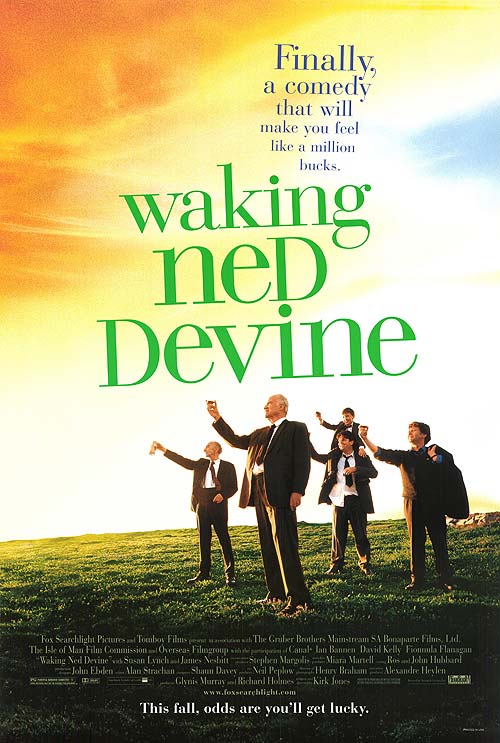
It is estimated that there are over 41 million Wills and Grants of Probate on the database, which are compiled from 1858 onwards for England and Wales. I’m reminded of the film “Waking Ned Devine” which is a comedy about a man who wins the lottery but dies from shock, to collect his winnings, he has to be alive, leaving his community to concoct some creative solutions.

Implications

There will be some people who certainly won’t relish the prospect of their Will being published online – perhaps a few celebrities or even Royalty. Remember that for some people a Will reveals the state of family relationships at the point the Will was made.

HMRC better informed?

Perhaps the more important point about a Will or Grant of Probate is that assets are valued and those that are inherited ought to be more visible. This essentially provides a money trail for HMRC to follow. Remember evading tax is illegal, but with this approach it really ought to be the case that HMRC are able to now close in on those that don’t declare sufficient assets in their estate.

There are also implications for capital gains tax too – if you inherit an asset, then unless you sell it, or gift it, there is reasonable grounds to assume that you still own it. If it disappears from your asset inventory, surely questions would be asked which have a knock on effect for prospect of unpaid capital gains tax and perhaps even income tax (if the asset generated income). In short, anyone that isn’t being crystal clear about  their assets is likely to come under greater scrutiny.

Other implications also revolve around more “joined up thinking” in that your DVLA licence and car insurance are connected and if you now try to rent or hire a car, you need to input your NI number so that a DVLA permission certificate can be generated. This could be used to link to your investments (pensions and ISAs in particular) but why not your household insurance policy, meant to insure your physical assets.

All in all, I think this will lead to deeper and better information about us all, which will to some extent be publicly available, but more importantly available to HMRC. So make sure you declare your assets and taxes properly. Above all make sure your Will is current and reflects your wishes.

Dominic Thomas
Solomons IFA

You can read more articles about Pensions, Wealth Management, Retirement, Investments, Financial Planning and Estate Planning on my blog which gets updated every week. If you would like to talk to me about your personal wealth planning and how we can make you stay wealthier for longer then please get in touch by calling 08000 736 273 or email [email protected]

Estates: Your Will online forever2025-01-27T17:04:12+00:00
Go to Top