What Am I seeing on my Portfolio X-Ray on the portal?

Dominic Thomas
March 2026  •  3 min read

What Am I seeing on my Portfolio X-Ray on the portal?

One of the features of our secure portal is the ability to see the live valuations of your investments. These are not ‘held’ on our portal, it is merely a secure reporting tool, loaded with data pulled from the original sources (ie investment platforms, such as Fundment, Nucleus, 7IM, Transact and so on).

The portal pulls through current holdings and allocations, but doesn’t do a particularly good job of showing historic ones. You will see previous valuations, which reflect your actual valuations, but not of a fund that you didn’t have say three years ago but do today due to changes we may have made.

When you review this, you will see a combination of holdings and funds. You have a globally diversified portfolio of assets that are either shares in companies around the world or are a form of loan (debt) that a Government or company have issued. In the latter case (Bonds, Gilts and Cash) you lend your money to Governments and Companies on the agreement that they return it at a set date and in the meantime provide a fixed (agreed) level of interest. It’s more sophisticated than this implies, but essentially that’s what is happening underneath. So you hold lots (7,000-30,000) of securities within funds within your portfolio at a very low cost.

Your portfolio is based in part on your responses to loss (nobody likes it, but we all respond differently). In essence how much panic you feel. Unfortunately, whilst I would prefer emotions were removed from investing, they are a default setting on humans, so the attitude to risk questionnaire helps us assess how anxious you get seeing a large fall in value (or a small one). I am not a robot, but the world stock markets are not the place to develop your character. However, clearly part of good financial planning is to set an appropriate level of risk to generate returns that will beat inflation (and keep your spending power favourable) within the context of our conversations and what the money represents to and for you.

This is given more context by how long you are investing (for most clients it’s the remainder of their lifetime) and the level of average annualised returns that you need to achieve to provide the lifestyle and financial security that you require. These are obviously unique to you and your circumstances. The more held in shares the greater the long-term returns, but the greater the volatility (valuation wobbles).

Then there is possibly some short-term opinion on the state of the global economy or your need for cash (or both) which may also temporarily influence our selection.

The portfolio contents changed recently (to reduce costs and further increase diversification). So these funds are the current position not what you actually held three years ago. Secondly we may have taken some steps (with your agreement) to shore things up based on your short-term requirements for capital or income.

We use data and attempt to extract from this the evidence rationale for making decisions. The mix is appropriate and will include underperformers sometimes.  You may remember me showing you an image that looks rather like a patchwork quilt of top performing assets or markets in each calendar year – a brightly coloured image. It’s very human to attempt to find patterns, but the pattern is that there is no pattern. Here is a recent one by Dimensional, you don’t need to worry about the small print on this, it’s the concept that is important. Ask me if you want a readable copy.

We combine assets to attempt to deliver a particular long-term return. Think of making something with flour, eggs, salt, sugar etc… different quantities and cooking methods provide anything from a pancake to a souffle (and a whole lot besides).

Not all elements will always ‘win’ or even be positive, but they add to the mix to deliver the required result. Think of it a bit like buying umbrellas for rain along with sunglasses and suntan lotion for sunshine. Markets are cyclical and random. In short we don’t look for the needle in the haystack, we buy the haystack.

Sorry for all the metaphors, but I think they work! To assess historic performance, you are better doing this in your platform portfolio (Fundment etc) or leaving it to us and do something less boring instead… (ok you have to be a certain age to get the Why Don’t You? Reference).

Does that make sense?

You may find this a helpful aid in thinking about your investments:

Solomon’s – Investing in Pictures

What Am I seeing on my Portfolio X-Ray on the portal?2026-03-23T16:37:49+00:00

Will We Remember Not to Forget?

Dominic Thomas
Jan 2026  •  1 min read

Will We Remember Not to Forget?

There is so much intentional division at the moment, all of it is deliberate policy from extreme right politicians. There seems to be no depths to which the American President will not sink and just as you think his administration cannot get any worse, they defy reason again. The evident truth is then gaslit, denied or simply reinvented to suit his twisted narratives.

The right wing is “rising” here in the UK, or at least that is what the BBC Board (Robbie Gibb, who ought to be removed) and directed News programmes would have us believe; with further platforming of failed and corrupt former Tories jumping right. These same people who all push nationalist lines and wax lyrical about our Armed services, don poppies each November, yet seem irredeemably unable to learn from the past.

Over the Christmas break I read In Search of Meaning by Viktor Frankl who survived the holocaust concentration camps. He eventually became a therapist and died in 1997, nearly three decades ago – I wonder what he would make of things now. Today, 27th January 2026, is International Holocaust Day and we are encouraged to light a candle to ensure that this sort of monstrous inhumanity never happens again. Over six million people were murdered by the Nazis.

I cannot really fathom what it would have been like to have been in a concentration camp. I can only admire Frankl’s ability to survive. He wrote “Everything can be taken from a man but one thing: the last of the human freedoms—to choose one’s attitude in any given set of circumstances”.

We can choose our attitude towards those who are determined to discriminate and perpetuate hatred, but I think it requires more than an attitude. Waiting for things to improve doesn’t inspire confidence in me and as far as I can tell, doesn’t prevent evil from thriving.

So whilst we may endure market swings and I will encourage you to be patient, waiting for the inevitable recovery, I do think that this is an active state, not a passive one. There is certainly a lot going on behind the scenes here at Solomon’s, despite activity on your portfolio seemingly appearing to be “not a lot”. Similarly, we cannot simply wait and hope that history does not repeat itself, we all have to ensure that it doesn’t, which I think means being actively engaged in defeating racism. As Frankl said:

“In a word, each man is questioned by life; and he can only answer to life by answering for his own life; to life he can only respond by being responsible”

Here is a trailer to a documentary Vickor and I (2010) by Alexander Vesely.

Will We Remember Not to Forget?2026-03-16T09:09:36+00:00

STORIES IN DISASTERS

TODAY’S BLOG

DISASTERS…

At the risk of sounding a little odd, I admit that I have been interested in the stories of natural and manmade disasters since I was a youngster. It wasn’t a morbid fascination for me; it was a genuine curiosity about the causes of tragic accidents and incidents. I wanted to understand how these catastrophes occurred. I wanted to learn about the ‘anatomy of disaster’

As I got a little older, other aspects of these types of events started to reveal to me how important they are in our collective history.  Time and again we see humanity triumphing over adversity and becoming stronger, better and wiser for it.

In more recent years, I have found that individual stories of ordinary people caught up in extraordinary circumstances have really resonated with me and inspired me. I have read many autobiographies from the survivors of these disasters and often the small details they remember serve to preserve not just the factual history of the event, but the human perception of the experience (it’s always about suffering but often accompanied by hope and joy).

My interest ranges from natural disasters (earthquakes, tornadoes, volcanic eruptions, tsunami) through to engineering and technological incidents (so-called ‘manmade’ disasters) – aircraft crashes, bridge collapses, mining cave-ins, explosions on oil rigs.

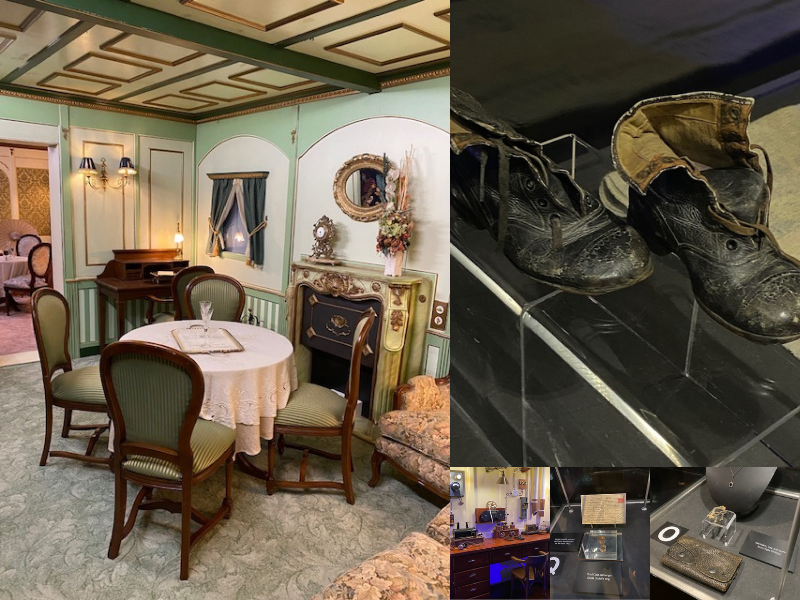
Very recently I visited the Titanic exhibition at Dock X, Canada Water and was overwhelmed by some of the artefacts on display. Not the big pieces of furniture or the heavy watertight doors from Titanic’s sister ship Olympic (impressive as they were to see!); but the tiny trinket of a victim; the shoes of a small child who had survived; the cuff links of one of the crew; the postcards that had been sent by passengers (such poignancy in the fact that the postcards arrived home, but some of the authors didn’t); the simple jewellery of a third-class woman who had ended up in the water but had been hauled into a lifeboat – she sadly died of hypothermia before the Carpathia was able to reach them.

As excited as I had been to see the exhibits, I was hit by a very illuminating thought as we made our way around the displays … it wasn’t the ‘things’ that fascinated me. It was the ‘stories’.

The personal effects preserved in this and various other exhibitions and museums around the globe are all simple symbols of lived lives and they stand alone – each piece a part of ‘the humanity of disaster’

I continue to read autobiographical work – Jim Lovell of Apollo 13 fame, Chesley Sullenberger – the pilot of US Airways Flight 1549 (the ‘Miracle on the Hudson’) and Violet Jessop (a stewardess on the Titanic) to name a few.

The stories of these lived lives never fail to inspire me and the ‘stories’ of our clients often have the same impact. I love reading the articles written by our clients and showcased in Spotlight (our client magazine) as we learn a little more about what matters to them and the things they care about. Their stories. (By the way – if Jemima has been in contact with you asking you to contribute to our next edition, I would encourage you to share ‘your story’ … each one of us has our own and they are all unique and precious).

As for the Titanic exhibition – it’s running until 20th March 2022 and is well worth a visit.

Debbie Harris
Solomons IFA

You can read more articles about Pensions, Wealth Management, Retirement, Investments, Financial Planning and Estate Planning on our blog which gets updated every week. If you would like to talk to us about your personal wealth planning and how we can make you stay wealthier for longer then please get in touch by calling 08000 736 273 or email info@solomonsifa.co.uk

GET IN TOUCH

Solomon’s Independent Financial Advisers
The Old Mill Cobham Park Road, COBHAM Surrey, KT11 3NE

Email – info@solomonsifa.co.uk 
Call – 020 8542 8084

7 QUESTIONS, NO WAFFLE

Are we a good fit for you?

GET IN TOUCH

Solomon’s Independent Financial Advisers
The Old Mill Cobham Park Road, COBHAM Surrey, KT11 3NE

Email – info@solomonsifa.co.uk    Call – 020 8542 8084

7 QUESTIONS, NO WAFFLE

Are we a good fit for you?

STORIES IN DISASTERS2023-12-01T12:12:55+00:00

HOW TO STOP TIME

TODAY’S BLOG

HOW TO STOP TIME

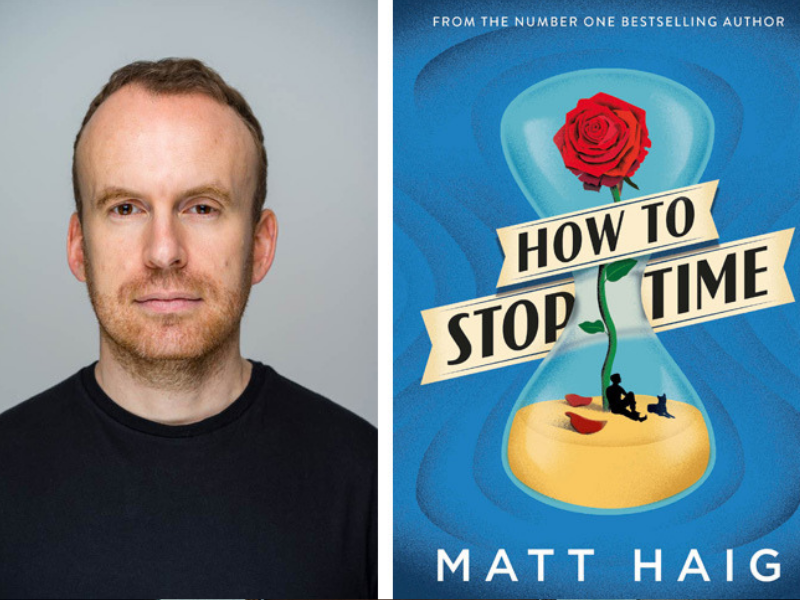
I have recently enjoyed a rather good book “How To Stop Time” by Matt Haig. The basic outline is that some people age much more slowly than the rest of us. This provides for some fascinating encounters in history, walking the streets of London from the time of Shakespeare to the present.

Matt Haig has already assembled an impressive body of work and this novel, which was published a little over a year ago is a really worthwhile investment. It is the story of Tom Hazard who at 41 has a secret that must be maintained and kept from the witch hunters of the time. Tom ages slowly – about 15 times more slowly, so whilst Tom moves from 15 to 20 years of age, his contemporaries have become 90. This makes for good fiction and a hugely enjoyable walk through history from the late 1580’s.

How to Stop Time - Matt Haig

Short-term obsessions

There are some wonderful insights about time, fear of the future and relationships. It prompted me to reflect on the main problem that we all have – being somewhat obsessed by the short-term and immediacy of “news”.  There is a great line that I shall probably use – “your nose is pressed against the canvas, you need to stand back to see the whole picture”.

Predicting the future?

As a financial planner that uses cashflow modelling, there is a danger of giving the impression that the future is predictable. There’s something of the mystic meg with her crystal ball, seeing the future… The truth is rather different – it is only predictable in its unpredictability. However, we can look to history as a great teacher. We use historical data to help shape our assumptions about the future. We get to play with the future, to alter it and reinvent scenarios, time and time again.

A client recently confessed that “the penny had dropped” for him. He was suddenly gripped by the reality that his retirement is now not so much theoretical, but all too real and getting closer by the day. Time marches on and it eventually forces us all to pay close attention. We now adapt the possible scenarios with far greater awareness of time. His experience is very normal and in practice it really doesn’t make that much difference how many times I or anyone else says – start investing early, there are always other calls for your money and the future, is… well, it’s the future, not the present.

In many respects Haig concludes that to know thyself and live a life without fear of the future is the logical conclusion for all us “mayflies”. Relationships are temporary and to be treasured. Loss of loved ones is a far harder path than the loss even of identity, let alone wealth. My job is to help you preserve yours, to start with the end in mind and to underscore your values – the people, places, things that make your life’s work worthwhile.

Time marches on, thankfully.

I enjoyed the book, here is a link to help you find it. Matt has been wonderfully honest about his struggles with depression and its also worth having a listen to his videos on the topic – reasons to stay alive. Here isn’t a bad place to start…

Oh and if you are interested, Matt Haig is currently touring the country promoting “Notes on a Nervous Planet”. Brighton at the weekend then blazing a trail up to Edinburgh for 28th April.

Dominic Thomas
Solomons IFA

You can read more articles about Pensions, Wealth Management, Retirement, Investments, Financial Planning and Estate Planning on my blog which gets updated every week. If you would like to talk to me about your personal wealth planning and how we can make you stay wealthier for longer then please get in touch by calling 08000 736 273 or email info@solomonsifa.co.uk

GET IN TOUCH

Solomon’s Independent Financial Advisers
The Old Mill Cobham Park Road, COBHAM Surrey, KT11 3NE

Email – info@solomonsifa.co.uk 
Call – 020 8542 8084

7 QUESTIONS, NO WAFFLE

Are we a good fit for you?

GET IN TOUCH

Solomon’s Independent Financial Advisers
The Old Mill Cobham Park Road, COBHAM Surrey, KT11 3NE

Email – info@solomonsifa.co.uk    Call – 020 8542 8084

7 QUESTIONS, NO WAFFLE

Are we a good fit for you?

HOW TO STOP TIME2025-01-28T10:08:06+00:00
Go to Top