
What about Grief?

Dominic Thomas
Nov 2025  •  3 min read

What about Grief?

The taboos of my childhood era were sex, death and religion. These, I was told (not by my parents), were topics that would divide and were not really up for discussion. The way the world seems to have evolved; the only remaining taboo seems to me to be death.

Like many of you and all of us eventually, I have had an ample dose of bereavement in my lifetime. The loss of very close friends, family members and clients. I can (obviously) only speak to my own experience and how facing each has been different, depending on the circumstances and relationship. There is a common process for grief or loss, but each has its own nuance.

An attempt to reflect on the misery, devastation and despair of losing a spouse is brought to life on screen from the book by Max Porter. I’ve not read the book and now intend to do so; the film attempts to make the unfilmable a film. Visually violently and bleak, it’s not one for those traumatised by Hitchcock’s The Birds and suffering ornithophobia.

As I watched I couldn’t help but think of one of my closest friends and wonder if I had even come close to helping him enough as he wrestled with the challenge of raising two boys alone. I realise that many people do this as single parents (mainly women) but that isn’t quite the same as also processing the permanent loss of the other parent forever. No conversations or arguments about the exhausting parenting experience with one another.

I’m curious and a little apprehensive to learn what he would make of it. The film shows ineffective conversation and platitudes of help. I hope that my approach of simply doing stuff was more useful. As a taboo, perhaps most of us aren’t really confident in our ability to talk about death with one another. I hope that I’m not misguided in thinking that I don’t find the topic threatening, I’m comfortable sitting with the uneasy … my psychotherapist spouse may want to add some thought to that though.

I found the film difficult to watch, not because of its content but because I was bottling up a list of seven things that could have been done to make the process better.

  1. A properly connected therapist
  2. A cleaner
  3. Someone skilled to help with childcare
  4. Someone to alleviate or handle a lot of the practical administration of death
  5. A lot of life assurance
  6. Relationships with friends who properly engage and get in the mire with you
  7. A community

The sense that we have to do everything on our own is one of those ridiculously badly communicated notions set at school about our independence.

You do not have to do everything on your own. That’s certainly harder when you are single or your circle of friends is relatively small or you don’t have any obvious community. However in my experience, those can be discovered, built and encouraged. Even as your financial planner, we will more than readily get involved to help you with any elements within out remit.

You don’t have to be a genius or expert in all of life’s topics. We are here to help you master money management, we don’t expect you to simply figure it all out yourself and should grief arrive at your door, we will be on hand. In the meantime, we will encourage you to be ready by being prepared and making the most of now.

References:
What about Grief?2025-11-07T16:28:45+00:00

Should I plan my own funeral?

Debbie Harris
Oct 2025  •  1 min read

Should I plan my own funeral?

I attended a funeral recently and when I was talking about it later that day with my adult children, I said that I thought the service had been thoughtfully planned and beautifully delivered – a real and heartfelt tribute to the lady who had passed away.

We then had what you might call a somewhat morbid and macabre discussion about what MY funeral might look like (much gallows humour ensued!)

I told them (and have always felt the same way about this) “I’ll be dead.  I don’t mind what you do!  Do whatever you want to do to honour my memory and say your goodbyes”.  My only ‘stipulation’ was that everyone attending my funeral should wear something purple (my favourite colour).

In my mind – funerals are ‘about’ the deceased; but ‘for’ the bereaved – so I’ve always felt that planning the funeral and deciding how to honour the memory of the deceased should be the remit of those left behind.

My opinion has always been that “if life is a book, the epilogue should be written by our loved ones”.

To my great surprise, both of my children were very clear that they would want me to have left them instructions! (My son in fact went so far as to suggest that it would be best if I could plan the entire thing … so that they [in their grief] would not have to think about it at all).

This was a real eye-opener!

So I now have another task on my ‘life admin’ to do list – is it on yours too?  Apparently your loved ones will thank you for it!

There are lots of firms who offer funeral planning as a service (for a hefty fee), but I suspect something rather more home-grown might feel more authentic.  It might be as simple as selecting a few songs; suggesting a venue; providing a list of possible ‘eulogy deliverers’.  It could be a detailed ‘order of service’ to be followed.  Whatever you decide to do (if anything), be sure to tell your loved ones that a plan exists and where it can be found.

I encourage you to ‘have the difficult conversation’ with your family about this. They might surprise you!

Should I plan my own funeral?2025-10-21T16:01:29+01:00

What month would you be in if life were a year?

Dominic Thomas
Aug 2025  •  3 min read

What month would you be in if life were a year?

One of the most difficult aspects of my work is approaching the subject of death. We covered some practical elements of this in our last edition of Spotlight (Spring 2025). It’s a very difficult topic, one of the last taboos. Most of us would prefer to avoid the discussion, in fact I have even met a couple of people who told me not to talk about it because it would hasten their death, which is one of the more strange responses I have had.

Most of us grow up with the expectation that life will be long, we will reach old age and have a lengthy, good retirement. We all come to experience loss; some of us at a very early age. We are often shocked by the news of someone young, or relatively young who has died. It feels as though their lives have been cut short.

The purpose of raising the subject is not to be the voice of doom, but to enable you to really do two things. Firstly, prepare for your death, which means getting your legal documents in place and ensuring that your beneficiaries are properly taken care of. Secondly, it is a reminder that life is brief, none of us know when it is our time, so we ought to be attempting to live a full life, one that doesn’t have too much deferred into the future, but feels very fulfilling here and now in the present.

You may have seen all sorts of data showing the average life expectancy of a man or woman in the UK. There is even a “death clock” which takes your age now and calculates the expected day of your death based on your health, outlook and country of residence. This of course is an informed guess based on international averages. The reality is that if you have a financial planner, you have money.  And if you have money, you probably have the ability to access better healthcare and make better dietary/fitness choices. You probably (not necessarily) have a lower level of stress. As a result, you are likely to outlive the average.

However, most of us rarely think about this and go about our lives with the expectation of a fairly long and healthy future ahead of us still. We tend to think life will stretch out ahead of us, there will be ample time. However, if life was a calendar year, I wonder what month you would be in?

If we were to consider each month representing eight years of our lifetime, then life expectancy would be 96. Turning 56 means it’s July with the expectation of a few summer months. At 72 you have reached October. I wonder if thinking about life this way might encourage us to take each day a little more thankfully – and thoughtfully. The average person would have each month represent seven years, so at 56 it’s August already.

It’s a bit alarming and perhaps morbid, but surely an important reminder that life is very brief indeed. We don’t know what the future holds, but ask yourself, do you really want to be spending a significant proportion of it worrying about money or attempting to manage it? Ultimately, that is the point of delegating your financial planning to us, so that you can go and do the important things that you value most.

Sadly, I regularly meet people with diagnosed conditions that shorten their lives; and whilst we all know that money cannot buy time, actually you can create more time to do the things that you value because of the backdrop of a great financial plan based on what’s important to you. It is never about you spending valuable time managing your own investments.

References:

Death Clock: https://www.death-clock.org/

ONS mortality tables: https://www.ons.gov.uk/peoplepopulationandcommunity/birthsdeathsandmarriages/deaths

What month would you be in if life were a year?2025-08-21T15:39:46+01:00

Jackie and grief in 1963

Jackie

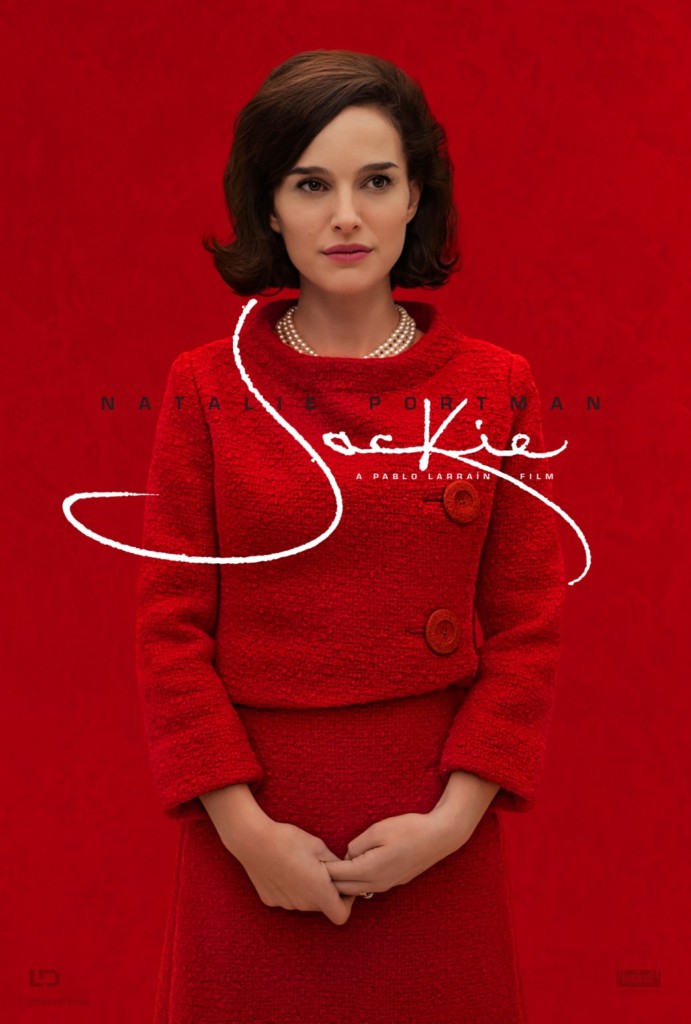
I doubt there are many people over the age of 40 that do not know about the assassination of the American President… number 35, John F. Kennedy. One of the most iconic Presidents of American history helped somewhat by the charms of his wife Jackie. It is likely that you would have seen more than one movie about JFK, but not that many about his widow Jackie.

The film is of course, centred upon the assassination and its immediate aftermath. Retold, this time, from the given perspective of the then First Lady. Jackie Kennedy (played by Natalie Portman) suddenly became a widow at the age of 34. Her husband 12 years her senior had only been President for 2 years 11 months. Yet their brief “Camelot” was full of incident.

Grief on Display

Grief is of course a daily reality. We all lose people that we love. It is a deeply painful experience. When the effective Head of State is assassinated, an entirely different set of circumstances are presented to the grieving family and friends. There are practicalities of a ceremony to which dignitaries are expected. In this case JFK was killed on Friday and buried on Monday. This is set against the backdrop of anxious security forces on high-alert, not yet knowing the who, what, how many or why JFK was assassinated. A hasty usurping of position and removal from a home, albeit a temporary one. How to “behave” and conduct oneself? It is perhaps reminiscent of the thoughts that must have concerned the Royal Household when Princess Diana died nearly 20 years ago, albeit in very different circumstances, but the same dilemma – how to display grief.

1963 annus horribilis

The film touches on the wider context. Only 15 weeks earlier, the couple had lost their third child Patrick, just 2 days after her was born to infant respiratory distress syndrome. On Friday 22 November 1963 JFK left a wife and two small children, Caroline 5 and John 2. Both children had their birthdays that later that month, John Junior’s was the day of the funeral. Tough for any “normal” family to come to terms with. Certainly Jackie would be entitled to call 1963 her “annus horribilis”.

The truth about life assurance

Life assurance does not provide comfort. The financial services industry has always struggled to market life assurance and persuade people of its merits. It is a product that is only payable when a horrible event happens. What it does provide is the financial resource to continue, to go on, as gradually those left behind rebuild their lives. I have witnessed the benefits of life assurance and the strife caused by not having enough. I cannot overstate how important it is. The question of how much cover is really required will vary from person to person and how well resourced you are. It will also depend on how you have arranged your Will and your estate.

It is unlikely that your loved ones will be under the degree of pressure that Jackie faced, within the eye of the world’s media. However, you can plan to make any such event considerably easier than it might otherwise be. It is time to ensure that your own house is in order.

Here is the trailer for the film, for which Natalie Portman has been nominated for an Oscar as Best Actress in a leading role.

Dominic Thomas
Solomons IFA

You can read more articles about Pensions, Wealth Management, Retirement, Investments, Financial Planning and Estate Planning on my blog which gets updated every week. If you would like to talk to me about your personal wealth planning and how we can make you stay wealthier for longer then please get in touch by calling 08000 736 273 or email info@solomonsifa.co.uk

Jackie and grief in 19632025-01-27T17:03:43+00:00
Go to Top