
Your Capacity for Loss

Your Capacity for Loss

One of the more difficult aspects of financial planning is the subject of capacity for loss. In essence this attempt to assess how bad things need to be before your lifestyle is significantly worsened. Most think in terms of the decline of a portfolio due to stockmarket crash, which would also affect the level of income that could be withdrawn from it sustainably.

Your appetite for risk, (or risk tolerance) is normally tested using a psychometric tool, such as the one we use (FinaMetrica) is different – testing your ability to cope with the shift in value of your portfolio (or volatility). All tools are flawed and in reality, it isn’t a process for generating an answer, more of a helpful starting point in a discussion. Capacity for loss has more to do with your financial ability to cope with loss.

A financial planners job is to attempt to ensure that your money lasts a little longer than you do. Yes its more complicated than that in practice, but if you strip away the mechanics and maths, that’s invariably where it leads.
What you have to lose

However, putting a number on this is arguably an impossible task. There are lots of relevant variables. Your age, investment timeframe, years until you retire, health, family commitments, income and expenditure, net worth, cash reserves, debt and insurance and of course this is all a moving continuum. Many clients will at some point say that they will live within their means, to cut their cloth accordingly, which of course is a sensible approach to the restrictions of real life.  However, in practice this can hurt, and it’s easier to blame someone else for discomfort, that it seems, is what our political system is all about.

Why capacity for loss is an issue

I assume (which is therefore prone to error) that the regulator is concerned about capacity for loss, because it would appear that over the years there have been many investors that simply didn’t understand what they had invested in and it would seem did not understand how the impact of an investment going wrong might impact them. Neither did they understand the illustrations. I would suggest that this is in part due to a lack of financial education, a lack of adviser explanation and frankly a lack of interest.

We live in a world of risk

The truth is that investing carries risk, but then so does not investing, just a different one, which can be equally as painful. In real terms, by which I mean once you allow for inflation, many people’s income has reduced over the last few years. Inflation, currently very low can ravage away at the power of the money you hold. So, holding cash, which is currently generating less than inflation each year is essentially going backwards.

There is always somewhere to be King…

By historical standards we are all rich, by global standards we are all rich, but you may not feel it.  Indeed, to be richer, or certainly feel richer, simply encash your worldly wealth and move to somewhere that is obviously poor, there you can live like a king…. Isolated, needing high castle walls and compelled to spend huge sums on defending what you have. Rich, but perhaps not connected.

The roaring Lion

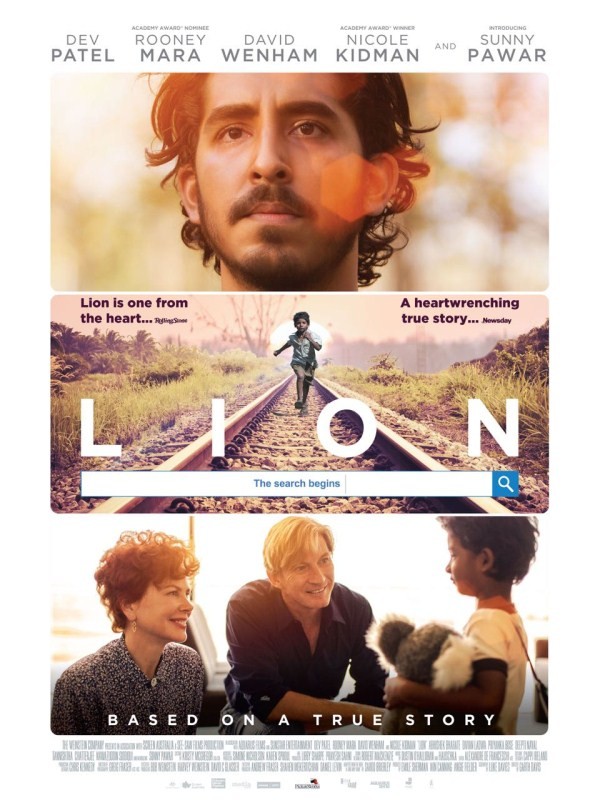
May I suggest an alternative? Perhaps pay a trip to the cinema to see Lion. This is the true story of how a small boy from a very poor village in India, gets lost and is eventually adopted by an incredible Australian couple. His life takes a very different path but eventually leads to a search for the family he lost.

Keep in mind the 767 million

We all know that most of the world is poor by our standards, and we are told that things are gradually improving, fewer people are in poverty, in 2013 10.7% of the world live on less than $1.90 a day. In the previous year, it was 12.4% (World Bank). That’s still 767million people, but 35% less than in 1990.

None of this is news to you. Yet I found myself confounded and discomforted once again by the plight of millions living in poverty and vulnerable children, who live on the streets and experience all sorts of abuse. I came away with a mixture of feelings, grateful that I don’t live in such circumstances, perplexed at why Governments don’t do more to serve their own people well and perhaps too a little ashamed of my own lifestyle choices, when so many have so few. So, I do wonder if it is ever truly possible to be even vaguely precise with terms like capacity for loss in a world of such extremes.

As for the film, it is very much worth watching and its good to see Dev Patel has been nominated for some awards along with the film. Here is the trailer.

Dominic Thomas
Solomons IFA

You can read more articles about Pensions, Wealth Management, Retirement, Investments, Financial Planning and Estate Planning on my blog which gets updated every week. If you would like to talk to me about your personal wealth planning and how we can make you stay wealthier for longer then please get in touch by calling 08000 736 273 or email [email protected]
Your Capacity for Loss2023-12-01T12:18:52+00:00

Money Monster

Money Monster

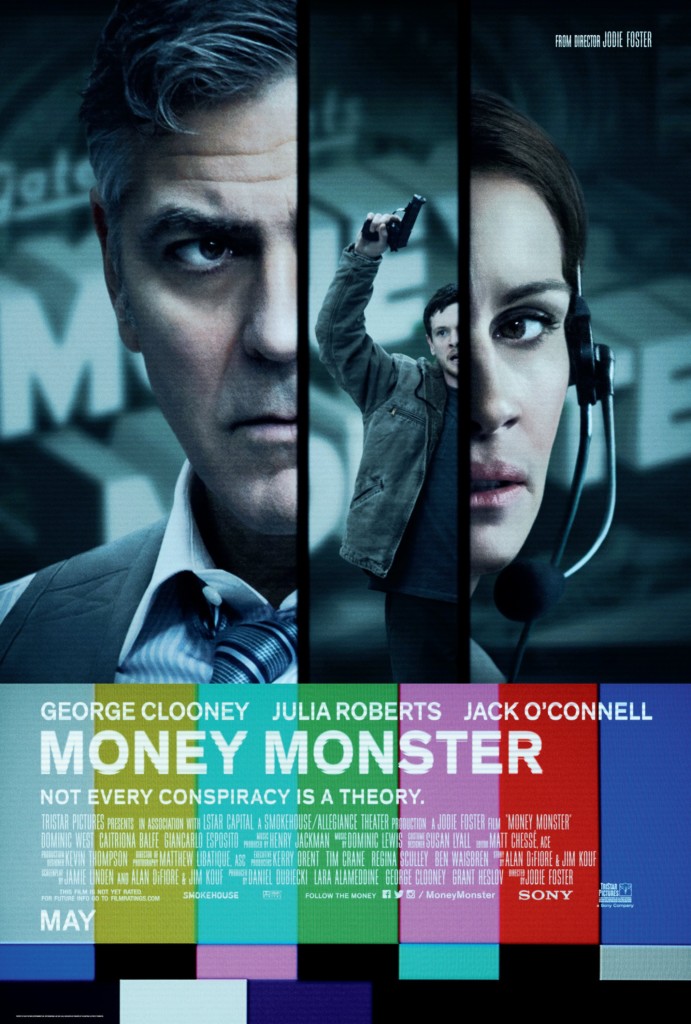
The latest George Clooney movie is on general release. It continues the theme of some elements of Hollywood questioning the current state of capitalism, yet recognises that the language used within financial circles is almost impenetrable and many feel so powerless that the impetus to understand is invariably lost.

Clooney plays Lee Gates, one of those dreadful money pundits on American TV stations that constantly cover the markets. If you have ever had the misfortune to tune into this sort of television you will know precisely what I mean. He is the worst sort of journalist – a TV presenter, who comments on markets and shares without context or thought of consequence. Regrettably this is not exclusive to the US, but within our own media too – both televised and written. The tempo may be different, but the problem is essentially the same. This is, for want of a better term, financial porn.

Financial Porn

Any glance at any financial publication over the last 10 years will reveal the same rather sad truth – the media appear to have little choice but to grab our attention with ever depressing or outrageous headlines. This reflects on us all and our overstuffed in-box lives, to which I am both a contributor and recipient.

The story itself revolves around Kyle, an irate investor who followed Lee Gates’ advice, but sank all his savings into this one “sure thing”. The stock collapses due to a “computer glitch” and he loses a lot of money. Kyle takes matters into his own hands, armed and in search of answers, takes the TV studio hostage. It’s a decent movie.

Lessons for investors

There are some obvious lessons for investors here. Firstly, all investment should have a context. There is no such thing as certainty, some things are much more likely than others, but not certain. I cannot guarantee that the sun will rise in the morning, but we all expect it will, but it’s not guaranteed. Do not invest all your money into one stock. Do not bet your future on a tip from a TV pundit or any other journalist – none of whom are accountable for the “advice” (that isn’t advice). Finally, in the event that the stock or investment collapses, few investments ever reduce to a value of nothing. It certainly is possible for a company to go bust, hence its share price worth “nada” but most investments are not single stocks. So you will not have “lost all your money” if the investment has a value, so does your investment. Ironically, in the film, the loss Kyle experiences would have been made far worse by the resulting story, not better.

I enjoyed the film, it poses some good and frequently asked questions. I would be happy to recommend it to you, about what not to do with your own money. Here is the trailer. It’s out now.

Dominic Thomas
Solomons IFA

You can read more articles about Pensions, Wealth Management, Retirement, Investments, Financial Planning and Estate Planning on my blog which gets updated every week. If you would like to talk to me about your personal wealth planning and how we can make you stay wealthier for longer then please get in touch by calling 08000 736 273 or email [email protected]
Money Monster2025-01-27T16:27:50+00:00

Creed: Fighting Talk

Creed: Fighting Talk?

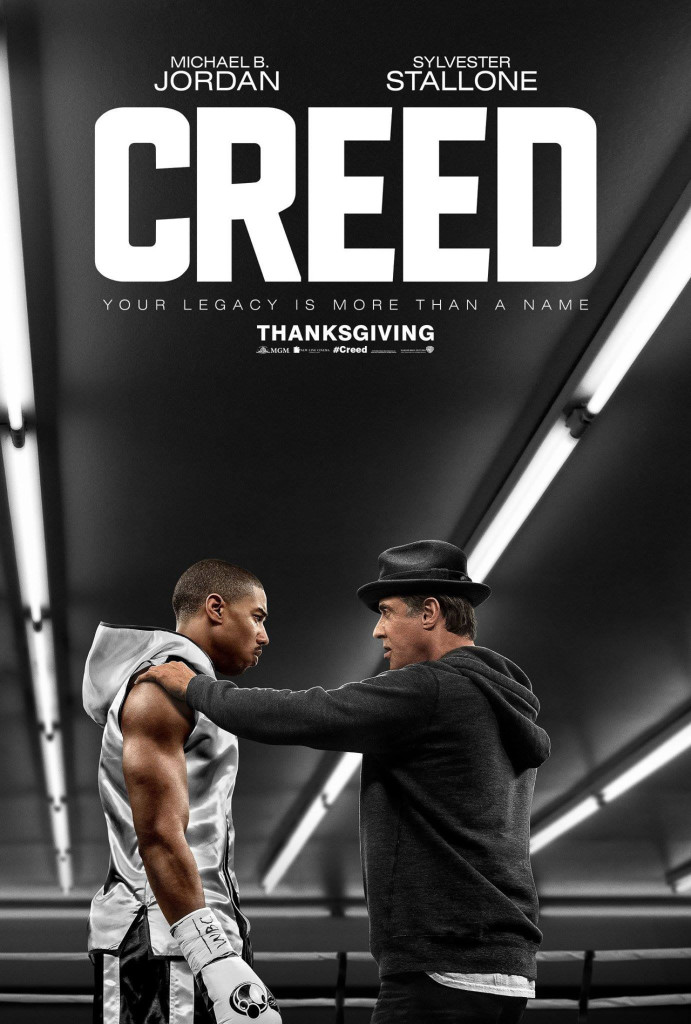
There is a sense in which the new film “Creed” is simply another film about boxing and fighting talk. Given the latter films of the Rocky franchise, anyone could be forgiven for thinking it was likely to be both propaganda for American capitalism and selling a soundtrack for exercise. Yet I wonder if this is a fair reflection.

The movie opens into the harsh world of institutional care for young boys and unfolds with our main character coming to terms (or not) with the death of his mother and then learning that  his fatherless existence was due to infidelity and untimely death. His lucky break comes in the form of adoption by the woman originally jilted. The unnerving reality is that despite being afforded acceptance, financial security and a surname with punch,  there is a gnawing sense that he simply doesn’t “fit”. He turns to the most compelling and certain traits of his makeup – that of rage and a desperate search for purpose.

Now perhaps I’m reading too much into things, but despite appearances, the Rocky franchise has always exposed an uncomfortable relationship with wealth and how it changes lives and relationships, invariably not for the better.

Shadow Boxing

As we all know, America has all manner of racial problems, perhaps there is more than a passing nod to the two areas of life where black Americans are “allowed” to flourish – sport and music, where fame and riches catapult often humble backgrounds into the limelight of the elite. In the film, the protagonist, Adonis meets several sparring partners, but Bianca is the one that offers the prospect of a real connection and possibility of going the distance.

Growth through loss

Our story touches on the loss of loved ones and the continued search for significance, the battles that many face, irrespective of wealth, physical or mental ability. These are of course issues that face us all as we age (even Rocky) and like him we have greater exposure to the limitations that money can supply, but perhaps more costly is the sense of lost purpose, which can make us spectators of our own lives. Rocky rekindles his by reconnecting with the younger man within and without, a mentor, a trainer.

Like every prizefighter, we all come to a point of realization where money cannot buy peace of mind… something that the American dream and capitalism conveniently ignore. That is not to suggest that money cannot help – of course it can, but as we witness all too often, an identity crisis is not solved by cash.

In your corner

Some think a financial adviser is going to work magic, providing enormous payoff without significant effort. I see it rather differently, my role as a financial planner is more akin to the trainer, encouraging, helping to keep you on track, focused and with a strategy for the success you are seeking.

Our fight is more like shadow boxing, where our greatest opponent is ourselves. Our own minds and bodies can turn against us, something that becomes a more relevant nagging reality with each passing year….. So however many we have left ahead, we ought to make the most of this one; a theme that I seem to be returning to with regularity.

Ultimately, we are not remembered for our incomes or our assets, but how we spent our time, how we lived our lives. This is the fight that I am interested in, how we figure out what is indeed enough given an uncertain future and a history of mixed experience…. So I guess, this may come down to our own creed.

Here’s the trailer for Creed, which has a supporting actor OSCAR nomination for Sylvester Stallone. For some, this will be just another Stallone boxing movie, but may I suggest that perhaps it punches considerably above its weight.

Dominic Thomas
Solomons IFA

You can read more articles about Pensions, Wealth Management, Retirement, Investments, Financial Planning and Estate Planning on my blog which gets updated every week. If you would like to talk to me about your personal wealth planning and how we can make you stay wealthier for longer then please get in touch by calling 08000 736 273 or email [email protected]

Creed: Fighting Talk2025-01-28T14:35:48+00:00
Go to Top