
Do you feel invisible?

Dominic Thomas
Jan 2026  •  3 min read

Do you feel invisible?

One of the statements I hear increasingly, perhaps I am more aware of it myself, is that with age, there is a growing sense of feeling invisible. Lately a number of thrillers or crime stories have played with the idea of being invisible in plain sight.

I was struck by this and had the sense rather amplified by an exhibition at the Royal Academy of Art by Kerry James Marshall. His work depicts his background (a black man born in 1955 Alabama and living in the United States) and confronts this stark reality. An entire room is entitled Invisible Man based around the 1952 book by Ralph Ellison which I bought last year and still haven’t got around to reading. His study is fascinating and deeply unsettling at the same time.

His work confronts injustice, inequality and his African roots all whilst deeply engaged in various foundational aspects of art history and process; incorporating contemporary, even very temporary, aspects of pop culture. A striking piece is his 2003 Black Painting which is totally in black (a comedy sketch from The Fast Show immediately comes to mind as I write) but this is the polar opposite – a couple lying on a bed, the room gradually coming to life as you notice different items and symbols such as the Black Panther flag. It’s very potent indeed and may be an imagined depiction of Fred Hampton moments before he was murdered by Chicago Police in 1969.

What on earth has art got to do with financial planning? Nothing and everything. Art is story and an insight into how the world is seen through the eyes of an artist, yet of course we are largely surmising and viewing through our own lens. When we are building your financial plan, and you are asked about what you may wish to do in the future, it’s common to think that you are expected to offer up some ideas of the places you would like to visit, the beaches you wish to experience, on your yacht whilst popping off for a hot air balloon ride, the golf club membership and advanced skills that you can acquire. There is nothing wrong with any of these things of course, but they are invariably dreamt up by the Don Drapers (Mad Men) of this world and not necessarily what you really wish to do. The truth is that our unique sense of who we are can become invisible even to ourselves as we become so accustomed to social expectations of what we should want from life. I also tend to believe that “if you don’t sacrifice for what you want, what you want becomes the sacrifice”. The question I ask you may even be unfair in the sense that it is so rarely asked at a deep level, and to provide an answer immediately is far from straightforward.

Most of us will struggle to explore much of our personality beyond the boundaries of our upbringing, which is perhaps why there is currently a palpable sense of rose-tinted nostalgia of a time “when things were better”, for which most of us really mean – less different or less challenging to an inability to address the life force of life – growth. It is evident that the struggle for equality is ongoing, the word itself seems to be a nuclear trigger to right wingers.

To honour who you really are and to embed your values deeply into your financial plan, to my developing mind, seems to require a sense of where you wish to arrive (if indeed that is possible) but certainly what impact, memory, impression or legacy you wish to leave with those who care about you and hopefully ‘know’ you.

I suspect that a common problem is the notion of being ‘ordinary’, but I believe that ordinary is surely what we wish to be, an acceptance of who we are yet a willingness to learn, change and improve what we can. The inability of world leaders to own the reality of their ordinariness is the fuel for their narcissism and inability to actually serve. However there is the other sense of ordinary, being ordinary but uniquely appreciated.

Anyway, you are appreciated and certainly not invisible to our small team at Solomon’s. We recognise and value your story and seek to help you to allow it to unfold. Whether you realise it or not, you have already made an impression on us. I certainly hope that you do not feel invisible when dealing with any member of the team.

Remember, the goal isn’t more money, the goal is living life on your terms.

The Kerry James Marshall: The Histories exhibition runs at the RA until 18th January 2026. Here is a link to a video of Marshall talking about nine shades of black. https://www.royalacademy.org.uk/article/video-kerry-james-marshall-black-paint

Do you feel invisible?2026-01-26T11:51:55+00:00

Is this The End?

Dominic Thomas
Jan 2026  •  3 min read

Is this The End?

One of the most difficult topics with new clients is a discussion about endings. Sometimes a new client is leaving an existing adviser or abandoning their former way of thinking about their finances; however you will probably gather that I’m more of the Stephen Covey persuasion … of starting with the end in mind. I encourage discussion about what will have been truly important when you reach the end of your life and look back on your decisions.

At the start of the month, I went to see a new play by David Eldridge at the Dorfman – National Theatre simply called End. It’s a single act with just two characters – Alfie (Clive Owen) and Julie (Saskia Reeves). I found it utterly engaging. Set in north London in June 2016, it’s a remarkable piece full of topical history and poignancy. Alfie and Julie are confronted with an inability to communicate well in the present for fear of the future and the legacy of the past; a very familiar condition. As the play only runs until 17th January 2026 I doubt I will be providing many with problematic spoilers.

We quickly learn that Alfie has terminal cancer but has had enough of the treatment, therefore he is thinking about his ‘end’ and reminiscing, but perhaps romanticising it. He doesn’t want Julie or their daughter with him, therefore he will say his goodbyes and head off quietly, like cats do. He wants to be buried with his parents.

Julie is shocked at his reluctance to continue his treatment, she wants him to fight to live and has been scouring the internet for alternative treatments. She admits her own romanticised ideas of burial, but it wouldn’t be with her mother-in-law and she also notes what a practical problem it would be for her to make the trip to visit the site anyway.

As you might expect, there are heated and emotionally exhausting exchanges. We learn of their past relational problems, their disappointments with one another and their very deep real love. We learn of their careers, triumphs and setbacks, their ‘dirty laundry’ and some of their contradictions. Life and relationships are never without complexity if they are honest. The societal setting is also helpful – Brexit, the recent end of an era as Alfie’s team (West Ham) moved from Upton Park to the Olympic stadium and his particular taste in music, acting as a wonderful signifier of change. There are plenty of nods to the social forces that are about to be unleashed and how for many of us progressives, the London Olympics was the high point of the last five decades with a decline ever since.

Alfie and Julie just about manage to navigate the highly charged topic of impending death, something that many of us have experienced (and some of you very recently) and undoubtedly each audience will have been touched deeply by these experiences too; it is all too common and all too ordinary, but ordinarily ignored or avoided. Dashed hopes and expectations from a life that we have little real control over.

The truth is that great financial planning is about your ‘story’, wherever it may have started and whatever direction it may take. My role is to help you to clarify what is important, therefore bringing a sense of structure and direction – and then build the financial pathway to facilitate this, but of course, we cannot predict the future. I have a crystal ball in the office as a bit of a joke, but I rarely use it in a meeting (it’s a fairly lame joke and to be honest I forget about it!). The point is of course that on one hand we all would quite like to know the future, believing it would provide the illusion of comfort, but the reality is almost precisely the opposite. Knowing the future strips the unpredictability of life and its joy. The little that we can truly control and hope to master is our response. Much like you, Alfie and Julie, I am also a work in progress with much to learn. I wonder how your conversation’s going about the one certainty?

Therefore as we face a new year, which appears to have begun with more chaos, quite deliberately manufactured by a deranged right wing, I am mindful of the challenges to be confronted, whilst acknowledging that people are people and beliefs, however baseless, are rather difficult to change.

Is this the end? Yes and no.  It is the end of something but the start of something else. What I do know is what you know … life is brief – so make the most of it. Was the play worth seeing? Most definitely, brilliant performances from both of them. You will probably be able to see it on the National Theatre streaming service.  Here is their trailer which gives little away (as a trailer should!):

Is this The End?2026-01-20T13:45:24+00:00

Charlie Hebdo & Uncomfortable Freedoms

Solomons-financial-advisor-guest-blogger-SB2

Charlie Hebdo & Uncomfortable Freedoms

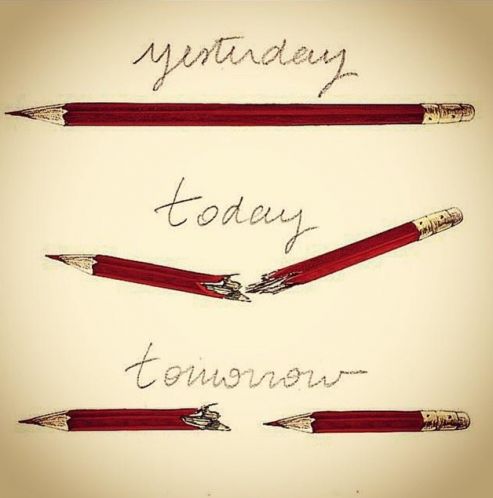
As I listened to the news of the murders at Charlie Hebdo I cried. Battling with writers block at the time I was forced to confront the very free and ephemeral nature of my struggle and that my fear was solely for my own lack of productivity rather than persecution for the outcome of my labour. Anyone who puts their creativity ‘out there’ from blogging to fine art runs the risk of ridicule or dislike alongside the possibility of appreciation. Tracey Emins 1998 ‘My bed’ seems to evoke particular vitriol. Perhaps the gamut of responses is to be more expected in the world of social media where anonymity can afford  for speedy and unconstricted ideas to find a mass audience in seconds, but to once again know that people had in the 21st century lost their lives for expressing themselves, their politics, art and ideas was a confronting reality. As a therapist who writes it was particularly poignant to hear that one of those who lost their life was the psychoanalyst and columnist Elsa Cayatbanksy_-_je_suis_charlie

As someone with strong connections to North Africa I am aware of the polarisation that is often underlined in moments like this, and the inevitable backlash against Islam from those who fail to see the actions of extremists as distinct and non-representative. We can only hope that the long-term legacy of this tragedy can be a reassertion of freedom not reductionist constraint.

In extremis and trauma the casualty is always the capacity to think, to play and explore. The brittle and defensive often compels us to more primitive ways of being; survival, fight, flight, or freeze. In the words of Malala Yousafzai to the UN General Assembly in 2013 “We realise the importance of light when we see darkness. We realise the importance of our voice when we are silenced”. Her response to a regime that sought to exterminate her both as individual and symbol tells us that it is precisely in these moments of oppression and terror that we need freedom of speech, art and creativity, something of ambiguity that leaves us with questions and a sense of not knowing. This is the opposite of traumatic shock. In our transaction with art and literature we are free to choose to look and engage or look away. Around the world there are those losing their lives for that which many of us take for granted. I hope that we can honour their courage by fighting to maintain the place for equality of expression and difference in the written, spoken and visual, even if it makes us uncomfortable.

Sarah Benamer

Charlie Hebdo & Uncomfortable Freedoms2023-12-01T12:39:50+00:00
Go to Top